



Hand Painted Accent Chair
A hand painted accent chair brings decorative colour and individual character to a room, drawing on centuries of painted furniture traditions.
Hand Painted Accent Chair
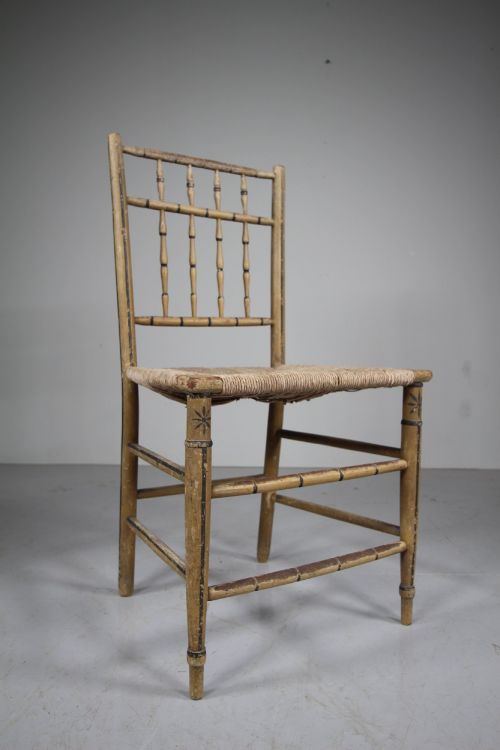
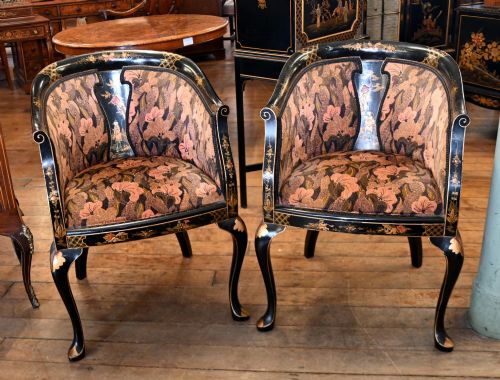
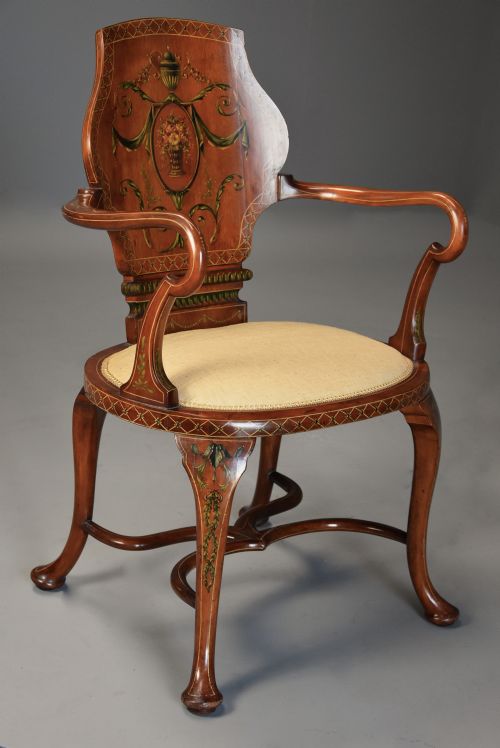
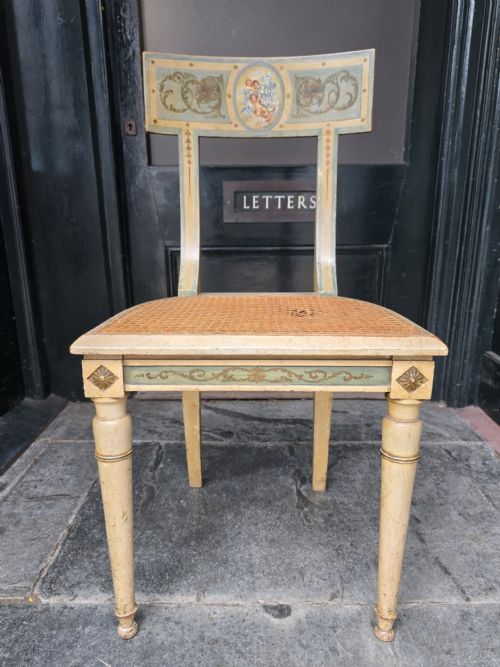
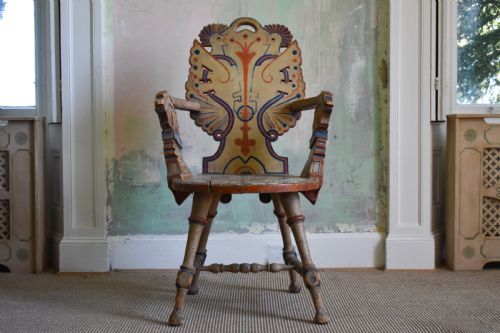
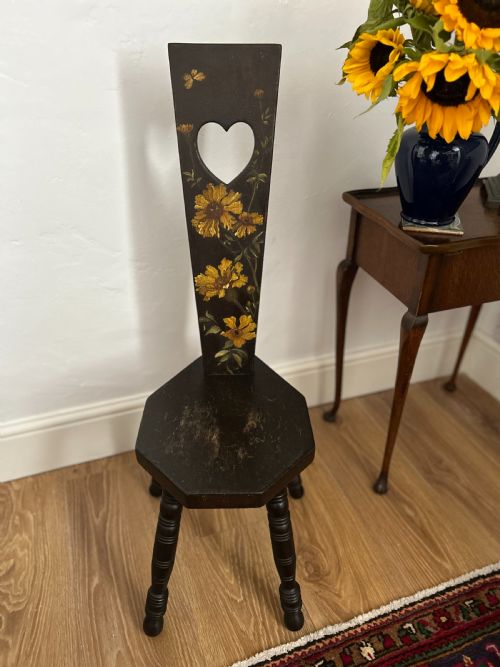
A hand painted accent chair is an occasional seat chosen to add visual interest to a corner or seating group rather than for formal dining. You will most frequently meet Edwardian satinwood pieces, Victorian decorative armchairs, and regional folk art examples on this page.
The forms span armchairs, side chairs, rocking chairs, and bedroom chairs. Makers drew upon a wide historical vocabulary, ranging from Chinoiserie and Sheraton neoclassical designs to Scandinavian and Welsh folk traditions.
Originating across different periods from the eighteenth century through the early twentieth century, these chairs often feature painted floral motifs or scenic decoration upon wood, cane, or fabric seats.
Materials and construction
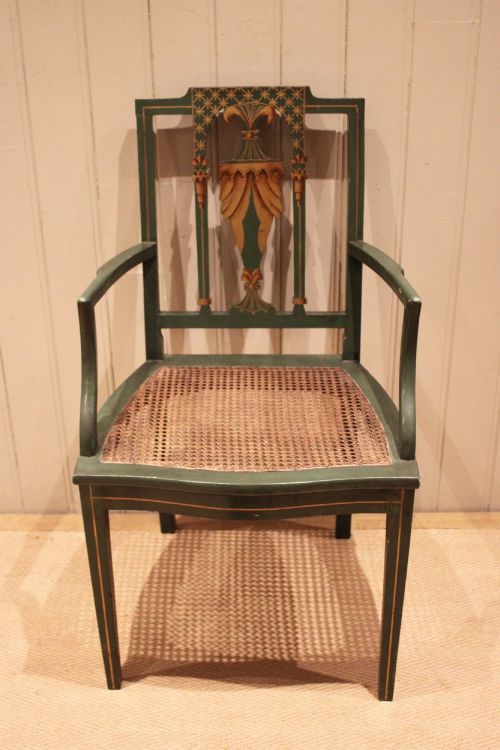
Construction relies upon traditional timber frames fashioned from woods such as satinwood and walnut, sometimes incorporating woven cane or upholstered textile panels. Craftsmen shaped these frames into armchairs, side chairs, and rocking chairs before applying decorative finishes.
The defining surface treatment involves paint, lacquer, or japanning applied directly to the wood. Artisans then executed hand painted details, floral motifs, or Chinoiserie scenes over the base layers.
Hand Painted Accent Chair Retail Price Guide 2026
Typical asking prices for hand painted accent chair among the pieces listed under this phrase on Sellingantiques today, from the lower quarter to the upper quarter. They describe what is for sale here now, not the wider market.
Several chairs double as musical or matrimonial seating, proving ancestors had specific furniture for every life event.
Evaluating quality and execution
Quality rests in the precision and artistic merit of the hand painted surface decoration. Finer examples display accomplished brushwork and well-preserved motifs, whilst simpler country or folk pieces rely on robust charm and regional character.
The underlying timber construction and the integrity of the painted finish determine the structural success of the piece. Items retaining their original paint surfaces without extensive modern repainting hold greater interest for collectors of period furniture.
The Hand Painted Accent Chair Glossary
- Chinoiserie
- European decorative style inspired by Chinese art and craftsmanship. It frequently appears on lacquer and painted furniture featuring scenic motifs.
- Satinwood
- A durable tropical hardwood with a lustrous golden sheen. It provided a smooth, pale ground popular for eighteenth and nineteenth century painted furniture.
- Japanning
- European imitation of East Asian lacquerwork using layered varnishes and metallic dust. It created glossy dark surfaces adorned with raised or flat painted designs.
- Cane
- Woven material made from the peeled bark of rattan palms. It formed resilient, lightweight seats and backs on various period chairs.
- Hepplewhite style
- Furniture design associated with the late eighteenth century characterised by elegant proportions and shield-shaped or oval chair backs.
Hand Painted Accent Chair: Frequently Asked Questions
Where should I place an accent chair?
These chairs suit quiet corners, bedrooms, or reception rooms where an extra seat with visual impact is needed. Their decorative painted surfaces allow them to function as standalone visual focal points.
Because they are occasional chairs, they work best away from heavy daily use. Pairing them with complementary furnishings helps integrate their distinct artistic style into an existing interior.
How do I care for painted wood?
Protect the hand painted surfaces by keeping them away from direct sunlight and excessive moisture. Dust gently with a dry, soft cloth rather than using chemical polishes.
Maintaining stable room temperatures prevents the underlying wood from expanding or contracting. This gentle treatment preserves both the timber substrate and the delicate painted details over time.
Are these chairs comfortable for daily seating?
Most of these pieces are occasional chairs designed primarily for decorative effect or light use rather than lounging. Their suitability for sitting depends on the specific form, whether it is an upholstered armchair, a cane-seated side chair, or a rocking chair.
Adding a small loose cushion can increase comfort without altering the historic character of the seat. Buyers seeking hours of ergonomic support generally choose modern seating instead.