

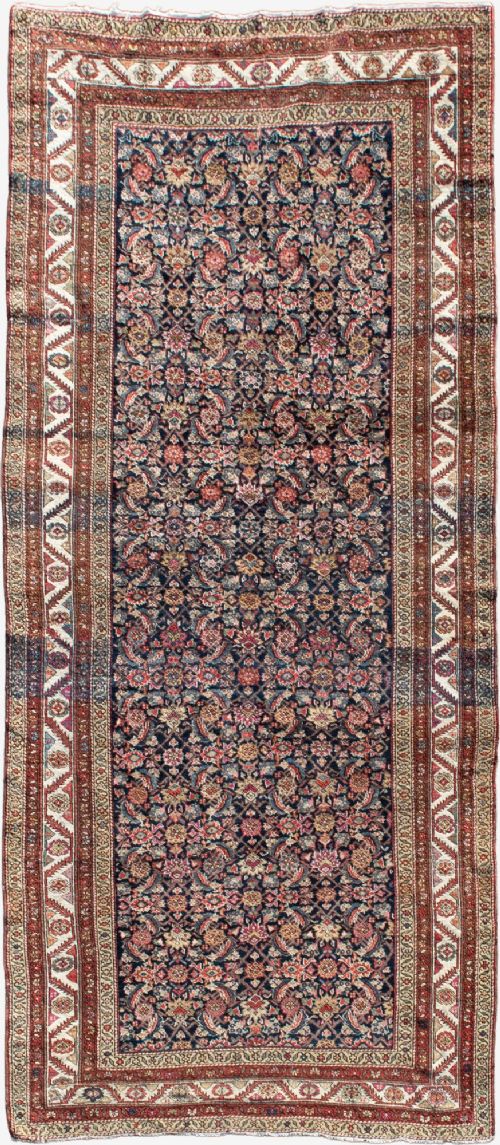
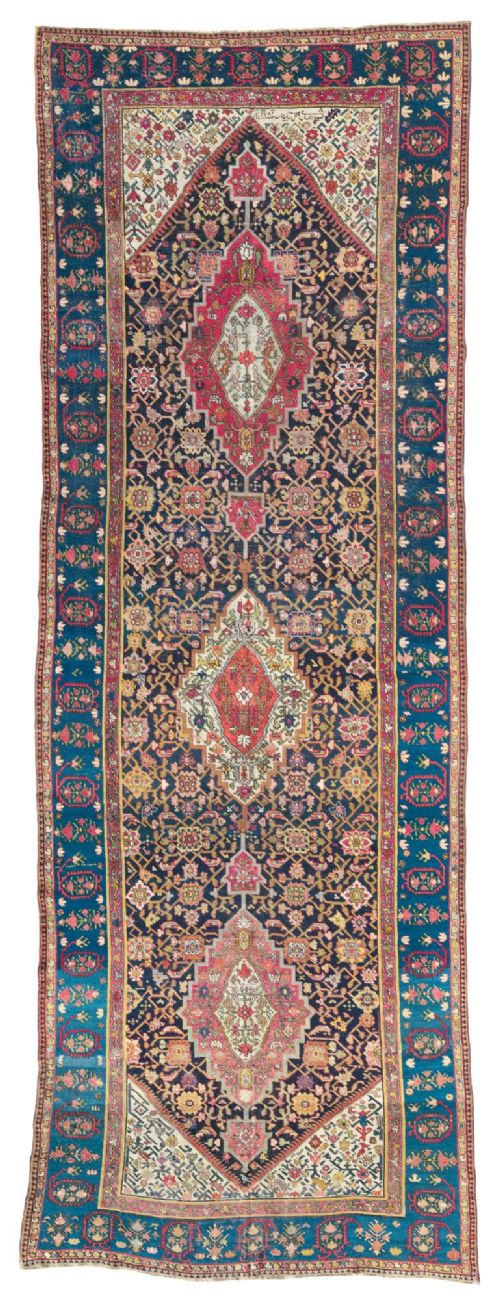
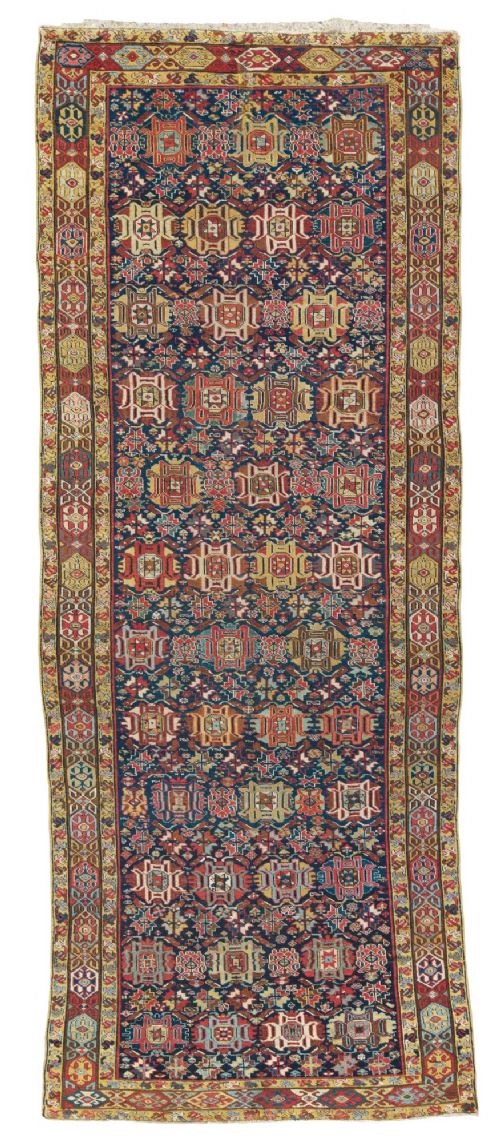


Hand Knotted Kelleh Rug
A hand knotted kelleh rug is a room-anchoring tribal or village floor covering offering rich history and enduring traditional craft.
Hand Knotted Kelleh Rug
A hand knotted kelleh rug is an elongated room-sized carpet traditionally woven by nomadic and village weavers across Persia, the Caucasus, and surrounding regions. These substantial textiles served practical daily purposes in tribal tents and village homes while displaying distinctive regional patterns.
The most common formats on this page reflect nineteenth-century and early twentieth-century production, particularly pieces originating from Kurdish, Bidjar, and Karabagh workshops. These rugs demonstrate the characteristic narrow proportions that distinguish a true kelleh from a standard square carpet.
How they were made
Weavers constructed each hand knotted kelleh rug using durable wool pile tied onto sturdy cotton or wool foundations. Hand-spun wool provides the tactile warmth and natural resilience observed in these antique examples.
Natural dye materials produced the deep palettes characteristic of these woven works, binding securely to the animal fibres through traditional mordanting techniques. Skilled makers utilised upright looms to knot the pile densely, ensuring structural integrity across decades of use.
Hand Knotted Kelleh Rug Retail Price Guide 2026
Typical asking prices for hand knotted kelleh rug among the pieces listed under this phrase on Sellingantiques today, from the lower quarter to the upper quarter. They describe what is for sale here now, not the wider market.
Some weavers snuck tiny comb symbols into the borders, perhaps hoping to keep their own hair tidy through long days at the loom.
What varies in quality
The distinction between ordinary and exceptional examples rests in the fineness of the knotting and the crispness of the drawing. Tighter knot density allows for sharper definition in complex geometric medallions, tree of life motifs, and border patterns.
Depth and saturation of colour elevate certain pieces above others, depending on the quality of the wool and the mastery of the dye bath. Preservation of original borders and pile height across a large surface area also marks a superior survivor from the weaving floor.
The Hand Knotted Kelleh Rug Glossary
- Kelleh
- A traditional format of Persian and Caucasian carpet characterised by a distinct elongated rectangular proportion, narrower than a standard room carpet but wider than a runner.
- Bidjar
- A renowned weaving centre in western Persia known for producing exceptionally heavy, durable carpets featuring dense construction and sturdy foundation materials.
- Boteh
- A stylised floral motif resembling a pear, almond, or bent cypress tree, frequently repeated across the field of traditional tribal rugs.
- Karabagh
- A highland region in the Caucasus noted for distinctive rug weaving that blends Persian and Caucasian design elements, often incorporating bold coloration and animal or floral forms.
- Cloud band
- A decorative border or field element derived from Chinese art, depicting stylised ribbon-like wisps of vapour across the woven surface.
Hand Knotted Kelleh Rug: Frequently Asked Questions
How do I place a hand knotted kelleh rug?
The elongated proportions of a hand knotted kelleh rug make them particularly suited for narrow reception rooms, hallways, or anchoring furniture arrangements in long living spaces. Their substantial size allows them to define a distinct zone within an open room.
Ensure you use an appropriate underlay to protect the historic wool foundation from sliding on hard floors. Position the rug away from direct, continuous sunlight to preserve the natural dye colours over time.
What is the difference between a kelleh and a runner?
A kelleh is proportioned specifically as a wide long rug, bridging the gap between a standard room-sized carpet and a narrow corridor runner. They offer greater width than traditional runners while maintaining an extended rectangular footprint.
This format was traditionally utilised alongside larger carpets in Persian domestic architecture to fit specific room dimensions. Their unique width accommodates furniture placement much better than a standard narrow hallway runner.
How do I identify a Kurdish kelleh?
Kurdish kelleh carpets typically exhibit robust wool foundations, geometric precision, and strong regional motifs such as repeated boteh patterns or bold dragon borders. The weaving structure tends to be heavier and stiffer than delicate city-made Persian counterparts.
Examining the reverse side reveals the characteristic hand-spun wool and irregular knotting signatures of nomadic or village production. Local dyeing traditions give these pieces an earthy, saturated palette.