



Hand Hooked Runner
A hand hooked runner brings tactile warmth and enduring tribal design to a hallway, offering the robust durability collectors seek in antique floor coverings.
Hand Hooked Runner
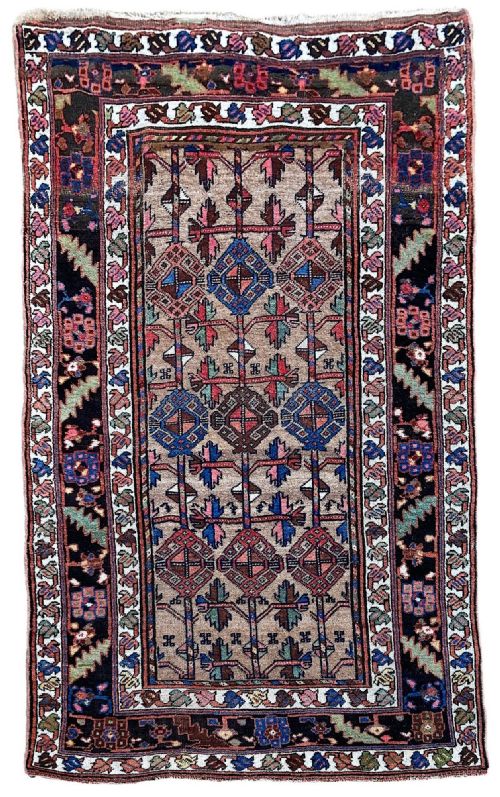
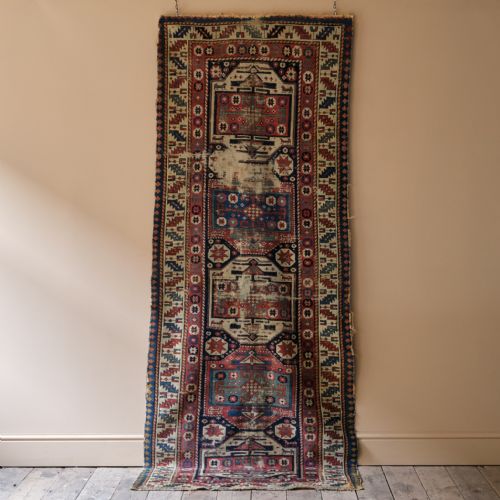
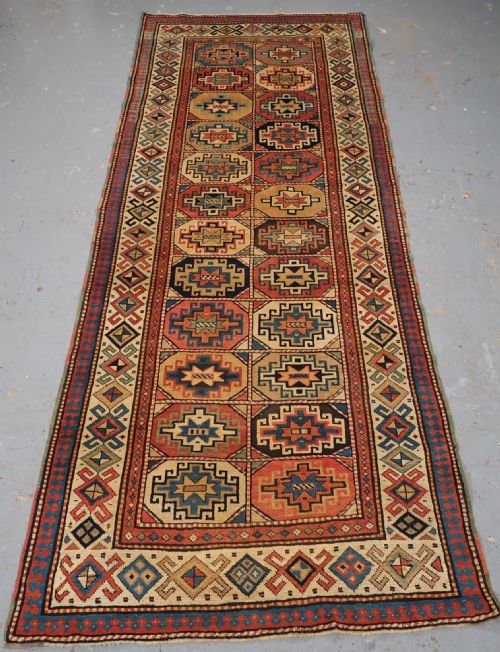
When buyers search for a hand hooked runner, they encounter long, narrow floor coverings originating from tribal regions and folk traditions spanning the late nineteenth century into the early twentieth century. These textiles include Caucasian and Kurdish tribal formats alongside American folk art examples, featuring elongated geometric motifs.
The pieces appearing on this page predominantly showcase traditional regional weaving methods with latch hook and medallion designs. They bridge utilitarian household use and decorative floor art, offering narrow dimensions suited to corridors and entryways.
Factors that define quality
Quality in these textiles rests upon the tightness and regularity of the looping work alongside the integrity of the foundation fabric. Tighter packing of the loops yields greater durability and sharper definition in the geometric medallion patterns.
The depth and nuance of the natural dye palette also dictate the stature of a piece. Runners exhibiting harmonious, soft secondary tones alongside strong primary hues demonstrate superior artistic command by the original maker.
The listings span from 1880 to 1920, incorporating wool, cotton, jute, burlap, and camel hair across Caucasian, Kurdish, and American folk art traditions.
The Hand Hooked Runner Glossary
- Latch hook
- A geometric motif resembling a stepped hook used frequently in tribal rugs. It appears in repeated configurations along the central axis of Caucasian and Kurdish runners.
- Burlap
- A coarse woven fabric utilised as a foundation backing material. It provides the structural grid through which pile yarns or strips are pulled.
- Medallion
- A distinct central ornamental design element set into the field of the rug. These often appear in series of three across Caucasian Kazak and Moghan examples.
- Hand-spun wool
- Yarn produced manually using a spindle rather than industrial machinery. This method creates variable thickness and texture in the finished pile.
Hand Hooked Runner: Frequently Asked Questions
How do I care for an antique runner?
Gentle vacuuming without a rotating power brush prevents fibre damage while removing surface dirt. Professional textile cleaning is recommended for deep maintenance.
Using a quality rug underlay prevents slipping and cushions the natural foundation fibres against hard flooring.
What is a latch hook medallion?
A latch hook medallion is a stepped geometric emblem positioned along the central field of tribal floor coverings. The motif holds traditional symbolic meaning within Caucasian and Kurdish weaving.
These repeated shapes create strong vertical rhythm down the length of the narrow runner format.
How do I distinguish regional styles?
Caucasian pieces frequently display precise geometric medallions and structured borders in saturated mineral tones. Kurdish examples often reveal softer transitions and distinct tribal elements like gul motifs.
Examining the handling of the wool and the specific configuration of the latch hooks aids in identifying the origin.