


Hand Hammered Coal Scuttle
A hand hammered coal scuttle brings a tactile, metal-worked warmth to the hearth through traditional British fireside vessels.

Hand Hammered Coal Scuttle
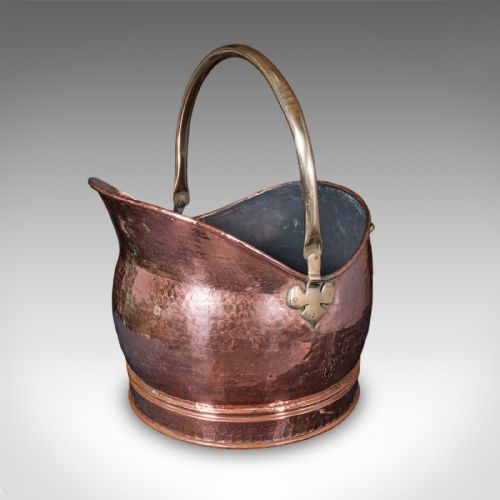
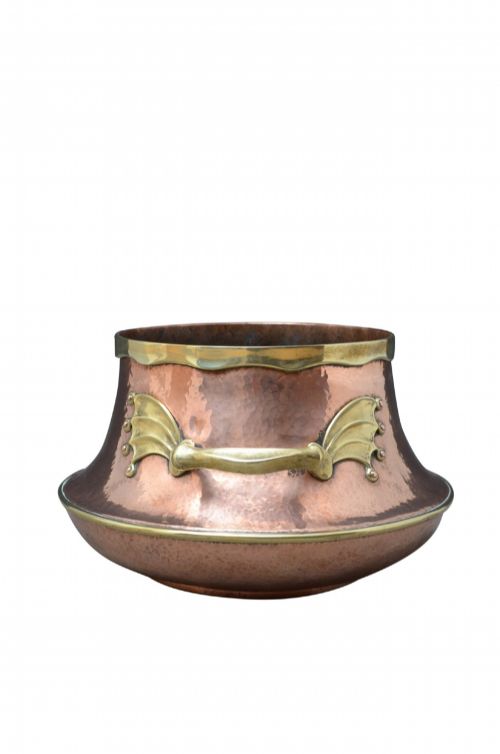
A hand hammered coal scuttle is a functional fireside container designed to hold fuel near an open fire. These vessels range from helmet-shaped buckets to lidded purdoniums and open cauldrons.
The examples gathered here span the Victorian era, the Edwardian period, and the turn of the twentieth century. Many carry the distinct aesthetic of the Arts and Crafts movement.
Makers shaped these utilitarian objects for domestic service in British homes. Today, buyers use them as decorative log buckets, planters, or fireside storage.
How they were made
Artisans hammered sheets of copper and brass by hand to build up the body of each scuttle. Wrought iron and standard iron frequently provide structural support or handles.
Metalworkers formed the sheet metal into helmet shapes, cylindrical buckets, and deep vessels, often combining copper bowls with cast brass swing handles and feet.
The listings here include materials such as copper, brass, wrought iron, and wood, spanning the Victorian era and the Arts and Crafts movement.
What varies in quality
The depth and uniformity of the hand-beaten marks dictate the visual texture of the metal body. Heavier gauges of copper and brass ensure the vessel maintains its rigidity during daily hearth use.
Superior construction involves securely riveted joints and robust handles that bear the heavy weight of coal or logs. The integration of contrasting metals, such as brass fittings on a copper bucket, shows greater attention to design.
The Hand Hammered Coal Scuttle Glossary
- Coal scuttle
- A container used to hold and transport coal for a domestic fire. These often feature a shaped mouth for pouring.
- Helmet scuttle
- A coal bucket with a high back and a sloping front rim that resembles a classical helmet. This shape allowed easy scooping and tipping of fuel.
- Purdonium
- A box-style coal scuttle with a hinged lid, often incorporating an inner metal liner for carrying the fuel. They keep the hearth tidy by completely enclosing the contents.
- Arts and Crafts
- A design movement valuing handcraftsmanship and simple forms over mass production. Pieces from this period often display visible hand-hammered textures.
- Aesthetic Movement
- A late nineteenth-century design approach focused on artistic visual qualities rather than strict utility. Objects from this era emphasise decorative appeal alongside function.
Hand Hammered Coal Scuttle: Frequently Asked Questions
What is a hand hammered coal scuttle used for?
These vessels were originally manufactured to store and carry coal to domestic fireplaces. Their sturdy metal construction safely held heavy fuel next to burning hearths.
Modern buyers often repurpose them beside wood-burning stoves as log buckets or utilise them indoors as large planters and jardiniere vessels.
How do I date a copper coal scuttle?
Dating relies on stylistic markers and manufacturing techniques visible across the piece. Victorian examples often feature helmet profiles and heavy brass swing handles, whereas items from around nineteen hundred align with the Arts and Crafts movement.
Material choices also offer clues, as nineteenth-century pieces frequently combine hand-beaten copper with wrought iron components or cast brass fittings.
Are these coal scuttles waterproof?
Most of these vessels are constructed from sheet copper or brass with joined seams designed to hold solid fuel. While many retain their integrity for holding logs or dry goods, original riveted joints can develop minor seepage over time.
Buyers utilising them as planters or indoor water receptacles often place a modern liner inside to protect the historic metal.