


Hand Hammered Brass Bucket
When you search for hand hammered brass bucket, you are looking at substantial metal vessels formed by hand for fireside utility and display.
Hand Hammered Brass Bucket
A hand hammered brass bucket encompasses fireside accessories, coal scuttles, and planters found across Victorian, Georgian, and Edwardian periods. These domestic objects serve practical roles beside the hearth while offering decorative presence through hammered metal surfaces.
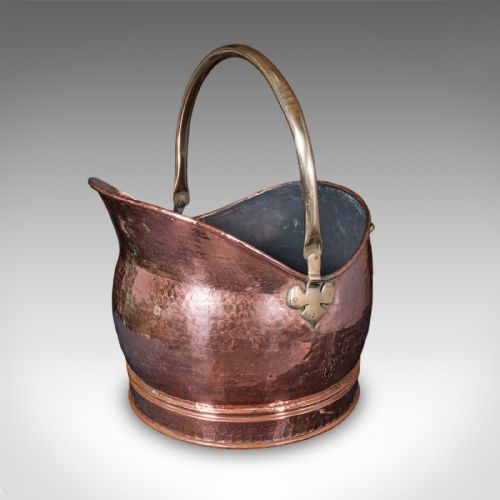
The pieces on this page appear primarily in Victorian forms, alongside Georgian and Edwardian examples. Common shapes include helmet coal scuttles, cauldrons, and large planters utilised for coal storage or display.
Makers shaped these items from brass, copper, and iron, incorporating wrought iron and wood elements. They function as log buckets, coal bins, and umbrella stands across multiple historic eras.
Materials and construction
Craftsmen built these items using sheet brass and copper, often finished with handbeaten or hammered textures. Rivets join the metal plates together, creating durable seams that withstand heavy domestic use.
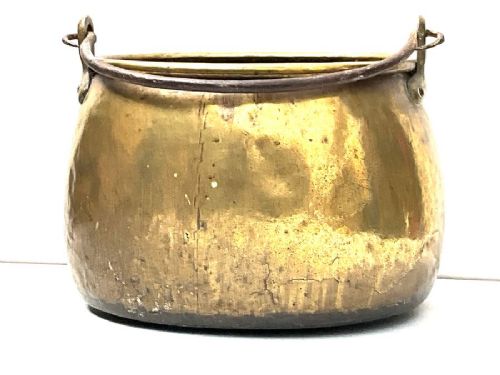
Handles frequently incorporate iron or swing mechanisms attached to the main body. The combination of brass and copper creates tonal contrast, while wood and wrought iron appear in supporting structures.
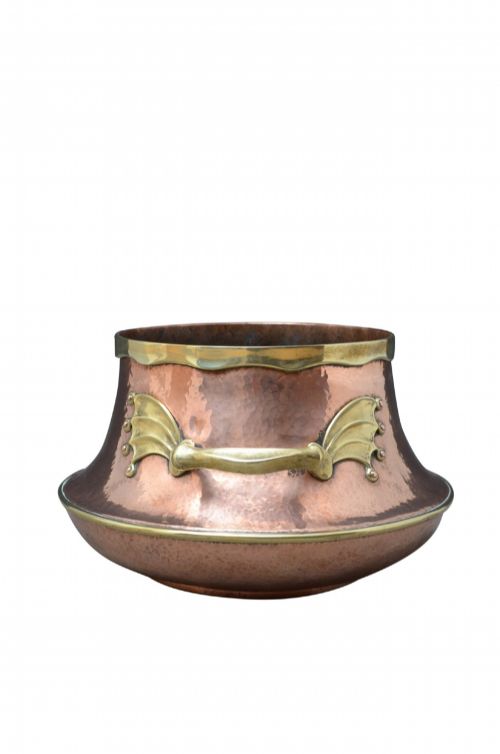
A heavy brass pan once destined for ash and coal makes an unexpectedly brilliant home for a very stubborn fern.
Judging quality in metalwork
Quality rests upon the weight of the metal and the precision of the hand-hammered surface. Substantial gauge brass and copper provide structural integrity that lighter vessels lack.
The definition in the handbeaten detailing and the integration of handles and rivets distinguish finer examples. Superior specimens display balanced proportions and robust construction across helmet scuttles and cauldrons.
The Hand Hammered Brass Bucket Glossary
- Helmet coal scuttle
- A traditional fireside bucket featuring a flared rim resembling a helmet, designed for pouring coal cleanly into a grate. This form remains common in Victorian examples.
- Jardiniere
- An ornamental pot or stand intended for holding plants or flowers. These large vessels often share construction methods with coal buckets.
- Cauldron
- A rounded metal pot with a wide opening and carrying handles. These items serve heavy domestic holding tasks by the hearth.
Hand Hammered Brass Bucket: Frequently Asked Questions
What were these buckets used for?
These metal vessels served primarily practical roles beside the fireplace, holding coal, logs, or kindling for daily hearth maintenance.
Some larger forms also functioned as indoor planters or umbrella stands, combining domestic utility with decorative display.
How do I clean a brass bucket?
Dust the surface regularly with a soft cloth to prevent grime buildup. Avoid harsh chemical cleaners that strip the historic patina.
Gentle washing with warm soapy water and thorough drying preserves the metal's natural finish and character over time.
How do I date a brass bucket?
Examine the construction methods, such as the use of hand hammering, riveted joints, and handle attachments. Stylistic details point toward specific periods like Victorian, Edwardian, or Georgian.
Materials also offer clues, as certain combinations of brass, copper, and wrought iron align with distinct manufacturing eras.
Where should I place a bucket?
These pieces sit naturally beside a fireplace or hearth as functional storage for logs and coal. They also suit hallways as umbrella stands or living spaces as planters.
Position them where the hammered brass and copper surfaces catch ambient light to best display the metalwork.