
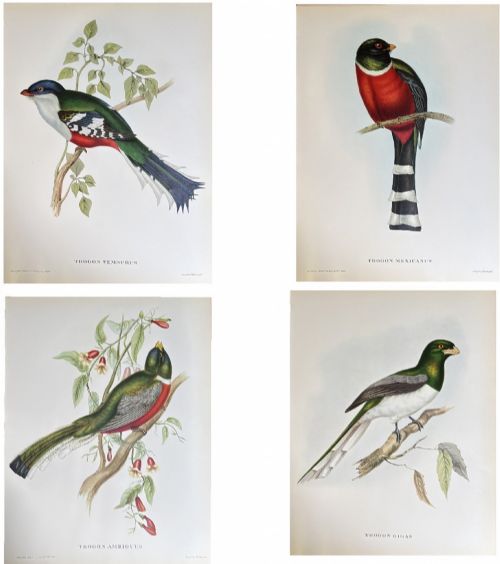


Hand Coloured Botanical Engraving
A hand coloured botanical engraving brings the precise, vibrant detail of natural history straight to the wall.
Hand Coloured Botanical Engraving
A hand coloured botanical engraving represents a meticulous intersection of scientific illustration and decorative art, capturing plants and specimens with striking accuracy. When you search for hand coloured botanical engraving, you encounter plates spanning from the eighteenth century through the Victorian era.
The pieces on this page appear in various formats, including individual framed prints, matched sets, and unframed sheets. Subjects range from delicate flora and sea shells to ornithological studies featuring birds and insects.
Materials and methods
These works rely upon fine paper sheets printed using engraved plates and finished with applied watercolour. Makers utilised ink alongside watercolour pigments to render each specimen.
Many examples arrive within wood frames, frequently enhanced with gilt or gold leaf finishes, and protected beneath glass.
Early naturalists sometimes mistook exotic birds for flying botanical specimens, leading to delightfully confused taxonomy in the margins.
Factors of quality
Quality rests upon the crispness of the original impression and the skill applied during the colouring process. Plates produced by renowned naturalists and draughtsmen command particular attention for their scientific and artistic fidelity.
Condition remains paramount, where clean paper, balanced pigmentation, and period framing elevate the piece. Sets that survive intact in larger groupings offer greater visual impact than scattered single plates.
Oliver Goldsmith·Pancrace Bessa·George Edwards·John Curtis·Georg Wolfgang Knorr·William Swainson·George Dionysius Ehret·Michael Rupert Besler·John Edwards
The Hand Coloured Botanical Engraving Glossary
- Engraving
- A printmaking process where an artist cuts a design into a metal plate with a burin. The resulting lines hold ink to be transferred onto paper under pressure.
- Hand-coloured
- The practice of applying watercolour or other pigments by hand to a printed monochrome outline. This adds life and scientific accuracy to the botanical or ornithological subject.
- Plate
- The copper or metal sheet bearing the engraved image. Plate marks often remain visible as indentations in the paper surrounding the printed area.
- Botanical print
- An illustration depicting the form, colour, and details of plant life. These works served both scientific recording and domestic decoration.
Hand Coloured Botanical Engraving: Frequently Asked Questions
How do I date a botanical engraving?
Dating relies upon paper characteristics, printing techniques, and typographical styles found on the sheet or plate margin. Reference works and artist florilegia often provide specific publication years.
Period frames and contemporary inscriptions also offer reliable clues to the age of the piece.
Are these prints originals from the period?
The listings comprise authentic period prints pulled from contemporary publications and natural history works. Each piece reflects the production standards of its specific century.
Dates range from the mid-eighteenth century through to mid-nineteenth-century Victorian editions.
How should I frame and hang them?
Protect the paper from direct sunlight by using conservation-grade mounting and UV-filtering glass. Keeping prints away from moisture prevents foxing and paper degradation.
Matched sets look striking when hung in symmetrical rows or grouped together on a wall.