



Hand Carved Timber Bowl
Every hand carved timber bowl carries the honest marks of the maker's hand, offering tactile warmth and centuries of domestic utility.
Hand Carved Timber Bowl
A hand carved timber bowl serves as a direct link to domestic and utilitarian history, shaped for functional tasks in homes, dairies, and rural communities. When exploring a hand carved timber bowl on this page, buyers most frequently encounter utilitarian vessels from the nineteenth and early twentieth centuries alongside earlier examples.
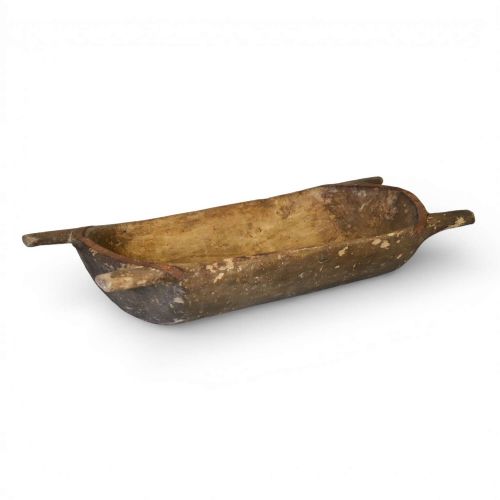
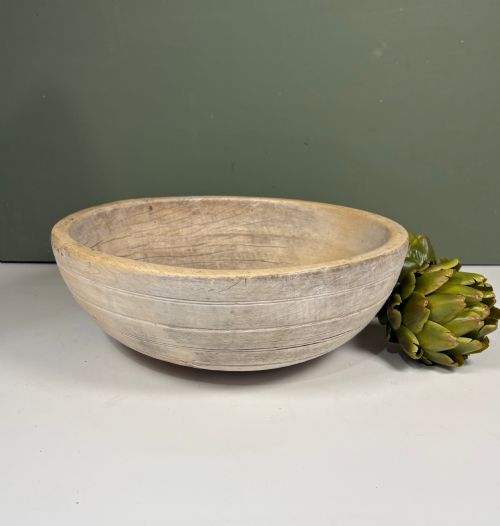
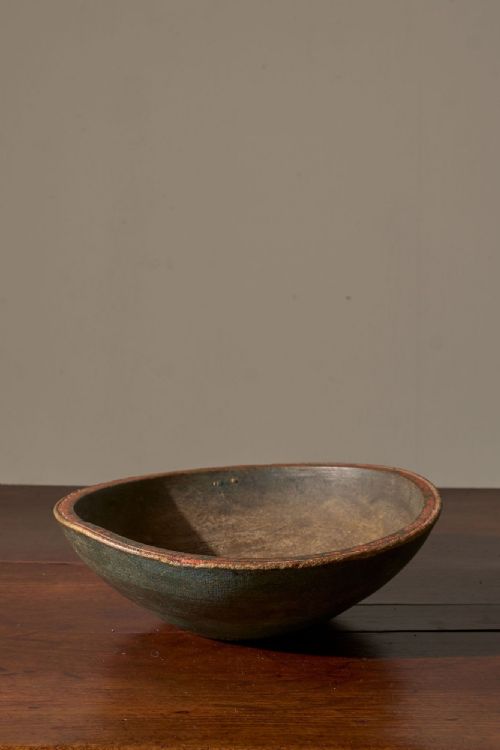
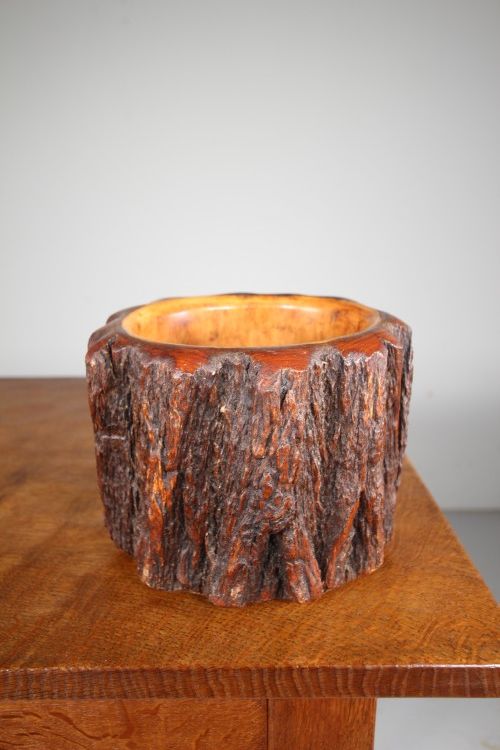
The selections span several distinct regional traditions, including French farmhouse kneading troughs, English and Welsh sycamore dairy vessels, and painted Swedish bowls. Forms range from large dough troughs and mortars to smaller egg bowls and tree stem vessels, reflecting the varied daily needs of past households.
Makers shaped these utilitarian objects from native timbers suited to daily toil, creating sturdy vessels meant to withstand heavy use. Surviving examples display the softened edges and worn surfaces that accumulate through decades of kitchen and dairy work.
How they were made
Woodworkers fashioned each hand carved timber bowl from solid woods like sycamore, pine, elm, and timber stems using traditional carving techniques. Craftsmen dug out solid blocks of wood to form deep vessels, leaving tool marks that reveal the progress of gouges and adzes.
Surfaces often retain original paint, hand polish, or the rich, dark patina accumulated through generations of use and handling. Iron elements occasionally appear on related pieces, while bark remains intact on specific rustic forms.
Several bowls retain the quiet ghosts of nineteenth-century dough and dairy work, whispering tales of flour dusted floors.
What varies in quality
The distinction between ordinary and exceptional pieces lies in the depth of the carving and the integrity of the timber. Vessels with deep, well-balanced walls and prominent tool marks command greater attention from collectors of rustic utility.
Surface preservation plays a decisive role, particularly where original paint finishes or deep, undisturbed patina survive intact. Well-preserved surfaces retain the visual warmth and historical depth that signal a distinguished domestic past.
The Hand Carved Timber Bowl Glossary
- Treen
- Small wooden domestic items made by turners and joiners. These encompass items ranging from dairy bowls to ladles and small household vessels.
- Sycamore
- A dense hardwood favoured by traditional turners and dairy workers. Its tight grain resists moisture and splitting, making it ideal for food preparation vessels.
- Dough bowl
- A large vessel used historically for kneading bread dough. These deep troughs often feature heavy walls to withstand the rigours of daily baking.
- Patina
- The surface sheen and colour acquired by wood over decades of handling and cleaning. A rich patina indicates long use and gentle care.
- Dairy bowl
- A shallow wooden vessel used in butter making and milk setting. Sycamore dairy bowls were essential equipment in nineteenth-century farmhouses.
Hand Carved Timber Bowl: Frequently Asked Questions
What were wooden bowls used for?
These wooden vessels served essential daily functions in kitchens, dairies, and farmhouses. They held milk, kneaded bread dough, and prepared food for the household.
Over decades of domestic work, these utilitarian objects became central to the practical routines of rural life.
How do I care for antique wood?
Keep wooden vessels away from direct heat sources and sudden temperature shifts to prevent the timber from splitting. Clean surfaces gently with a dry or barely damp cloth without harsh detergents.
Allow the natural oils and established patina to protect the wood over time.
How do I identify the period?
Dating relies on tool marks, timber selection, and surface wear patterns left by historical manufacturing methods. Nineteenth-century examples often display the characteristic heft of turned sycamore or dugout pine.
Earlier pieces from the eighteenth century frequently exhibit distinct painted surfaces or regional construction traits.
Are painted finishes original?
Original painted surfaces on Swedish and European bowls survive from the eighteenth and nineteenth centuries. These historic layers show natural wear and craquelure consistent with age.
Close inspection reveals how the paint interacts with the underlying timber over generations.