

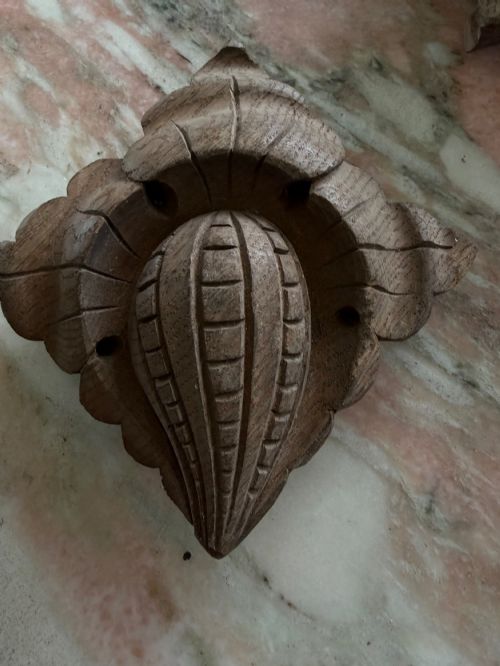
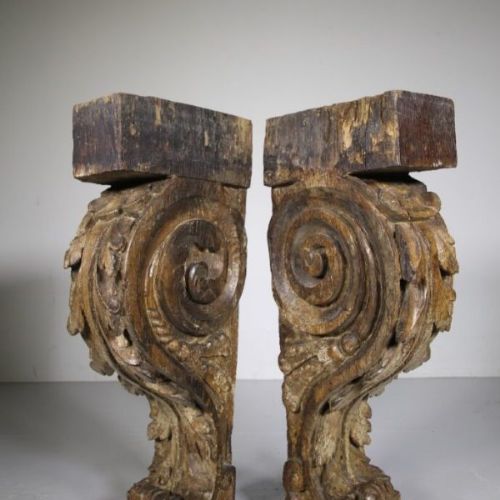


Hand Carved Corbels
These hand carved corbels are structural supports turned ornamental, bringing solid timber and stone brackets into domestic interiors as architectural salvage.
Hand Carved Corbels
Hand carved corbels encompass architectural salvage, wall brackets, fragments, and shelves found across periods spanning the sixteenth century to nineteen hundred. These pieces function historically as load-bearing projections from walls, though many survive today as decorative wall brackets and wood carvings.
Buyers meet examples shaped from diverse materials including oak, teak, hardwood, red walnut, iron, limestone, stone, and pine. Styles range through Georgian, Victorian, Victorian Gothic, Medieval, Anglo-Indian, and Rococo Revival forms.
How they were made
Makers shaped these supports using traditional timber and stone working techniques, relying primarily on solid oak, pine, walnut, and teak alongside sandstone and limestone. Carvers worked directly into the material to produce ceiling boss panels, tiger heads, and structural scrollwork.
The construction relies on manual cutting and chiselling rather than industrial moulding, visible in the tool marks left across sixteenth century fragments and nineteenth century pine brackets alike.
Among the architectural timberwork, a fierce nineteenth century Black Forest tiger head stares out ready to hold up your shelf.
What varies in quality
Depth and precision of the carving separate standard architectural salvage from exceptional sculptural works, such as Black Forest animal carvings or medieval fragments. The crispness of detail in foliage, figures, or animal motifs dictates the visual strength of the bracket.
Material selection and survival state define the hierarchy of pieces, where dense hardwoods like red walnut and oak retain sharper definition than softer pine or weathered stone fragments.
The Hand Carved Corbels Glossary
- Corbel
- A structural piece of stone, wood, or metal projecting from a wall to carry a weight above it. These items now serve primarily as decorative wall brackets.
- Architectural salvage
- Building elements rescued from structures slated for demolition or alteration. Such items are preserved for their historical and decorative value in new settings.
- Ceiling boss
- A decorative knob or projection placed at the intersection of ribs in a ceiling or vault. These carved wooden panels often feature floral or figurative motifs.
- Architectural fragment
- A surviving portion of a larger ruined or dismantled building. Pieces such as sixteenth century fragments retain historical evidence of earlier stonework and joinery.
Hand Carved Corbels: Frequently Asked Questions
What were corbels used for?
Corbels functioned historically as heavy load-bearing projections designed to support upper walls, balconies, ceiling beams, or parapets. Builders relied on their structural strength to distribute weight safely back into the main wall.
Over time, many of these architectural elements transitioned into decorative interior brackets, supporting shelves or simply adding sculptural depth to rooms.
How do I hang a heavy corbel?
Mounting heavy wooden or stone corbels securely requires locating wall studs or using heavy-duty masonry anchors suited to the weight of the specific material. Many pieces feature flat rear surfaces or integrated hanging points intended for stable wall attachment.
Consulting a professional builder ensures the chosen hardware can safely bear the combined weight of the bracket and any displayed objects.
How do I date an old corbel?
Dating relies on examining the tool marks, timber species, stylistic clues, and the overall wear consistent with periods like the Georgian or Medieval eras. Hand-hewn marks and historic wood shrinkage indicate considerable age compared to later machine-cut reproductions.
Comparing the decorative vocabulary, such as Gothic Revival motifs or Rococo curves, helps place the carving within its historical era.
Can I use stone corbels outside?
Sandstone and limestone corbels withstand exterior environments well if the stone density is appropriate for local weather conditions. Historic stone elements were originally designed for outdoor architectural exposure.
Checking for pre-existing frost damage or deep structural cracks ensures the stone remains stable against moisture and freezing temperatures.