

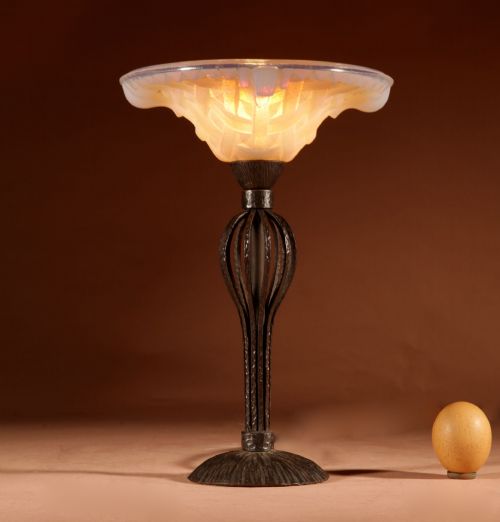


Hammered Iron Lighting
Hammered iron lighting brings robust hand-forged character and period design into a room through lamps, lanterns and chandeliers.
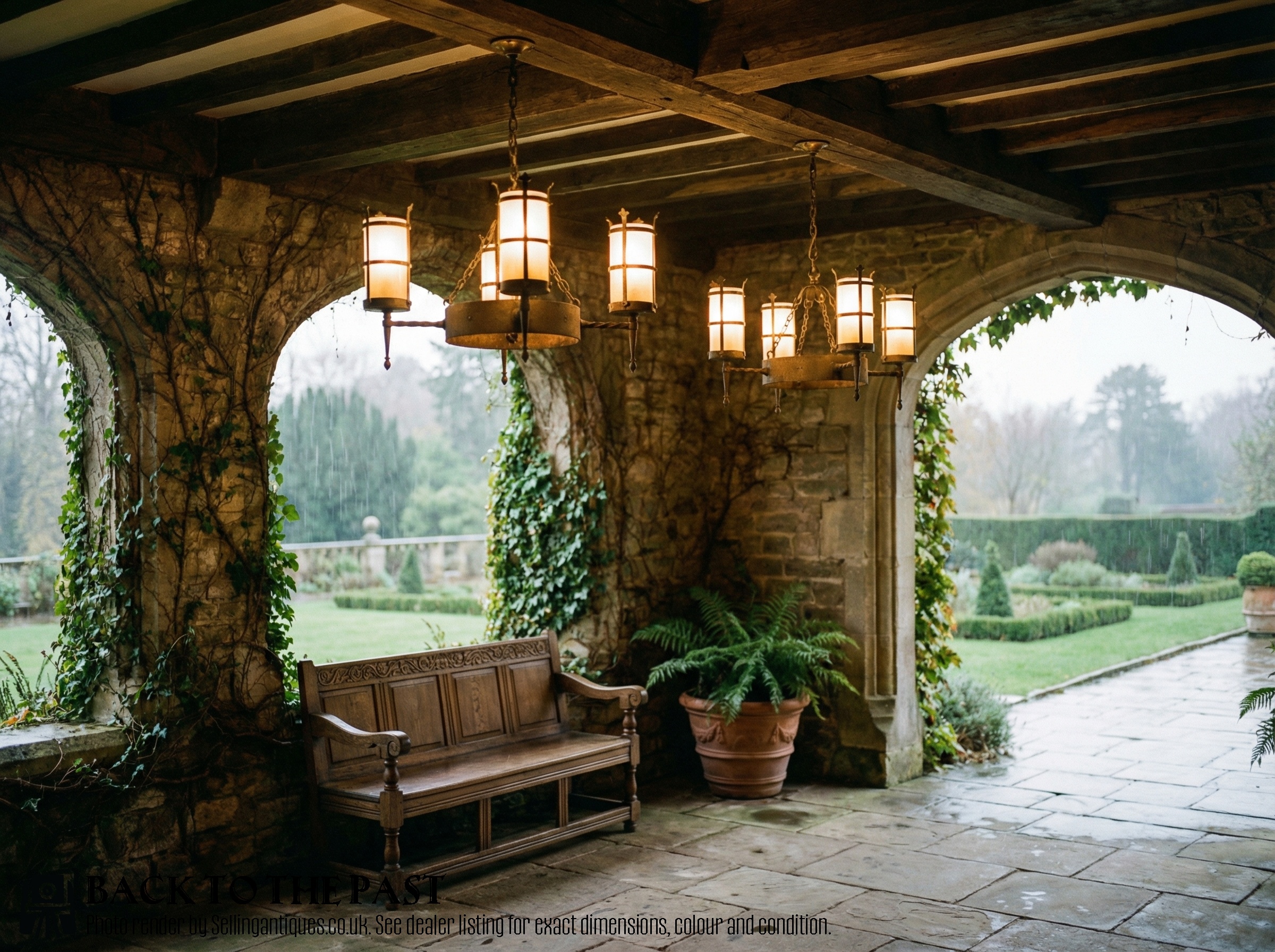
Hammered Iron Lighting
When you search for hammered iron lighting, you find metalwork fixtures spanning the early twentieth century, including the Arts and Crafts, Art Nouveau and Art Deco periods. These pieces range from simple chambersticks to large multi-arm ceiling lights and chandeliers.
Table lamps and pricket candlesticks dominate the selection, often combining wrought iron with contrasting metals like brass or copper. French lighting from the nineteen-twenties and nineteen-thirties frequently pairs dark forged iron with moulded glass shades.
How they were made
Blacksmiths shaped wrought iron and steel while hot over an anvil, leaving visible hammer marks that give the metal its characteristic texture. Joints were often riveted or welded by hand rather than mass-produced in a mould.
Many fixtures incorporate decorative panels or shades made from opalescent glass, pate de verre or plain glass. Brass and copper components were added to provide tonal contrast against the dark, textured iron surface.
Hammered Iron Lighting Retail Price Guide 2026
Typical asking prices for hammered iron lighting among the pieces listed under this phrase on Sellingantiques today, from the lower quarter to the upper quarter. They describe what is for sale here now, not the wider market.
Early twentieth-century blacksmiths occasionally left stray anvil scale baked right into the iron finish, proving human hands did the hammering.
What varies in quality
Quality rests in the fluidity of the forged ironwork and the harmony between metal and glass elements. Finer pieces display crisp hammer marks and deliberate proportions rather than stiff, uniform machine bending.
The integration of specialised glass shades, such as moulded opalescent bowls or pate de verre, separates standard utilitarian fittings from designer pieces. Maker attribution also elevates a piece, particularly when paired with high-grade metalwork.
Lacroix Lalique·Degue·Hugo Berger Goberg·Muller Freres
The Hammered Iron Lighting Glossary
- Wrought iron
- Tough, malleable iron that can be heated and hammered into decorative shapes. It forms the structural body for most twentieth-century lights.
- Pricket candlestick
- A candlestick featuring a sharp central spike that pushes into the base of a candle to hold it upright. These often appear in heavy brass and iron pairs.
- Pate de verre
- A glass-making technique where crushed glass is packed into a mould and fused in a kiln. It creates richly coloured, textured shades often seen on early chandeliers.
- Chamberstick
- A short candlestick fitted with a wide saucer pan and a loop handle for carrying around a room. Arts and crafts examples frequently utilise hammered iron for this form.
Hammered Iron Lighting: Frequently Asked Questions
What periods do these lights come from?
The available lighting dates primarily from the early twentieth century, covering the nineteen hundreds up to the nineteen thirties. This span captures several distinct design movements including arts and crafts and art deco.
Craftsmen during this era embraced visible hand-working techniques, ensuring that the metalwork shows the direct touch of the blacksmith.
Are these lights wired for modern use?
Many vintage ceiling lights and table lamps arrive with their original wiring or later updates, but electrical standards vary. Buyers frequently have older fixtures checked or rewired by a qualified electrician before installation.
This ensures the lamp safely accommodates modern bulbs while preserving the historic iron and glass components.
How do I distinguish art deco from arts and crafts ironwork?
Arts and crafts pieces tend to feature honest, rustic construction with Gothic or medieval influences and simple functional forms. Art deco lighting introduces sleeker geometric lines, stylised motifs and French opalescent glass shades.
Examining the silhouette and the glass panels usually reveals which design philosophy shaped the fixture.
How should I clean hammered iron lighting?
Dust the ironwork gently with a soft, dry cloth to prevent dirt accumulation without disturbing the surface patina. Avoid harsh chemical cleaners or abrasive pads that can strip the dark protective finish.
Glass shades can usually be removed and washed carefully in warm soapy water if handled with extreme care.