


Hammered Brass Vessel
When you handle a hammered brass vessel, you hold a piece shaped by heat and heavy blows into a lasting utilitarian form.
Hammered Brass Vessel
A hammered brass vessel combines decorative surface texture with functional everyday use. When you search for a hammered brass vessel, you encounter domestic items designed for hearth, kitchen, and display purposes across several centuries.
The pieces on this page span the nineteenth century and the early twentieth century, drawing on Victorian, Arts and Crafts, and Georgian traditions. Hearth accessories, coal buckets, jardinières, and jugs dominate the forms you meet.
Makers shaped these objects to hold coal, water, plants, or food. Each vessel reflects the practical domestic needs of its era, combining sheet metal construction with hammered or handbeaten surface decoration.
Materials and construction
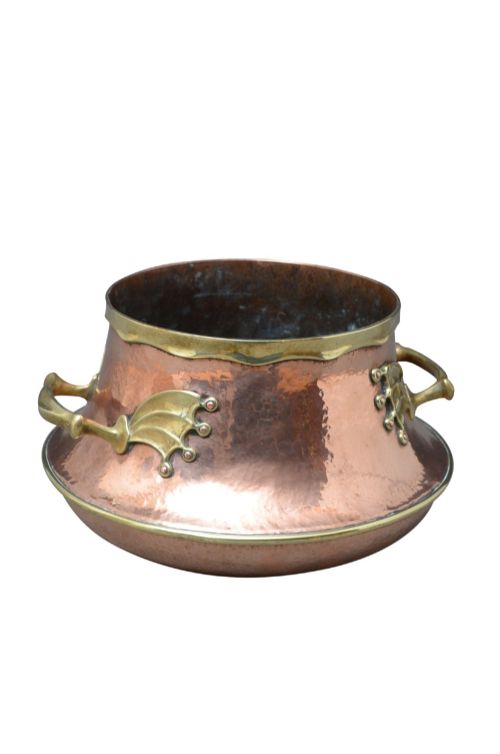
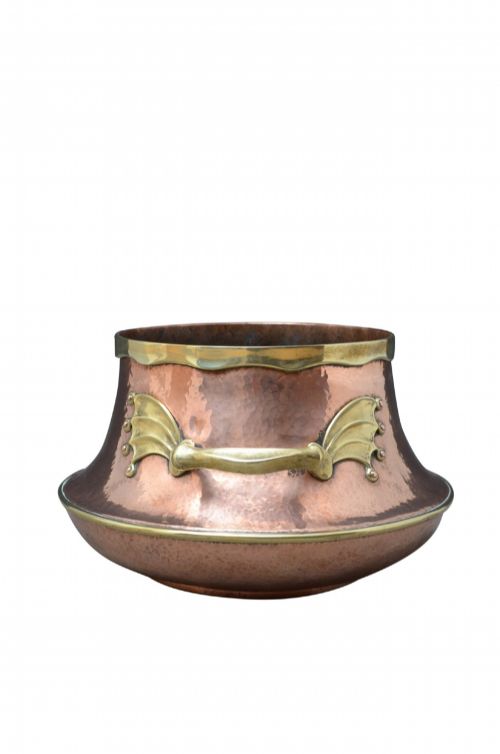
Makers constructed these items primarily from sheet brass and copper, frequently pairing the metals within a single piece or adding iron, tin, and ebonised wood for handles and trim. The underlying metal sheets were worked extensively while hot or cold to achieve the desired hollowware shape.
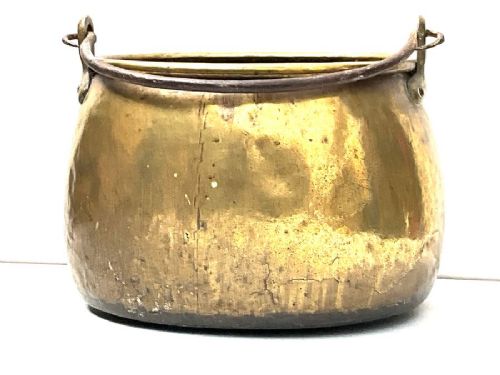
Handbeaten and riveted techniques define the surface texture and structural joins of these vessels. Hammer marks left directly on the metal surface record the physical labour of the workshop, while folded seams and iron rivets secure the heavier bodies.
Listings span the eighteenth, nineteenth, and early twentieth centuries, encompassing Georgian, Victorian, Art Deco, and Arts and Crafts styles.
Evaluating quality and execution
Quality rests upon the weight of the metal and the precision of the handbeaten surface work. Heavy gauge sheet brass and deep, deliberate hammering distinguish superior pieces from lighter, purely decorative items.
The integrity of the construction determines distinction, visible in the neatness of the riveted joints and the secure attachment of handles. Well-formed proportions and clean execution separate standard utilitarian ware from finer examples intended for display.
H F Fearncombe And Co Of Wolverhampton
The Hammered Brass Vessel Glossary
- Jardiniere
- An ornamental pot or stand for holding plants or flowers. These large vessels often sit on the floor or a hearth.
- Coal bucket
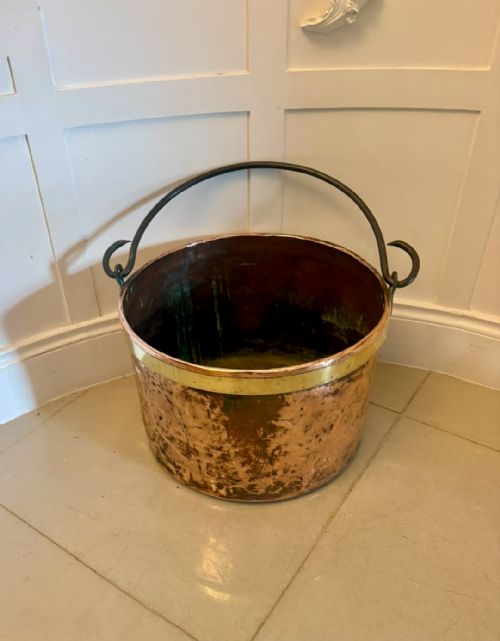
- A deep container used for holding and transporting solid fuel to a fireplace. They frequently incorporate sturdy swing handles.
- Dinanderie
- Objects made of beaten brass or other copper alloys, named after the Belgian town of Dinant. This term covers various medieval and later hollowware forms.
- Handbeaten
- A descriptive term for metal surfaces shaped or textured manually with a hammer. This process leaves characteristic indentations across the exterior.
Hammered Brass Vessel: Frequently Asked Questions
What is a hammered brass vessel used for?
These vessels served various practical domestic functions ranging from holding coal and water to cooking food and displaying plants.
Today, collectors repurpose them as planters, log bins, or decorative interior pieces that retain their original utilitarian character.
How do I date a brass vessel?
Dating relies on stylistic clues, manufacturing techniques, and material combinations recorded across the nineteenth and early twentieth centuries.
Victorian, Arts and Crafts, and Georgian periods each show distinct preferences in form, surface treatment, and handle construction.
Are copper and brass combined on these pieces?
Many items integrate both brass and copper within the same body, often using one metal for the main vessel and the contrasting metal for rims or handles.
This mixed-metal approach appears frequently in nineteenth-century and Arts and Crafts hollowware.
How should I clean a brass vessel?
Maintenance depends on whether you prefer to preserve the aged patina or polish the metal to a bright finish.
Gentle washing with warm soapy water removes dust and dirt without stripping the historical surface character accumulated over generations.