




Hallway Umbrella Container
A hallway umbrella container keeps wet weather gear in order, combining functional metal or timber construction with period character for the entrance.
Hallway Umbrella Container
A hallway umbrella container serves as a dedicated vessel for walking sticks and wet gear upon entering the home. These pieces appear most frequently from the Victorian and Edwardian periods, running through the early twentieth century.
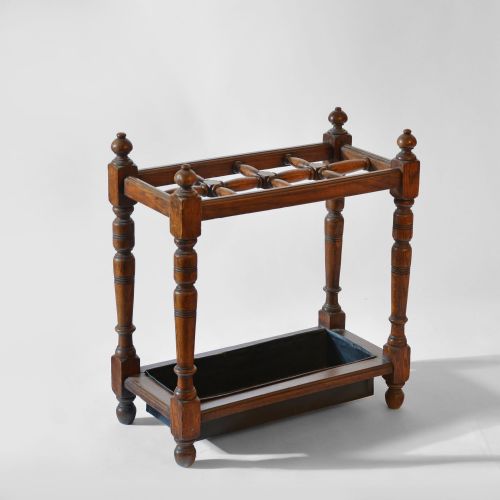
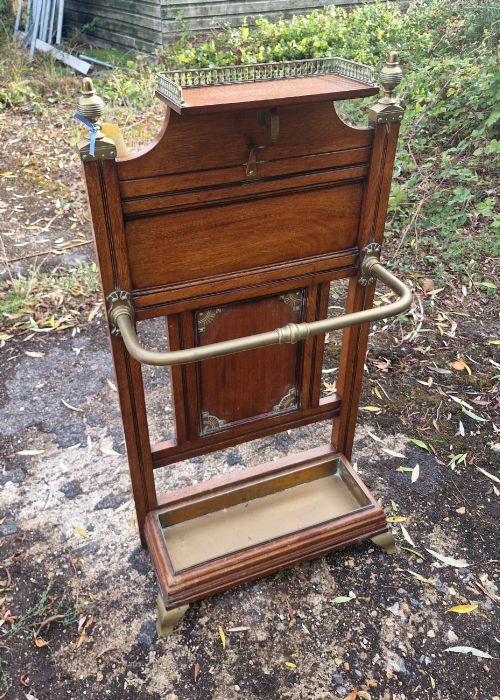
The selection here encompasses several distinct forms, including umbrella stands, stick stands, and combined umbrella and stick stands. Materials range from solid timber barrels to metal frames and glazed ceramics.
Materials and construction methods
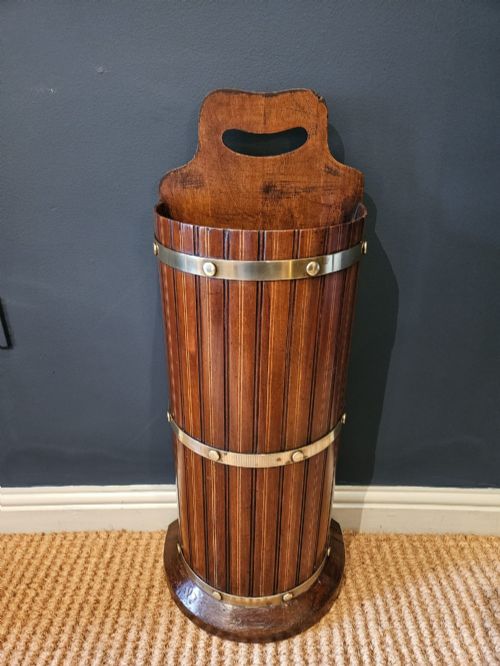
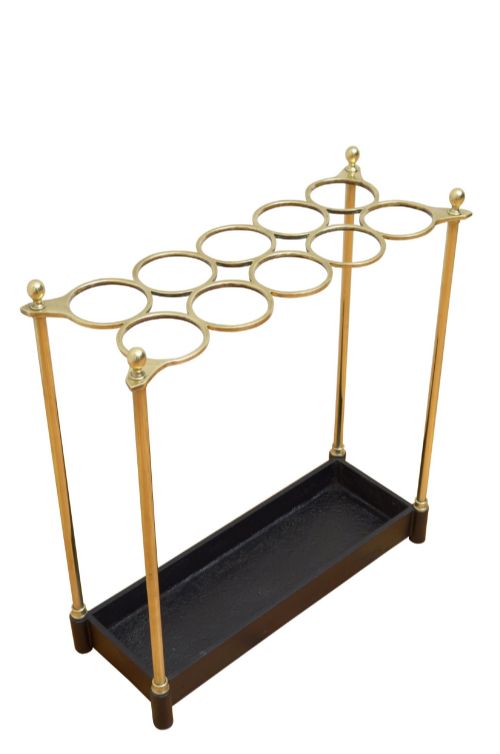
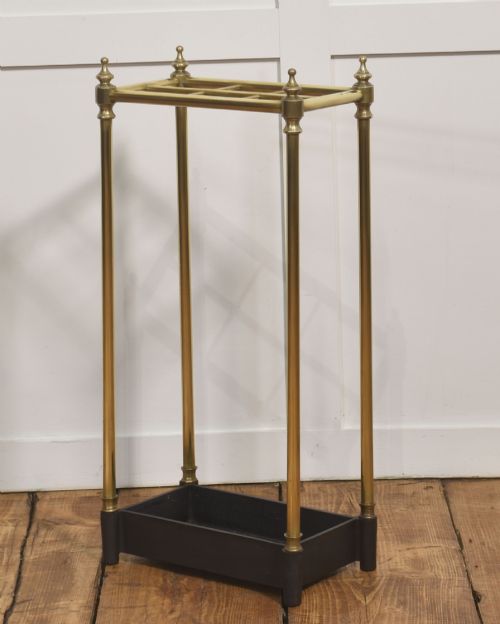
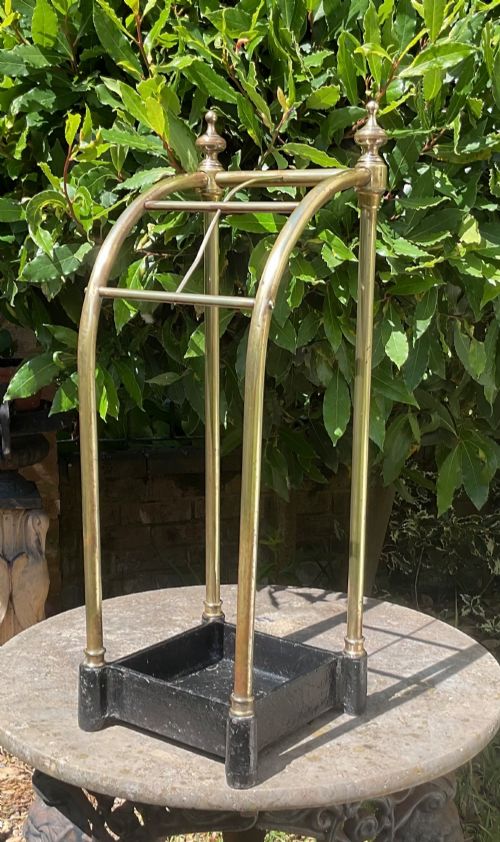
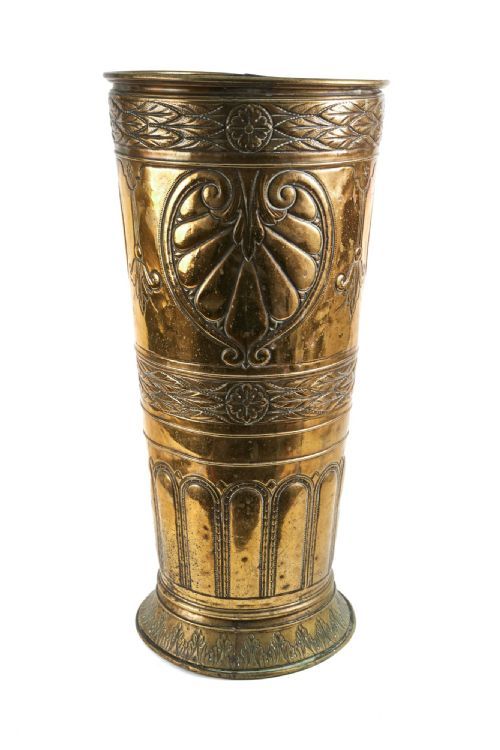
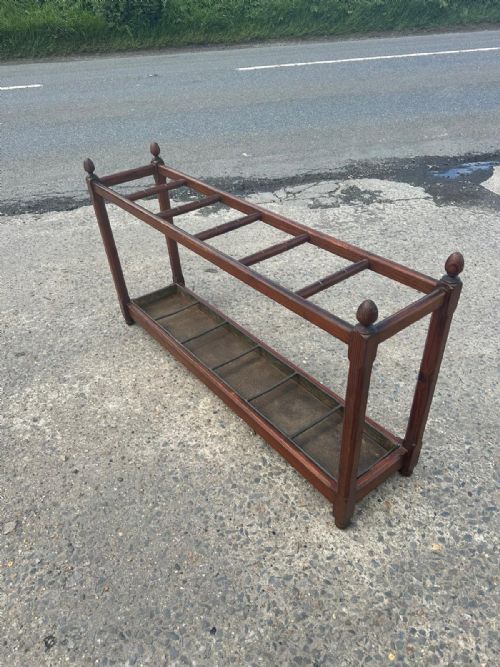
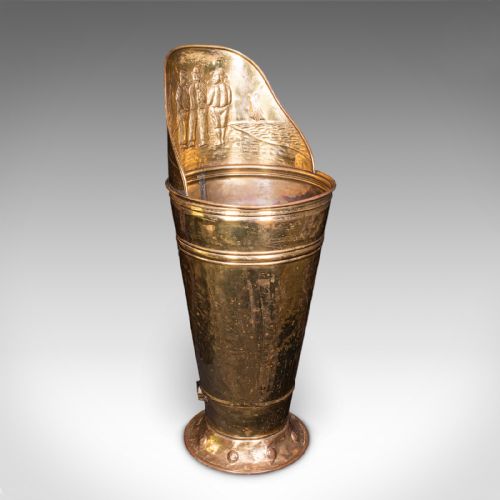
Metal examples utilise brass, copper, and cast iron, often shaped into demi-lune designs or fitted with decorative ball finials. Brass banding frequently secures wooden stave bodies.
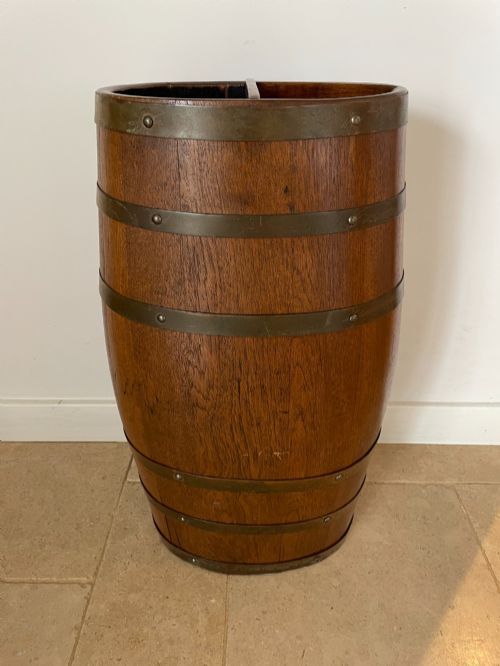
Timber construction relies on oak, pitch pine, and mahogany, sometimes employing coopered barrel techniques or barley twist turnings. Earthenware and glazed ceramic bodies provide heavy, waterproof vessels.
Some nineteenth-century halls relied on coopered oak barrels that previously held ale, hastily repurposed to catch muddy riding crops and sodden brollies.
Distinctions in construction and finish
The distinction between standard utility items and finer examples rests on the quality of materials and decorative ambition. Pierced brass work, detailed turnings, and substantial metal castings separate ambitious examples from plain containers.
Original construction details, such as tight coopered staves, secure brass binding, and well-preserved ceramic glazes, determine the structural integrity and visual presence of each piece.
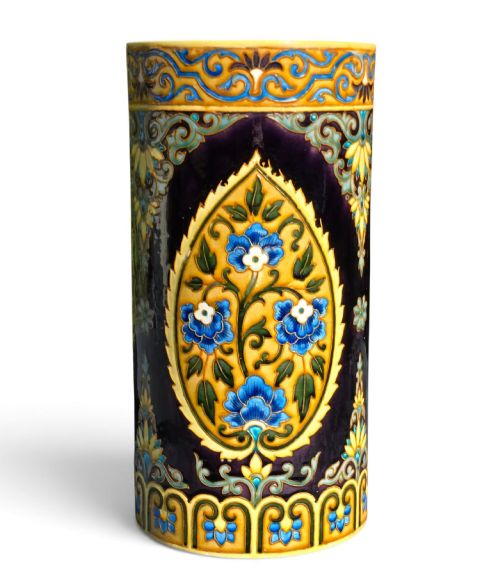
Théodore Deck
The Hallway Umbrella Container Glossary
- Demi-lune
- A half-moon shape designed to sit flush against a hallway wall. This profile saves floor space while holding multiple sticks and umbrellas.
- Coopered
- Built from wooden staves bound together with metal hoops, much like a traditional barrel. This method ensures waterproof strength in timber vessels.
- Ball finials
- Spherical decorative terminals placed atop metal frames or upright supports. They provide a neat finish to brass and iron assemblies.
- Iznik-Revival
- A nineteenth-century decorative style imitating traditional Turkish Iznik pottery. Pieces featuring this style display colourful, intricate ceramic glazes.
- Pitch pine
- A resinous pine timber utilised in nineteenth-century country house furniture. It offers durability and a distinct grain pattern.
Hallway Umbrella Container: Frequently Asked Questions
Where should I place a hallway umbrella container?
Position the container near the main entrance where wet gear is deposited upon entering the house. This keeps hallways tidy and protects interior flooring from dripping water.
Ensure adequate clearance around the piece so that longer walking sticks and umbrellas can be retrieved easily without disturbing nearby furniture.
How do I protect the floor from moisture?
Many period umbrella containers feature internal metal drip pans or waterproof ceramic liners designed to catch runoff. Check that these liners remain intact before placing the container on sensitive wooden floors.
For wooden or coopered barrel designs lacking removable trays, placing a small modern saucer inside the base prevents dampness from affecting the timber.
How do I tell Victorian from Edwardian stands?
Victorian examples often display heavier ornamentation, including pierced brass, cast iron framework, and darker mahogany or oak timbers. They reflect a taste for substantial, decorative hallway furnishings.
Edwardian and later pieces frequently adopt lighter forms, such as demi-lune brass frames or simpler oak barrels, aligning with a shift towards brighter interior spaces.
Can these containers hold heavy walking sticks?
Solid timber coopered barrels and heavy cast iron or brass stands provide the necessary weight and stability for heavy walking sticks and country pursuits. Their robust construction prevents tipping when items are placed inside.
Lighter metal wire or sheet copper versions suit standard umbrellas but require careful placement when loaded with dense wooden sticks.