




Hallway Stick Container
A hallway stick container keeps wet umbrellas and walking canes in order while setting the tone of an entrance hall.
Hallway Stick Container
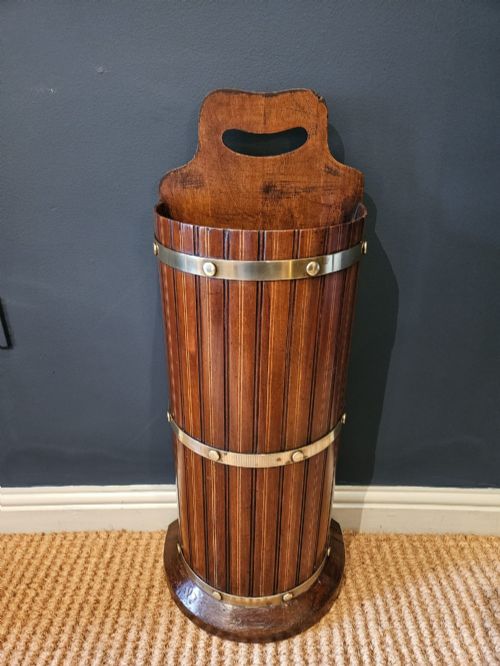
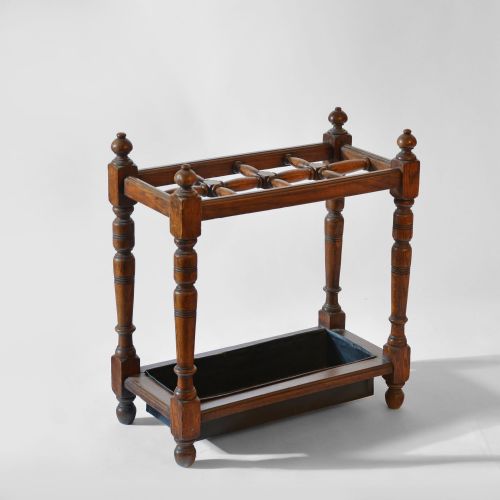
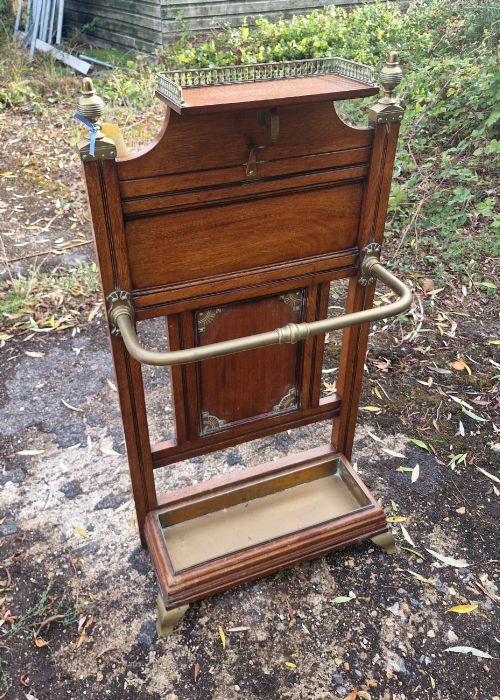
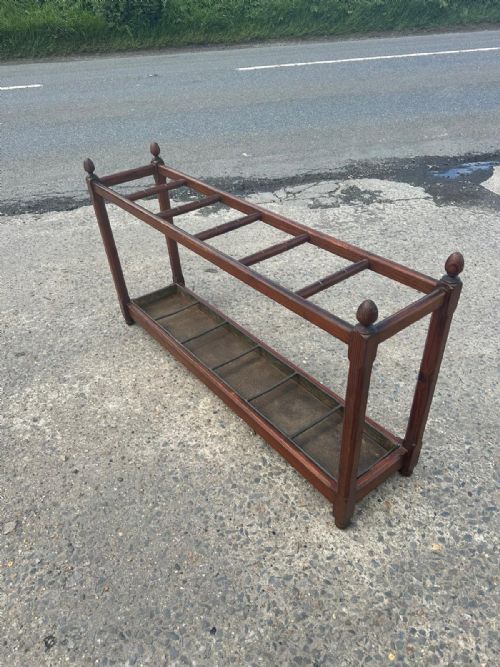
A hallway stick container serves as a practical vessel for umbrellas and walking sticks, appearing in forms such as umbrella stands, stick stands, and combined umbrella and stick stands. These pieces range from compact demi-lune designs to substantial barrels suited for country houses.
Most examples found here date from the nineteenth and early twentieth centuries, spanning the Victorian and Edwardian eras through to the 1930s. Buyers regularly encounter sturdy oak and mahogany structures alongside heavy metal receptacles.
Originating to manage wet weather gear in bustling domestic halls, these objects combine utility with decorative presence. They sit directly on the floor near an entrance, often incorporating drip trays or heavy bases to protect flooring.
Materials and construction methods
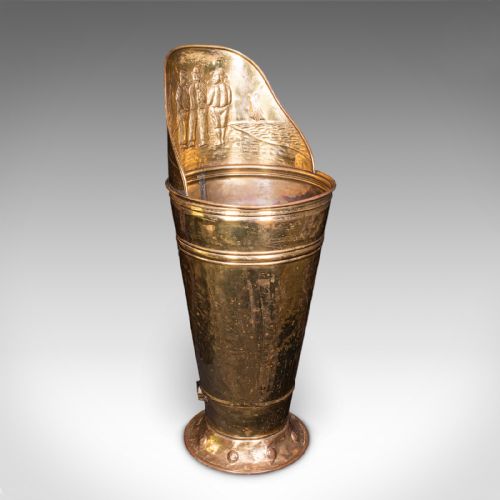
Makers utilised a combination of timber, metal, and ceramic to build these containers. Oak and mahogany frequently appear as solid wood, coopered staves bound with brass, or pitch pine, while metals include cast iron, brass, copper, and general metalwork.
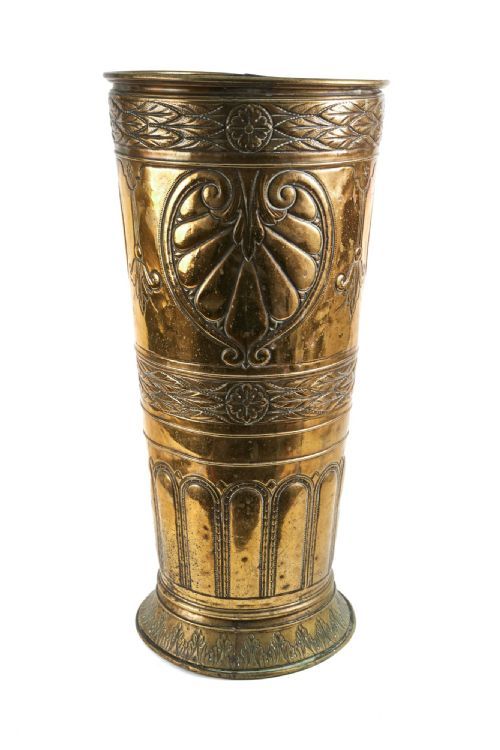
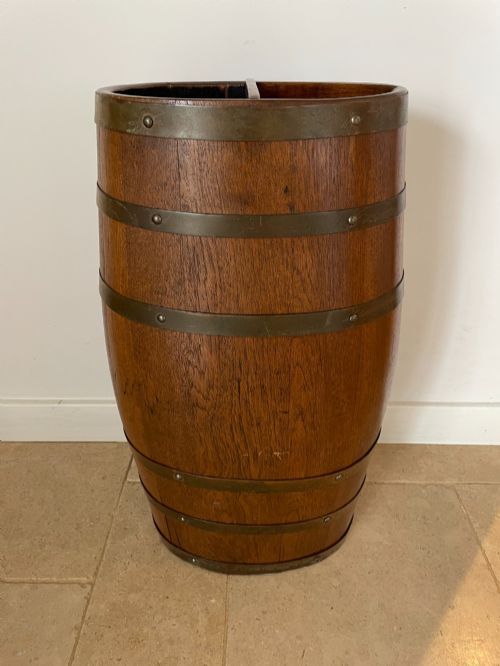
Coopered wooden barrels rely on tight stave construction secured by brass bands or hoops. Metal versions employ cast iron for heavy weighted bases alongside spun or pierced brass sheets for the main body.
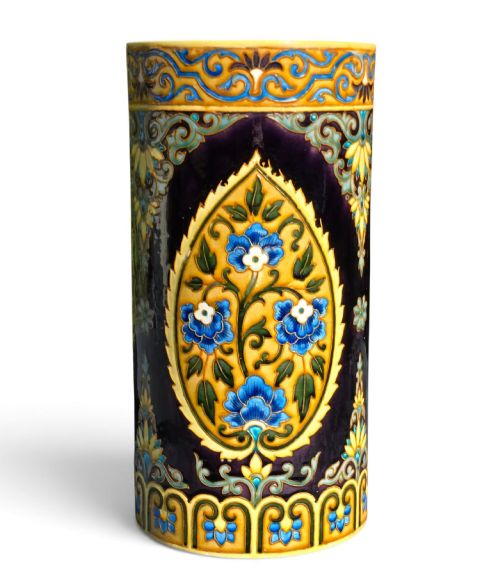
Ceramic components involve glazed earthenware, including Iznik-revival styles, which introduce colourful decorative surfaces to the metal or wooden frameworks. Details such as ball finials and barley twist turnings complete the construction.
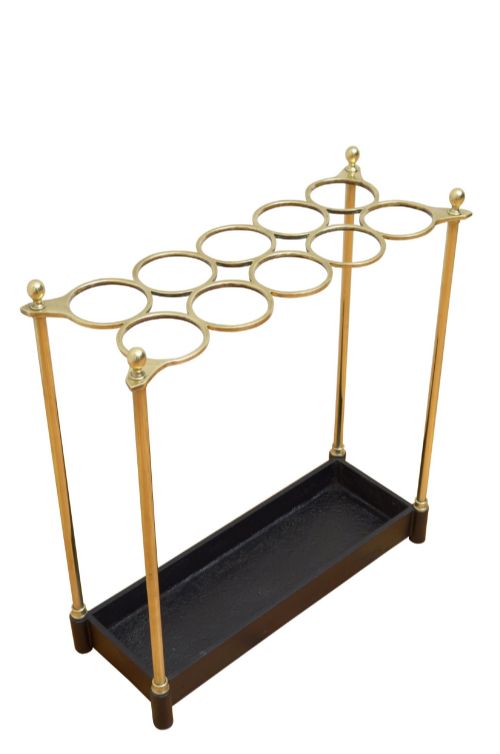
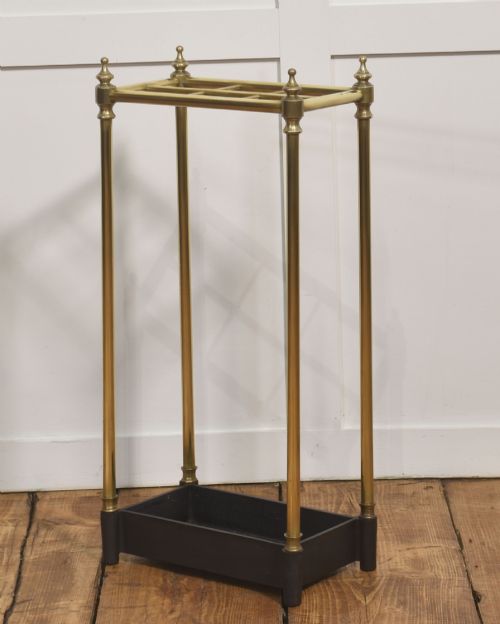
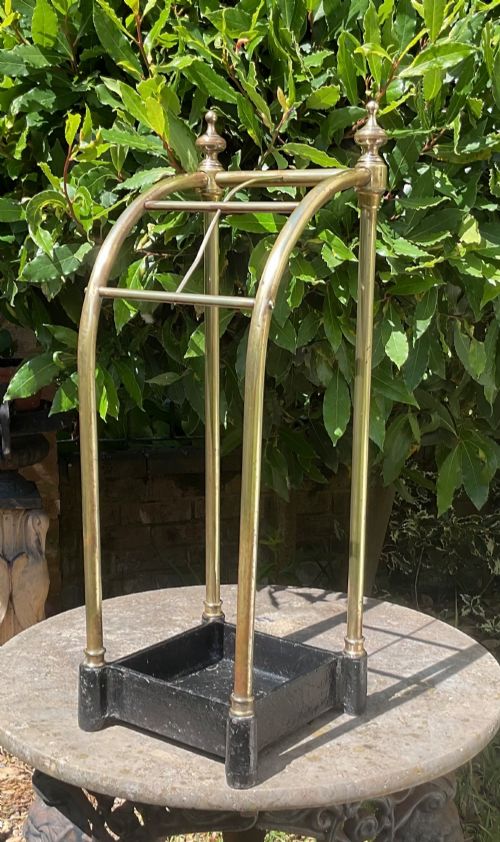
Some stands wear heavy decorative ball finials atop their brass frames, ready to steady generations of rain-soaked arrivals.
Qualities of distinction
Quality rests upon the integrity of the materials and the crispness of the decorative work, such as pierced brass patterns or well-turned wooden staves. Finer pieces demonstrate robust joinery and substantial metal thickness that withstands daily domestic use.
The choice of materials dictates the character of the object, with coopered oak barrels and glazed ceramic bodies representing distinct stylistic ambitions compared to utilitarian cast iron. Pierced metalwork and decorative finials elevate standard forms into notable decorative items.
Théodore Deck
The Hallway Stick Container Glossary
- Demi-lune
- A half-moon shape allowing the stand to sit flush against a hallway wall. This profile maximises floor space in narrow corridors.
- Coopered
- Built from vertical wooden staves bound together by metal hoops, much like a traditional barrel. This method suits liquid-resistant containers.
- Iznik-revival
- A nineteenth-century stylistic movement reproducing the vibrant ceramic glazing and motifs of Ottoman Turkey. Such ceramics add striking colour to hallway furniture.
- Barley twist
- A type of turned woodwork resembling a spiral rope. It appears on the upright supports of wooden stands.
- Pierced brass
- Metal sheeting perforated with decorative cut-out patterns. This technique lightens the visual weight of the brass body.
Hallway Stick Container: Frequently Asked Questions
Where should a stick stand go?
Place the container immediately beside the front door or in the main entrance hall where coats and hats hang. This positioning catches dripping water before it reaches interior rooms.
Ensure there is adequate clearance around the stand so household members can deposit or retrieve walking sticks and umbrellas without obstruction.
How do I protect the floor underneath?
Many antique stands include internal metal liners or original drip trays designed to catch rainwater. Check that a waterproof tray remains inside the base before placing the container on sensitive timber or carpet.
Empty accumulated moisture from the liner regularly to prevent dampness from affecting both the floor and the base of the stand itself.
Can these hold heavy walking sticks?
Sturdy models constructed from cast iron, heavy brass, or coopered oak easily support heavy walking canes and sturdy country sticks. The weight of the base prevents the container from tipping when loaded.
Lighter metal or pierced brass versions suit standard umbrellas and slender folding canes rather than weighty carved hiking staffs.
How do I date a stick stand?
Examine the materials and manufacturing techniques, such as coopered staves, cast iron components, or specific stylistic markers like Aesthetic Movement or Art Deco designs. Victorian and Edwardian examples often display distinct decorative brass work or pitch pine construction.
Consult the recorded period attributes of the piece, noting whether construction methods align with nineteenth or early twentieth-century workshop practices.