


Hallway Mirror Table
A hallway mirror table combines a console and a looking glass to anchor an entrance hall with functional elegance.
Hallway Mirror Table
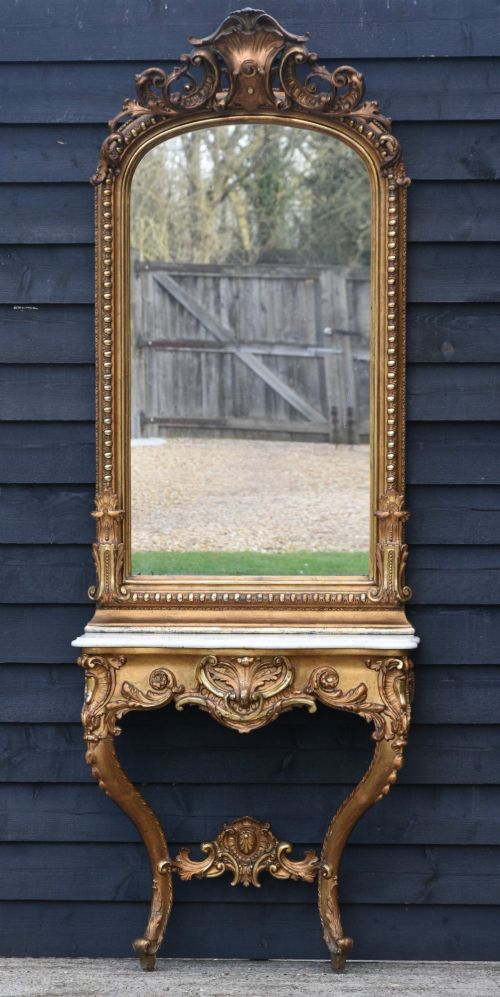
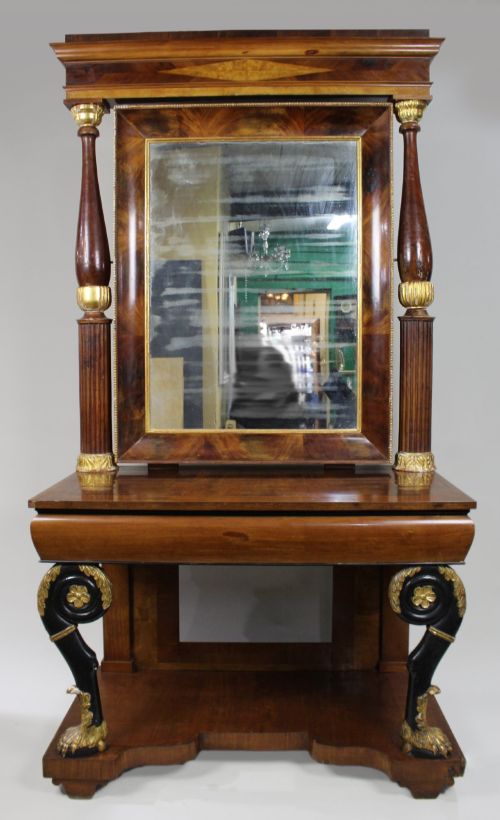
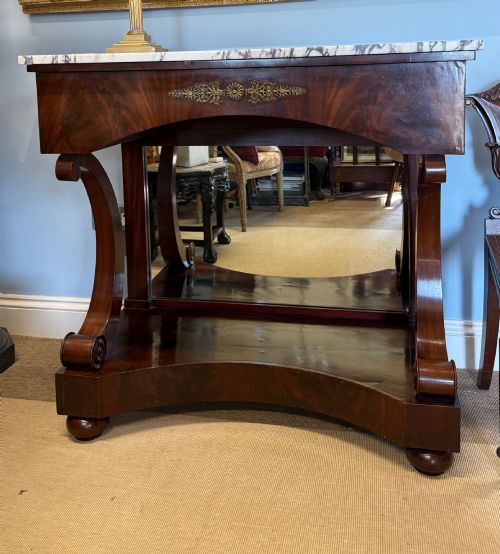
A hallway mirror table groups console tables, pier mirrors, and hall stands designed to furnish entrance spaces from the Regency, Victorian, and Edwardian periods.
You will most frequently meet nineteenth-century mahogany, walnut, and rosewood console tables paired with matching mirror backs or separate wall-hanging pier glasses.
The form also encompasses architectural hall stands featuring integrated mirror glass, marble shelves, and timber frames dating across the nineteenth and early twentieth centuries.
Materials and Construction
Cabinet makers utilised dense hardwoods like mahogany, rosewood, walnut, and oak as the foundational structures, often applying burr veneers or parcel gilt highlights.
Heavy slab marble tops in white or coloured varieties provide durable surfaces, while carved giltwood and ormolu mountings decorate the more elaborate French and English frames.
Silvered mirror glass, frequently original with subtle foxing, is set into carved wood surrounds or integrated directly into the backs of console tables and hall stands.
French Revival and Victorian aesthetics dominate the stylistic range, alongside distinct Biedermeier and Arts and Crafts examples.
Judging Quality and Design
The refinement of the carving and the depth of the gilding separate standard production from exceptional pieces, particularly in the treatment of Rococo, Empire, and French Revival motifs.
Integration defines the better console table and mirror sets, where the timber grain, scale, and decorative vocabulary of the table match the accompanying glass exactly.
The selection of cabinet timbers, such as figured mahogany or master birch, and the thickness of the polished marble slab indicate the original workshop's standing.
The Hallway Mirror Table Glossary
- Console table
- A table designed to be fixed against a wall, frequently supported by two front legs and secured by wall brackets.
- Pier mirror
- A tall looking glass specifically made to hang on the wall space between windows, often placed directly above a console table.
- Ormolu
- Gilt bronze ornamentation applied to furniture, cast and chased to produce crisp decorative mounts.
- Giltwood
- Wood that has been coated with a thin layer of gold leaf over a prepared gesso ground.
- Biedermeier
- A central European style of furniture from the first half of the nineteenth century focusing on utilitarian comfort and clean lines utilising native timbers.
Hallway Mirror Table: Frequently Asked Questions
How do I style a hallway mirror table?
Position the piece centrally in an entrance hall to create an immediate focal point upon entering the home. The surface accommodates small daily items whilst the mirror reflects light into narrow corridors.
Keep the arrangement balanced by pairing the console with slender decorative objects that do not obscure the glass. The proportions work best when the table width complements the scale of the hallway wall.
Were console tables and mirrors always sold together?
Many nineteenth-century examples were conceived as unified commissions where the workshop designed the table and pier mirror as a matched suite. Other combinations developed later when dealers or owners paired complementary frames and tables from the same period.
Examining the fixings, timber ageing, and stylistic details helps determine whether the pairing is original. Both integrated sets and thoughtful combinations appear frequently across these listings.
What is the difference between a hall stand and a console table?
A hall stand is a vertical piece of furniture incorporating coat hooks, umbrella wells, and an integrated mirror, designed for heavy practical use in a Victorian or Edwardian entrance.
A console table focuses primarily on a display surface and a wall-mounted or attached looking glass, offering a lighter decorative presence. Both forms serve the entrance hall but utilise floor and wall space differently.
How do I care for antique marble and giltwood?
Dust marble surfaces regularly with a soft cloth and wipe spills immediately to prevent staining on porous stone. Avoid acidic cleaners that etch the polished surface.
Dust giltwood gently with a dry, soft brush to protect the delicate gold leaf application from flaking. Keep these pieces away from direct heat sources and strong sunlight.