


Hallway Mirror Console
These hallway mirror console pieces combine a reflective glass surface with a sturdy table base, offering both functional utility and decorative presence.
Hallway Mirror Console
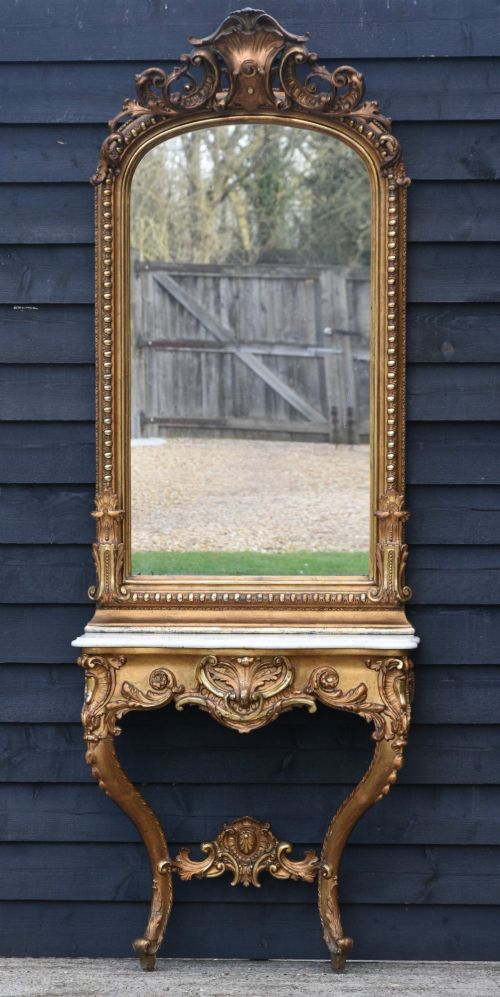
A hallway mirror console brings together a supportive table base and a reflective glass surface, designed specifically to furnish entrance spaces and reception areas. Buyers searching for a hallway mirror console encounter various forms, most commonly paired console tables and pier mirrors, alongside integrated hall stands.
The objects span multiple periods, with nineteenth-century examples and Victorian designs appearing frequently alongside Regency, Edwardian, and early twentieth-century pieces. These items serve to anchor an entryway, providing a surface for small objects while reflecting light into narrow spaces.
Materials and construction methods
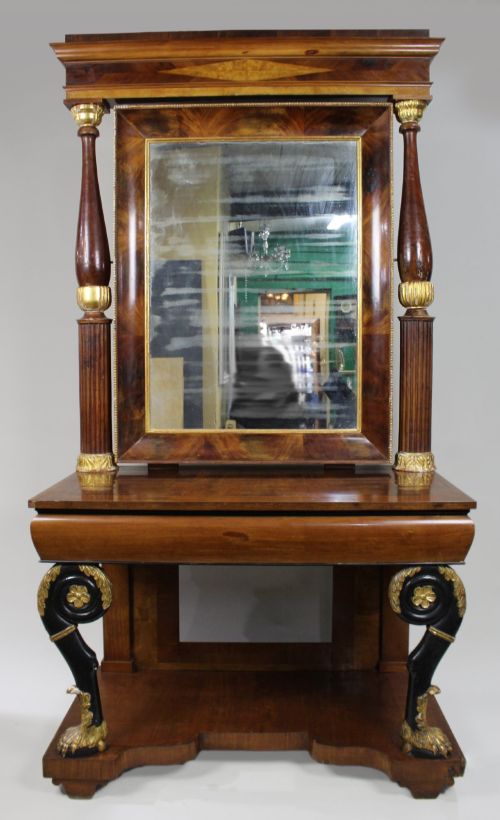
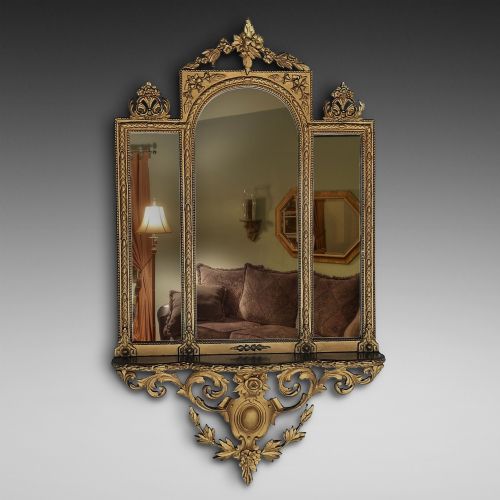
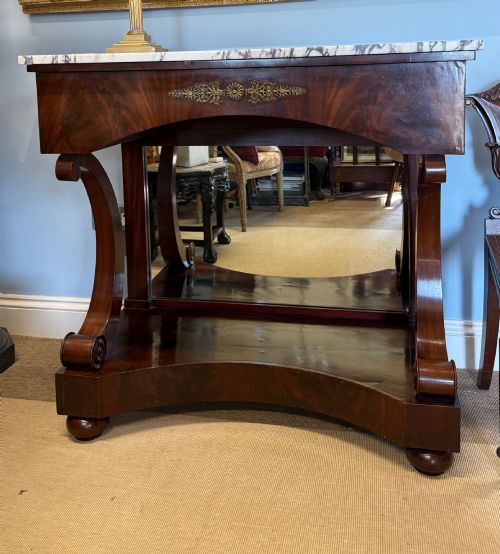
Cabinet makers utilised dense hardwoods such as mahogany, oak, rosewood, and walnut for the console tables and hall stands, often incorporating marble for the table tops. Giltwood and brass feature prominently in the construction of the frames and decorative elements surrounding the glass.
Mirror glass forms the central visual component, fitted into carved wooden frames or integrated into the backboards of console tables and tall hall stands. Joinery methods reflect the period of manufacture, from nineteenth-century hand carving to early twentieth-century construction techniques.
Listings demonstrate a strong presence of nineteenth-century pieces, alongside Victorian, Regency, and early twentieth-century examples utilising mahogany, marble, and giltwood.
Factors influencing quality
Quality separates pieces through the selection of primary timbers, such as figured mahogany and burr walnut, versus simpler domestic woods like oak. The depth and precision of the carved decoration on giltwood frames and wooden bases also dictate the standing of an individual piece.
The integration between the console table and its matching mirror indicates the skill of the original workshop, particularly in paired sets where proportions must align precisely. Furthermore, the incorporation of high-grade marble tops and original mirror glass elevates the overall execution.
The Hallway Mirror Console Glossary
- Console table
- A table designed to stand against a wall, frequently supported by brackets or legs at the front.
- Pier mirror
- A tall wall mirror specifically designed to hang on the pier of wall between windows, often paired with a console table beneath.
- Hall stand
- A piece of hallway furniture incorporating a mirror, coat hooks, and a shelf or umbrella stand.
- Giltwood
- Wood that has been coated with gold leaf or a gold-coloured metallic finish.
- Trumeau
- A decorative wall mirror or panel featuring painted or carved decoration within the frame.
Hallway Mirror Console: Frequently Asked Questions
Where should I place a hallway mirror console?
These pieces suit entrance halls and reception areas where wall space permits a table and hanging glass.
Positioning the console opposite or adjacent to a light source maximises the reflective qualities of the mirror in narrow spaces.
What is a pier mirror and console set?
A pier mirror and console set consists of a tall wall-mounted mirror designed to sit directly above a matching table.
This combination was traditionally utilised in nineteenth-century drawing rooms and hallways to create a sense of expanded space.
How do I identify a Victorian hall stand?
Victorian hall stands typically combine timber construction with integrated mirror glass, umbrella compartments, and clothes hooks.
Many examples from this period also incorporate marble shelves or inserts into the wooden base structure.
What woods were used for these consoles?
Cabinet makers constructed these tables and stands using hardwoods such as mahogany, walnut, rosewood, and oak.
Selected pieces also feature gilded wood frames or decorative veneers like maserbirch and burr walnut.