

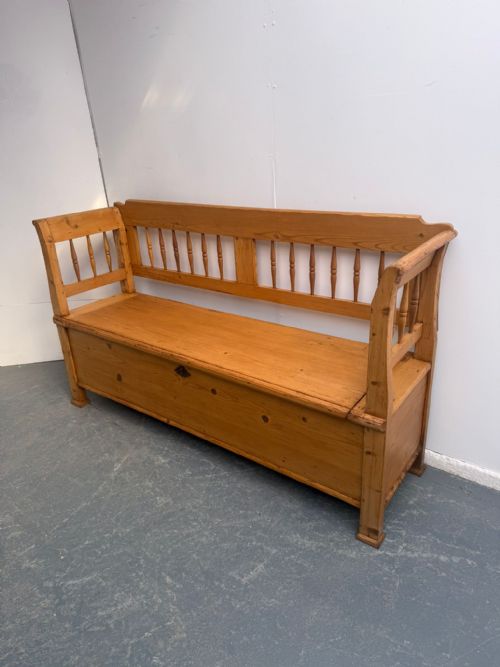
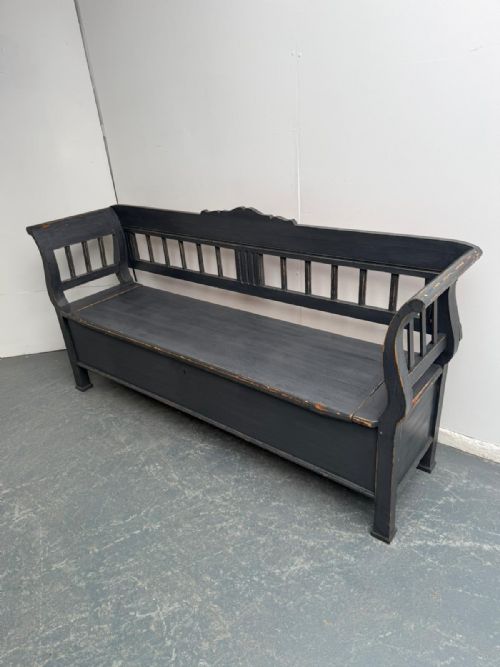

Hallway Box Bench
A hallway box bench combines seating with concealed storage, offering a practical utility that suits narrow entrance spaces.
Hallway Box Bench
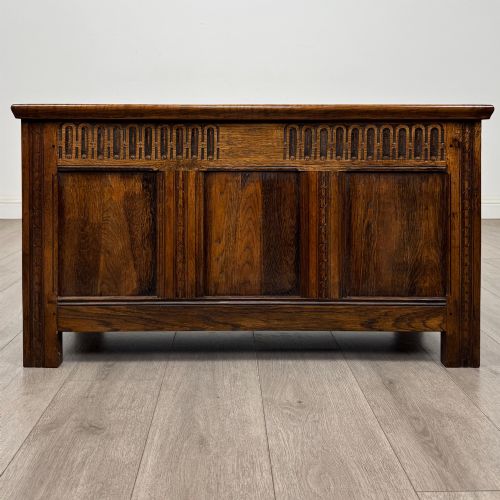
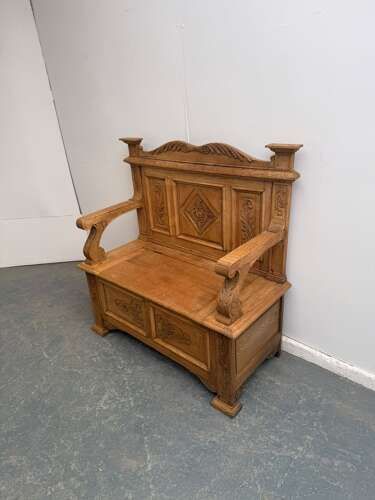
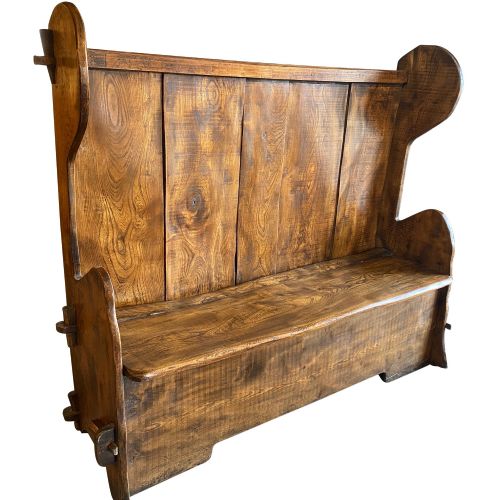
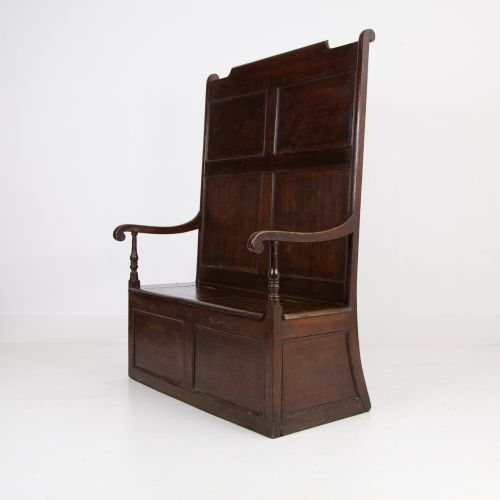
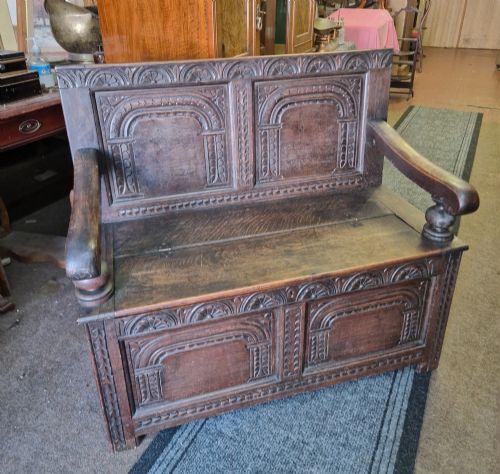
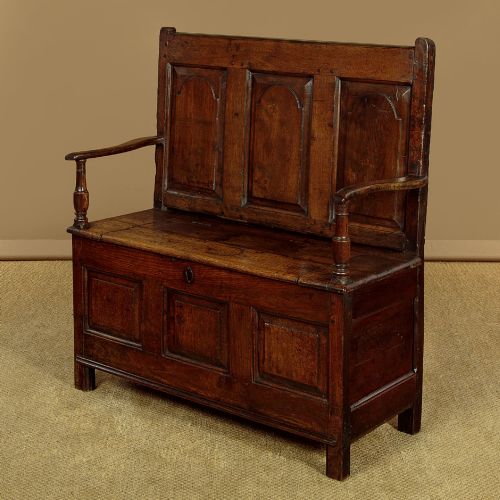
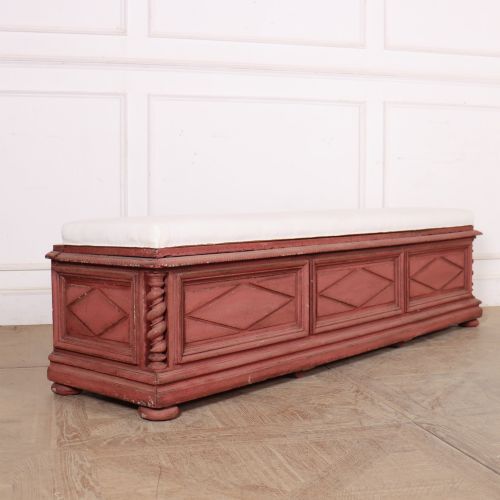
When you search for a hallway box bench, you encounter seating furniture designed with integrated storage compartments accessible beneath the lift-up seat. These pieces frequently appear under various historical terms, including settles, hall seats, and box settles.
The selections span multiple eras, with Victorian and Georgian pieces forming a substantial portion of the available items. Many examples originate from country workshops, utilising local timbers such as oak, pine, elm, and mahogany.
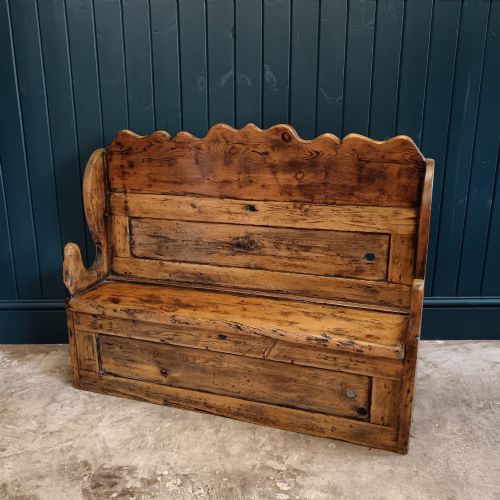
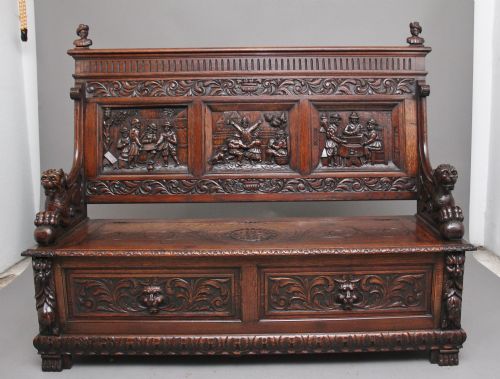
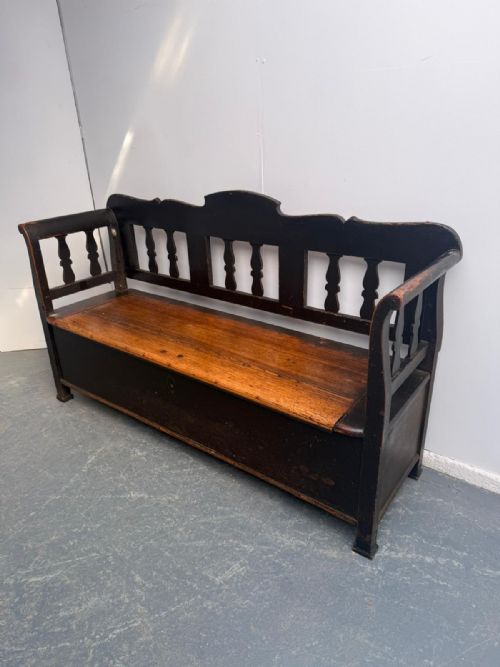
Forms range from high-backed oak seating originating in the seventeenth and eighteenth centuries to longer pine examples from Hungary and Wales featuring original painted finishes. Smaller variations include monks benches and blanket chests adapted for hallway use.
Materials and Construction Methods
Makers constructed these benches primarily from solid hardwoods and softwoods, choosing sturdy timbers like oak, elm, and pine to withstand daily domestic use. Panels were frequently joined using traditional framing techniques, while lids on the storage compartments relied on simple hinges or pivot mechanisms.
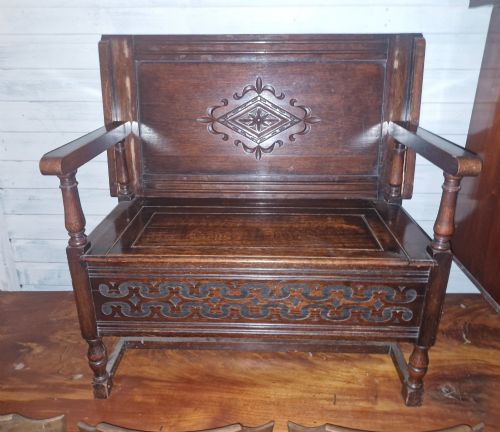
Surface treatments vary significantly between examples, ranging from waxed natural grain finishes that highlight the oak or mahogany to original painted surfaces in grey, cream, blue, and black. Decorative details include carved panels, spindle galleries, and upholstered elements like leatherette.
Recorded materials span traditional British hardwoods like oak and elm alongside softer timbers finished with period paint layers.
Factors Determining Quality
The distinction between standard examples and finer pieces often rests on the choice of timber and the complexity of the carpentry. Solid, dense hardwoods like oak and figured mahogany display a permanence that contrasts with simpler pine utility items.
Originality of surface finish greatly influences the character of each piece. Surviving period paintwork or deep, undisturbed waxed surfaces demonstrate how the furniture has aged over centuries of domestic service.
The Hallway Box Bench Glossary
- Settle
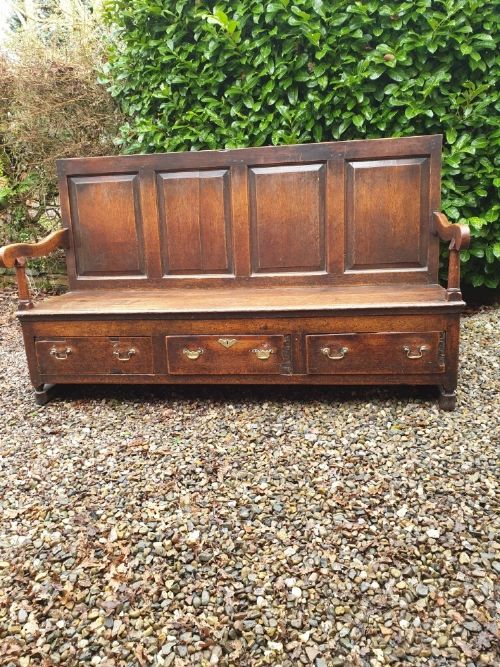
- A wooden bench with a high back, solid arms, and a box seat compartment underneath. This form provided shelter from drafts in older domestic interiors.
- Monks Bench
- A multifunctional furniture item featuring a hinged back that folds down to convert the seat into a table. These pieces often incorporate a box storage base.
- Coffer
- A large wooden chest used for storage, occasionally fitted with a seat or backrest for secondary use in a hallway. They typically feature heavy panel construction.
- Mule Chest
- A chest featuring one or more drawers beneath the main storage compartment. They bridge the design gap between traditional coffers and modern chests of drawers.
- Waxed Finish
- A traditional surface treatment applied to timber to nourish the wood and produce a soft sheen. This method preserves the natural grain without forming a glossy modern film.
Hallway Box Bench: Frequently Asked Questions
What is a hallway box bench used for?
These benches provide a dual function of seating and enclosed storage for entrance halls and corridors. The lift-up seat conceals internal space suitable for boots, blankets, and everyday items.
Historically, the high backs on many styles helped block cold drafts from entering doorways while offering a sturdy seat for removing footwear.
How do I identify a Georgian box bench?
Georgian examples typically feature heavy solid oak or elm construction with pegged joints and fielded panels. The proportions tend to reflect utilitarian country craftsmanship from the eighteenth century.
Detailing on these pieces remains restrained, focusing on functional robustness and the natural ageing of the hardwood rather than heavy carved ornamentation.
Are painted pine benches original?
Many pine benches from regions like Hungary, Wales, and Sweden retain old or original painted finishes in colours such as grey, cream, blue, or black. Examining the surface wear helps determine the age of the paint.
Original painted surfaces show natural fading, chipping, and patina consistent with decades of household use rather than uniform modern application.
Where should I place a box settle?
A box settle fits well in entrance halls, boot rooms, and wide corridors where floor space accommodates the depth of the seat and the rising lid. Measuring the clearance for the opening top is essential.
Pairing the bench with simple wall hooks or a hat and glove stand creates a cohesive entryway arrangement using period furniture.