

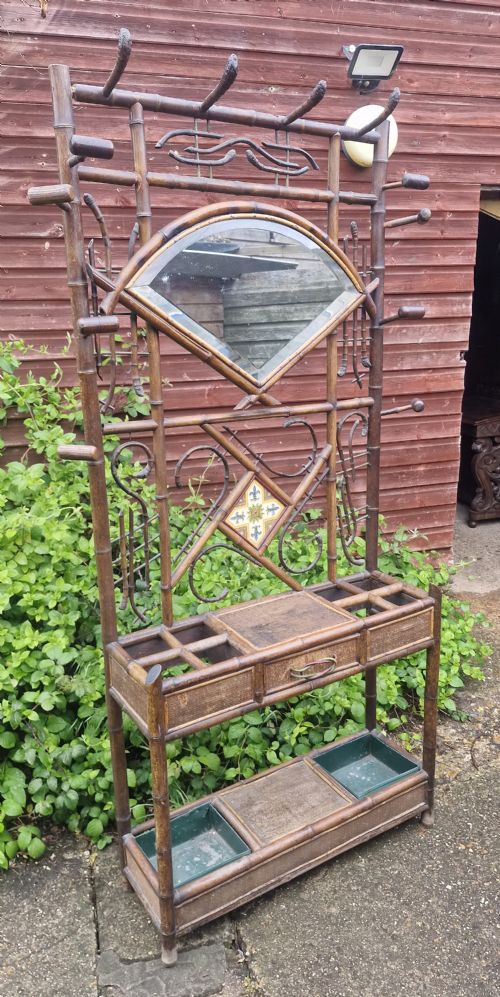


Hallstand with Mirror
A hallstand with mirror brings practical entrance storage and polished glass into the hallway, combining coat hooks, stick racks and a looking glass.
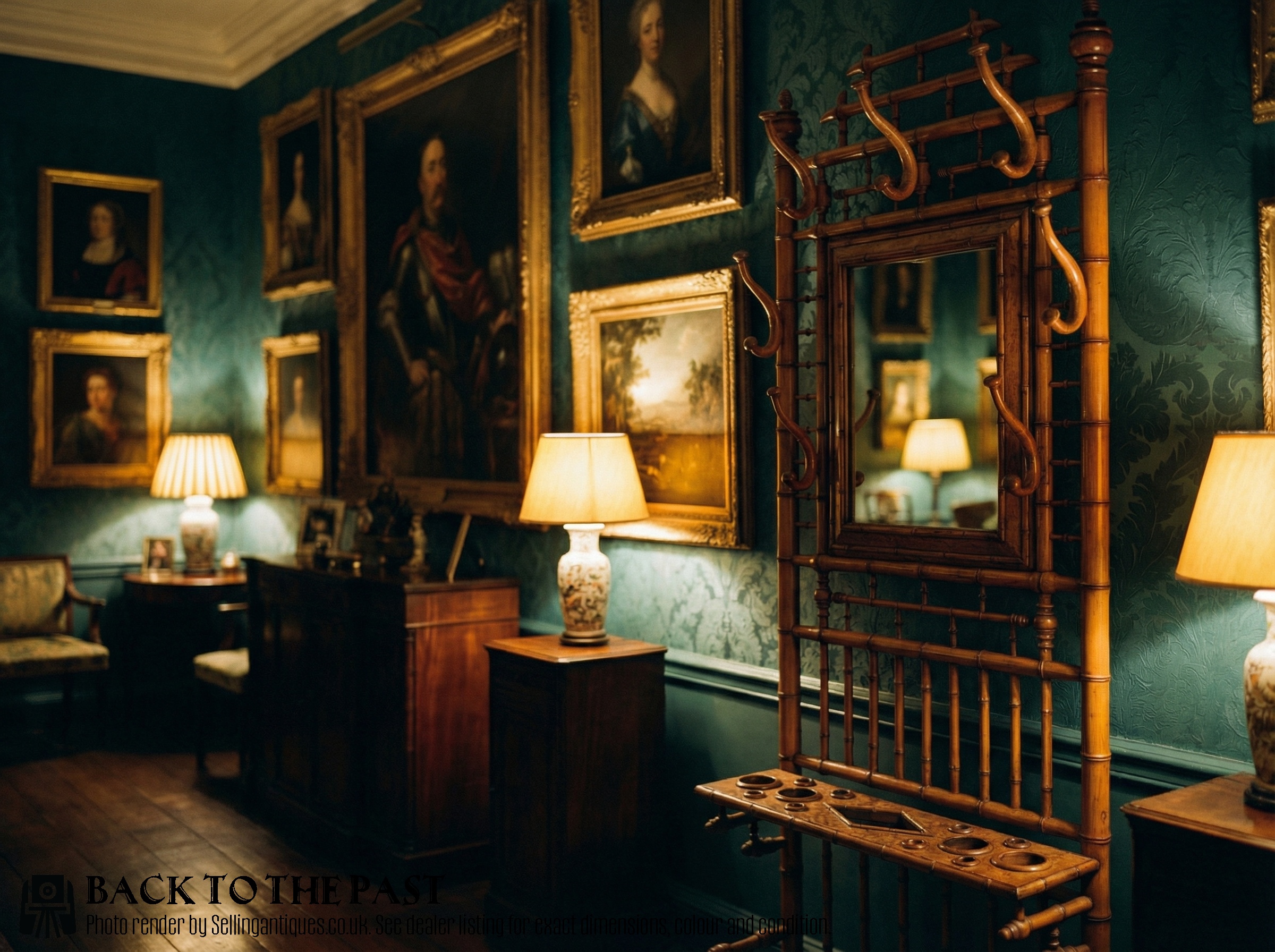
Hallstand with Mirror
A hallstand with mirror combines practical entrance furniture with a reflective glass surface for checking appearance before leaving the house. These pieces range from substantial Victorian oak and mahogany structures to lighter Edwardian designs and French cast iron examples.
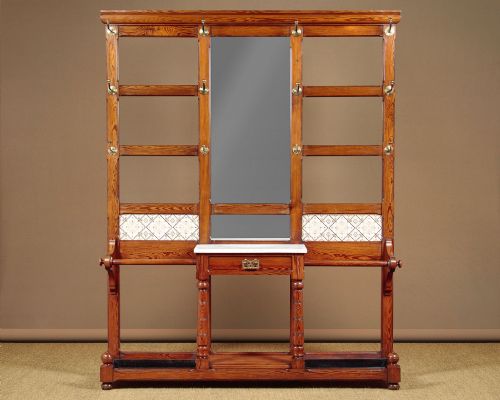
Most entries on this page date from the Victorian and Edwardian periods, stretching from around 1880 into the early twentieth century. Common materials include oak, pine, mahogany, cast iron and brass, often paired with an integrated mirror and drip trays for umbrellas.
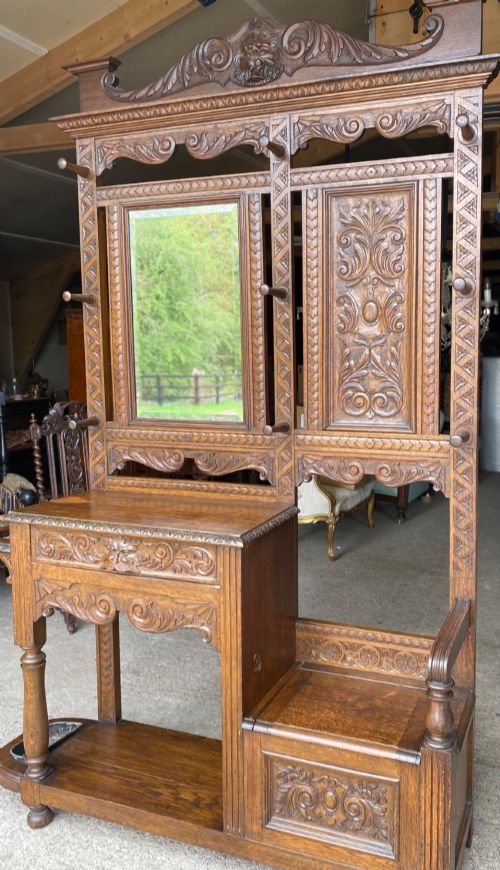
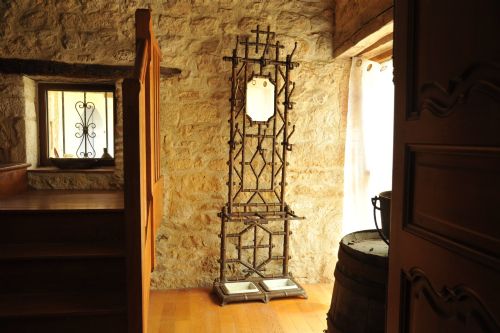
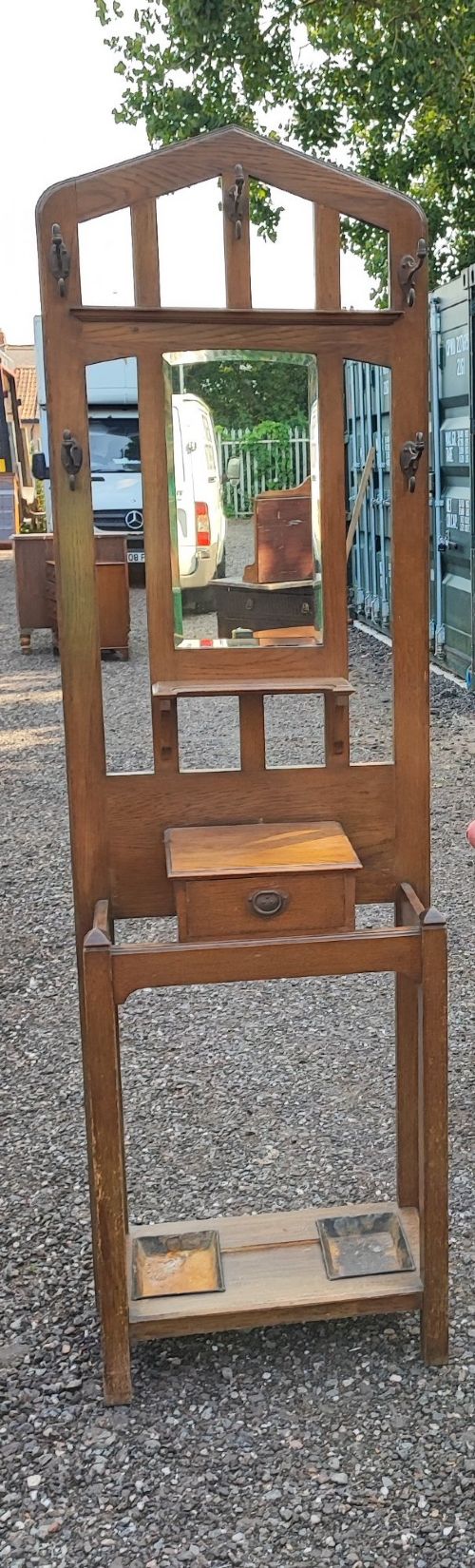
Forms vary from robust Gothic Revival and Arts and Crafts oak frames to slender faux bamboo cast iron pieces and simple wall-mounted oak hall mirrors. Buyers will encounter both grand country house furniture and more compact domestic iterations.
How they were made
Makers utilised timber such as oak, mahogany and pine for the main framework, shaping the wood with carved details and panels. Ironmongery of brass and cast iron provided robust hooks for hats and coats.
Cast iron versions relied on moulding techniques, particularly seen in faux bamboo frames and structural umbrella stands. Mirror glass was securely fitted into wooden or metal frames, accompanied by metal drip trays at the base to catch water from sticks and umbrellas.
Many a Victorian caller left their visiting card on the hallstand ledge while checking their hat in the glass.
What varies in quality
Quality rests in the selection of timber and the ambition of the carving, distinguishing heavy oak and mahogany constructions from simpler pine alternatives. Finer examples display crisply cast ironwork and well-integrated marble components.
The sophistication of the style dictates the character of the piece, moving from straightforward utilitarian joinery to expressive Arts and Crafts, Art Nouveau or Aesthetic Movement design.
Coalbrookdale
The Hallstand with Mirror Glossary
- Hallstand
- A piece of entrance furniture designed to hold coats, hats, and umbrellas, typically incorporating a mirror and hooks. These items anchor the hallway by combining multiple storage functions into a single structure.
- Faux bamboo
- Metal or wood shaped and painted to imitate the segmented stalks of natural bamboo. This decorative technique appeared frequently in nineteenth-century hall furniture and cast iron stands.
- Drip tray
- A metal tray placed at the base of a hallstand to collect water from wet umbrellas and walking sticks. It protects the surrounding floor and the lower frame of the piece.
- Gothic Revival
- A nineteenth-century design style drawing inspiration from medieval architecture and ornament. Pieces from this movement often feature pointed arches, heavy mouldings, and robust carved oak.
- Arts and Crafts
- A design movement prioritising traditional craftsmanship, visible construction, and simple forms. Oak hallstands from this tradition emphasise honest joinery and utility.
Hallstand with Mirror: Frequently Asked Questions
How were hallstands used?
Hallstands were placed in entrance halls to manage the daily comings and goings of a household. Coats and hats hung from the iron or brass hooks, while walking sticks and umbrellas stood upright in the base.
The integrated mirror allowed individuals a final glance at their appearance, and the small compartments often found on these pieces held calling cards, gloves, or keys.
How do I date a hallstand?
Dating a hallstand involves examining the primary materials, construction methods, and stylistic cues present in the piece. Victorian examples often feature heavy carved oak, mahogany, or marble inserts, while Edwardian and later pieces tend towards lighter oak and simpler lines.
Specific stylistic movements such as Art Nouveau, Arts and Crafts, or Gothic Revival provide narrower chronological windows for manufacture.
Where should I place a hallstand?
A hallstand belongs naturally in an entrance hall, vestibule, or large corridor where coats and umbrellas are dropped upon entry. Ensure there is adequate wall space and floor clearance to accommodate the depth of the base and the umbrella drip tray.
Positioning the piece near a light source enhances the utility of the mirror and highlights the carved wood or cast iron details.