


Hallmarked Silver Pedestal Dishes
Hallmarked silver pedestal dishes bring elevated form to the table, offering structured display for sweets, fruit, and potpourri.
Hallmarked Silver Pedestal Dishes
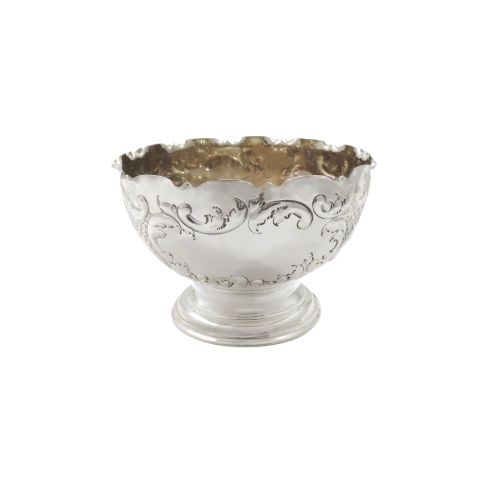
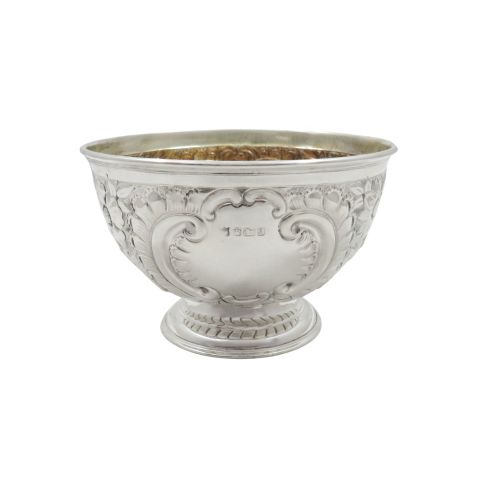
Hallmarked silver pedestal dishes encompass bowls, baskets, tazzas, and dessert dishes raised on a footed base. The selection spans the Victorian, Edwardian, and later twentieth-century periods, showing shifts in aesthetic from ornate nineteenth-century work to cleaner modernist lines.
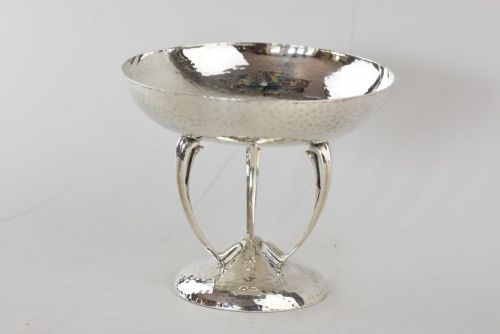
Forms range from sweet bowls and sugar baskets with swing handles to large display bowls and three-legged tazzas. Pieces from the Arts and Crafts and Art Nouveau movements appear alongside traditional Victorian and Edwardian designs.
Origins trace through English assay offices, providing secure dating via standard hallmarks stamped into the sterling silver. Buyers find both standalone sweet dishes and matched pairs complete with glass liners.
Materials and construction
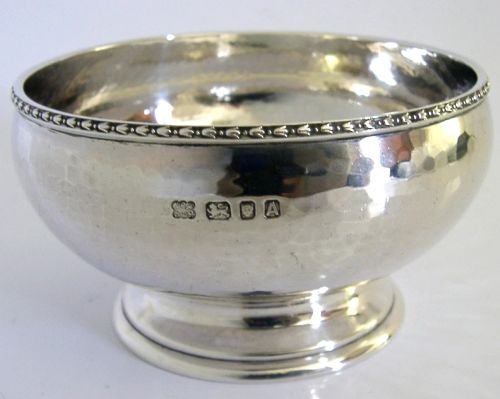
Makers shaped sterling silver using traditional silversmithing techniques, including hand-raising, spinning, and casting for the pedestal bases. Many Arts and Crafts examples display visible planished hammering on the surface, recording the physical labour of the maker's mallet.
Pierced work, repoussé decoration, and applied wire borders frequently embellish the bowls and baskets. Fitted components such as swing handles and removable cobalt or clear glass liners add functional complexity to sugar baskets and dessert dishes.
Listings feature sterling silver pieces spanning from the eighteen-seventies through to the nineteen-thirties, encompassing Victorian, Edwardian, Arts and Crafts, and Art Deco styles.
Factors of quality
Quality rests in the weight of the sterling silver, the crispness of the hallmarks, and the balance of the pedestal foot. Thicker gauge metal resists distortion and supports elaborate piercing or heavy hand-hammered texturing without sacrificing structural integrity.
The refinement of decorative details, such as hand-hammered planishing marks or delicate wirework handles, distinguishes standard production from exceptional studio output. Original fitted glass liners that remain undamaged contribute to the completeness and desirability of dessert dishes and baskets.
Goldsmiths and Silversmiths Company London·Elkington and Co·Viners
The Hallmarked Silver Pedestal Dishes Glossary
- Hallmark
- Official stamps struck into precious metals to guarantee the purity of the silver, the assay office, and the date letter. These marks allow precise historical tracking of each piece.
- Pedestal
- A raised foot or column supporting the main body of a bowl or dish. This architectural feature elevates the contents for display.
- Planished
- A surface texture created by repetitive overlapping hammer blows using a smooth-faced hammer. This technique hardens the silver while leaving a distinctive decorative pattern.
- Tazza
- A shallow bowl or saucer mounted on a stem and foot. It functions primarily as a display piece for fruit or small sweets.
- Repoussé
- Metalwork technique where the design is hammered into relief from the reverse side. It creates rich, tactile ornamentation across the bowl exterior.
Hallmarked Silver Pedestal Dishes: Frequently Asked Questions
How do I date a silver pedestal dish?
Dating relies on the set of hallmarks stamped directly into the sterling silver. These marks typically include a maker's mark, a standard fineness mark such as the lion passant, an assay office symbol, and a date letter.
Matching the date letter against official assay office tables reveals the exact year the piece was tested and certified.
What were pedestal dishes used for historically?
These elevated vessels served multiple dining and decorative purposes in domestic interiors. Smaller versions held sugar, sweetmeats, and bonbons, while larger bowls accommodated fruit or floating potpourri.
The raised pedestal format placed the contents at a convenient height for guests to reach across the dining or drawing-room table.
How should I clean antique silver?
Maintenance requires mild soapy water and a soft cloth to remove everyday dust and oils without damaging the metal. Avoid abrasive dips or harsh commercial polishes that strip away the fine surface layer and soften hand-hammered details.
Allowing a natural dark patina to settle in the recesses of engraved or hammered decoration enhances the visual depth of the piece.