



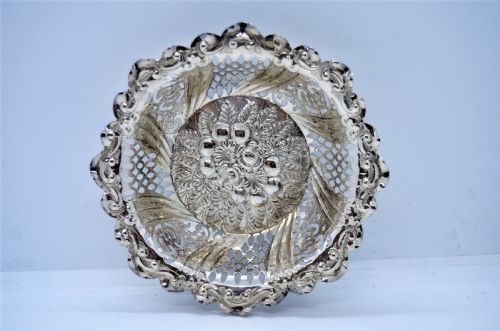


Pair Silver Bonbon Dishes
Pair silver bonbon dishes bring symmetrical sparkle to a table, offering small, delicate vessels designed for sweets and sweetmeats.
Pair Silver Bonbon Dishes
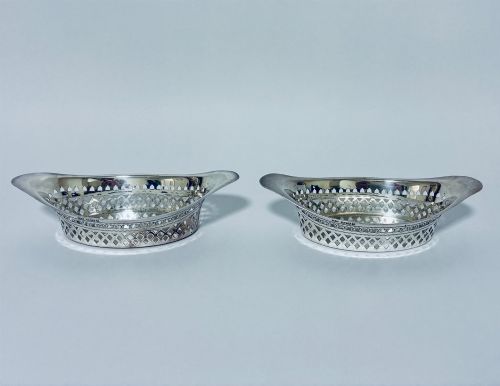
A pair silver bonbon dishes search uncovers matched sets of small open receptacles intended for confectionary, sweetmeats, and table decoration. The pieces span periods from the eighteenth century through the Victorian, Edwardian, and Art Deco eras, showing how dining rituals shifted over generations.
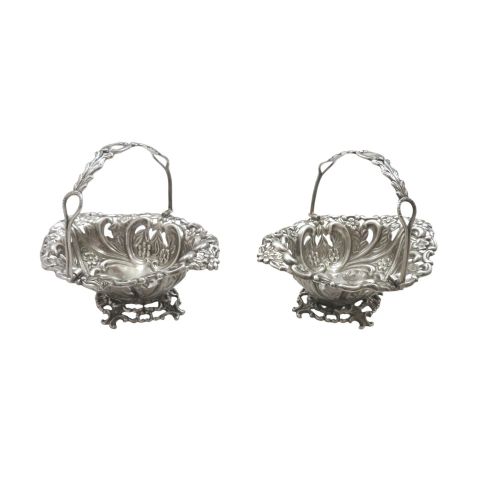
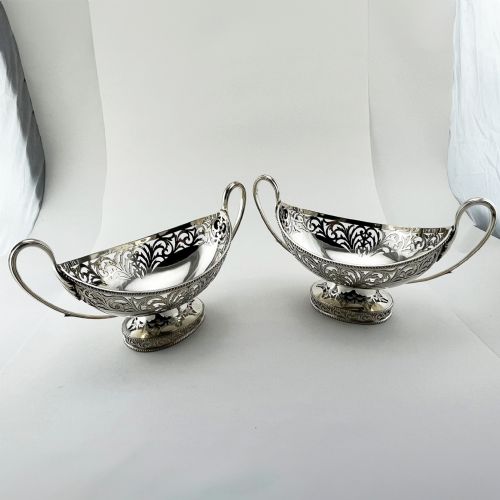
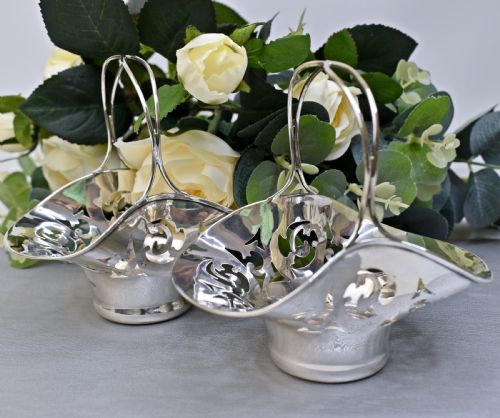
Most examples encountered here take the form of decorative baskets, pedestal dishes, sweet stands, or small footed bowls. Makers produced them in matched pairs to balance formal table settings and sideboards.
Origins range across English manufacturing centres, including Sheffield, Birmingham, and London, reflecting the main hubs of silversmithing output during the nineteenth and early twentieth centuries.
How they were made
Silversmiths utilised sterling silver and silver plate, often incorporating piercing, repoussé work, and reeded handles to shape the metal into intricate baskets and bowls. Piercing removed weight while creating openwork lace patterns across the body of the dish.
Many designs integrated contrasting inner elements, pairing the metal frame with glass liners, cut-glass inserts, tortoiseshell panels, or fabric linings such as velvet and satin. Gilt interiors, known as vermeil, protected the silver from acidic sweets and added a warm golden contrast.
Common structural variations include pedestal stems, swing handles, fitted glass liners, and intricate pierced baskets.
What varies in quality
The standard of craftsmanship shows in the crispness of the piercing, the weight and gauge of the metal, and the depth of any embossed decoration. Hand-chased detailing and substantial gauge silver separate superior items from lighter, pressed metal alternatives.
The presence of original fitted presentation cases or intact specialised glass inserts elevates the completeness of a pair. Matching hallmarks and coherent maker marks across both pieces confirm their original pairing.
William Comyns·Fenton Brothers·Viners·Mappin & Webb·Minshull & Latimer·James Dixon & Sons·Harrods·Thomas Bradbury
The Pair Silver Bonbon Dishes Glossary
- Bonbon dish
- A small vessel designed specifically to hold sweets, nuts, or small confections. These items often feature footed bases or swing handles for easy passing.
- Piercing
- A technique where silversmiths cut intricate patterns through the metal sheet to create lightweight, lace-like decorative borders. This openwork was particularly popular during the Victorian and Edwardian periods.
- Vermeil
- Sterling silver coated with a thin layer of gold on the interior surface. This finish prevented the silver from tarnishing when exposed to sugary or acidic foods.
- Pedestal dish
- A vessel raised above the table surface on a central foot or stem. This form gives height and presence to small decorative tableware.
- Sweet stand
- A raised small dish or basket intended to display confectionery on a dining or drawing room table. They frequently appeared in matched pairs.
Pair Silver Bonbon Dishes: Frequently Asked Questions
What were pair silver bonbon dishes used for?
These dishes held bite-sized sweets, sugar plums, and after-dinner confections on formal dining tables and drawing room sideboards. Hosts placed them in pairs to maintain visual symmetry across the table arrangement.
Over time, their uses expanded to include holding small trinkets, pins, or calling cards when not employed for entertaining.
How do I tell Victorian from Edwardian dishes?
Victorian examples often feature heavier, ornate Rococo Revival scrolling, deep embossed repoussé floral motifs, and denser ornamentation. The metalwork tends to feel substantial and theatrical in style.
Edwardian pieces generally lean towards lighter, airier designs with delicate geometric piercing, neoclassical swags, and refined Edwardian elegance.
What are glass liners used for?
Glass liners protected the sterling silver framework from sticky residues and acidic components found in certain sweets and fruits. They also allowed the dishes to hold moist items without risking corrosion to the metal.
Coloured glass inserts, such as amethyst glass, also provided a striking visual contrast against the polished silver exterior.
How should I clean silver bonbon dishes?
Maintenance requires a soft cloth and a reputable silver polish formulated to remove tarnish without stripping thin plating or fine chasing. Harsh abrasives must be avoided to protect delicate pierced details and maker marks.
Removable glass liners or velvet inserts should be separated from the metal frame before any cleaning takes place.
Are swing handles original?
Swing handles allowed guests to pass the dishes easily along the table during dessert courses. Many Edwardian and Victorian designs incorporated pivoting handles attached to small hinges on the rim.
Matching the pivot pins and hinge wear helps confirm that the handle is original to the basket.