

Hall Umbrella Stand Drip Tray
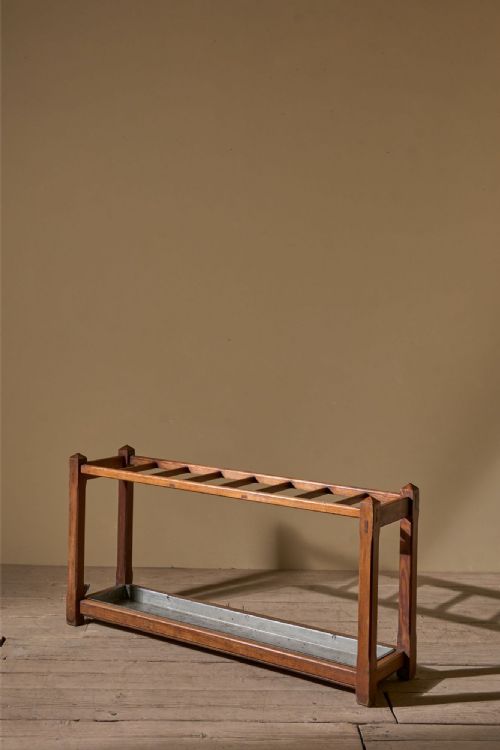
A hall umbrella stand drip tray collects the moisture from wet walking sticks and wet weather gear as soon as one steps inside.
Hall Umbrella Stand Drip Tray
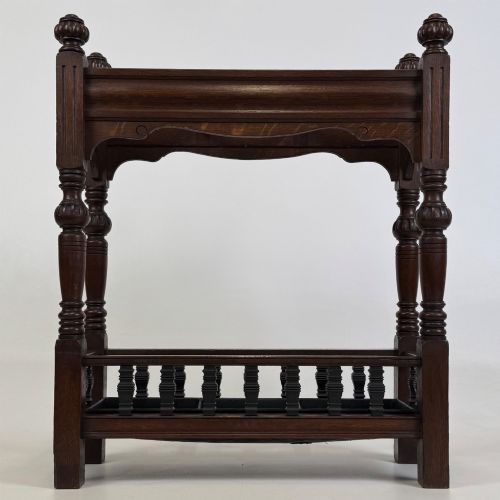
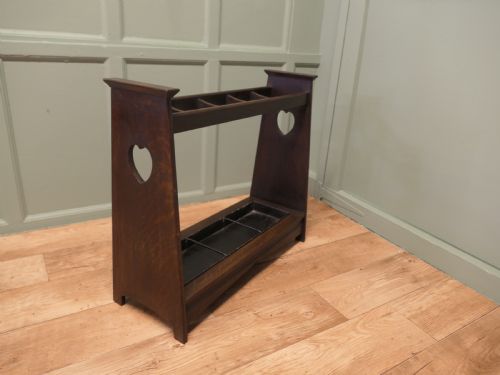
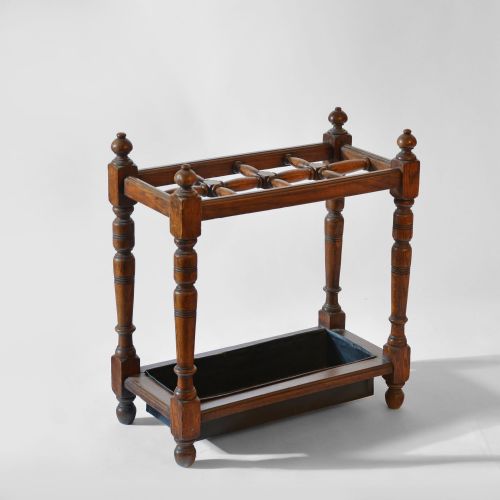
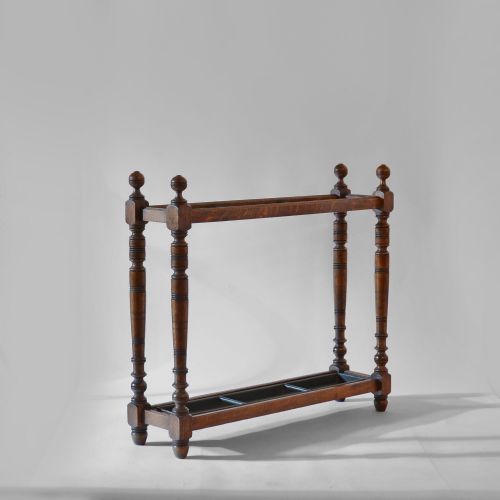
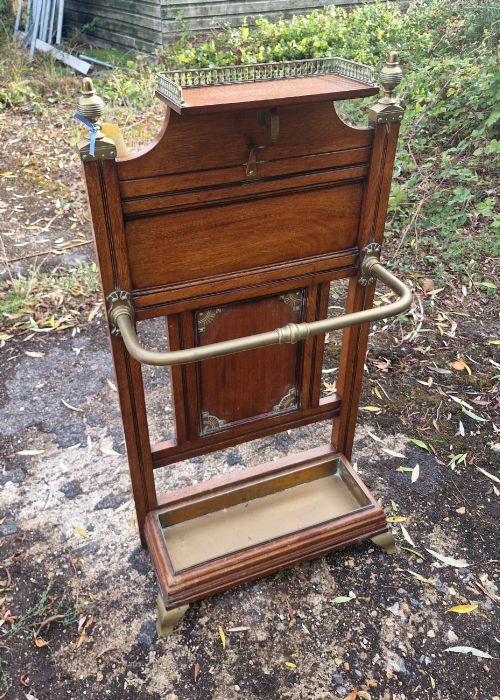
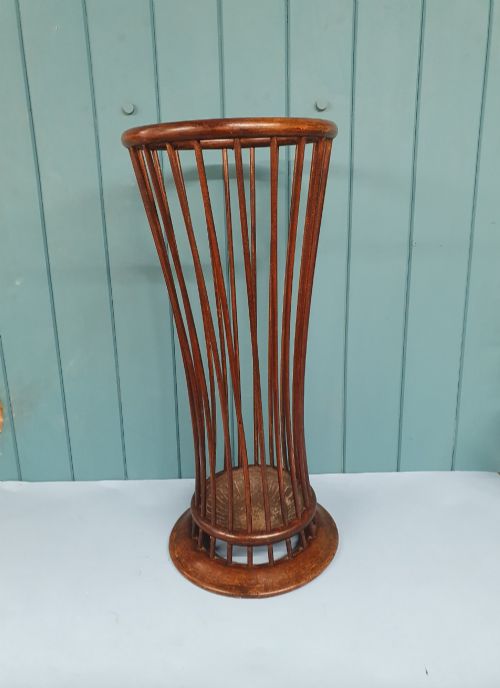
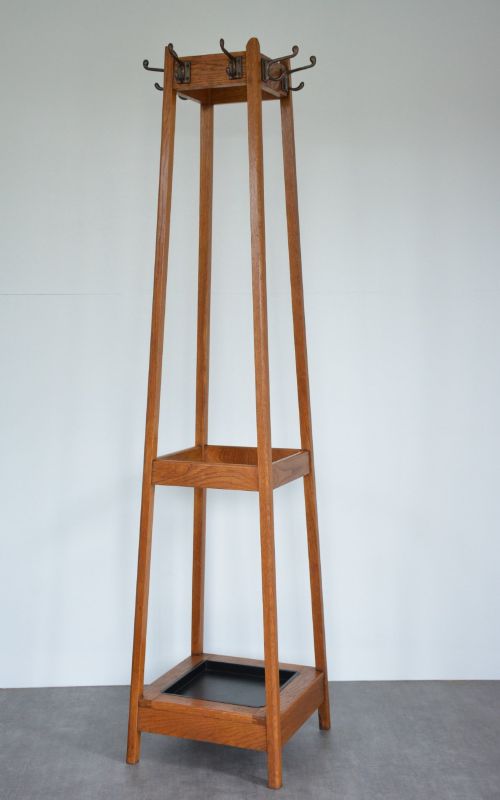
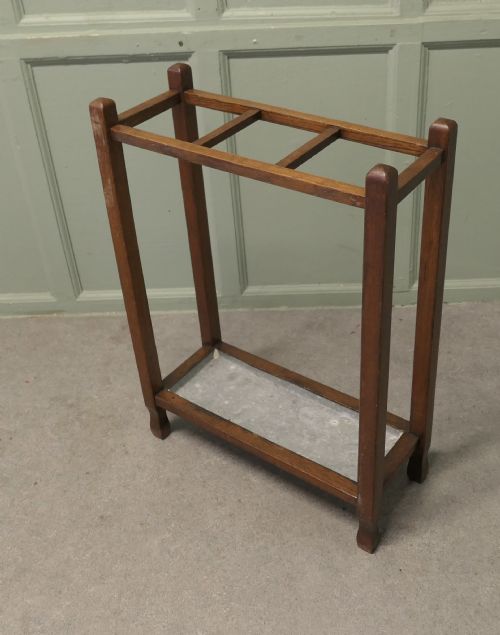
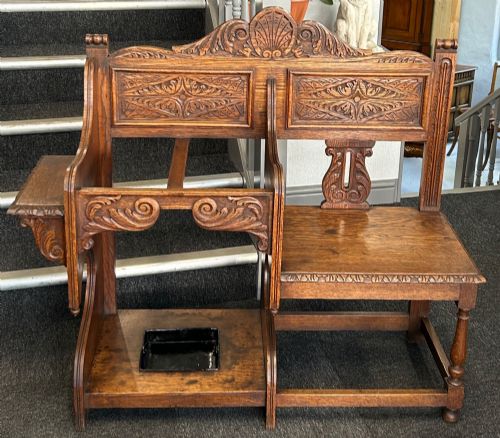
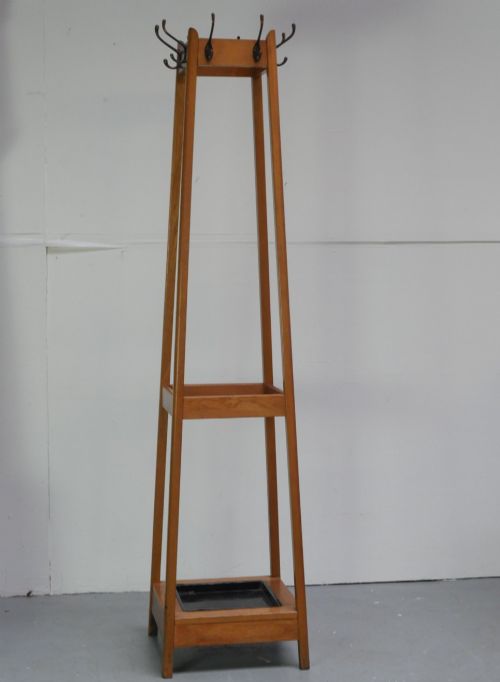
A hall umbrella stand drip tray is an essential feature of an entrance hall, designed to keep dampness away from timber floors and carpets. These items appear in various forms, from dedicated stick stands to multi-functional hall seats and large coat stands with integrated umbrella holders.
The versions most commonly met on this page date from the Victorian and Edwardian eras, alongside pieces from the Art Deco period and the 1930s. Oak and cast iron dominate the selection, frequently paired with brass or zinc components to handle moisture effectively.
Makers and designers of the late nineteenth and early twentieth centuries approached these objects with both utility and style in mind. Pieces range from austere industrial oak designs to elaborate Aesthetic Movement and Arts and Crafts creations.
How they were made
Makers utilised solid timbers such as oak, mahogany, and pitch pine to construct the main frames of hall stands and umbrella holders. Carpenters employed traditional joining techniques, sometimes incorporating carved details or mirrored panels into the structure.
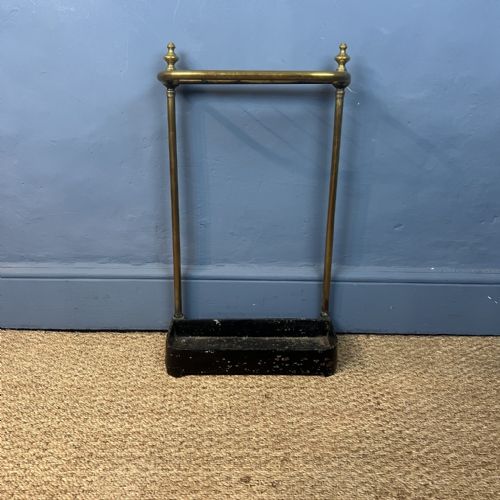
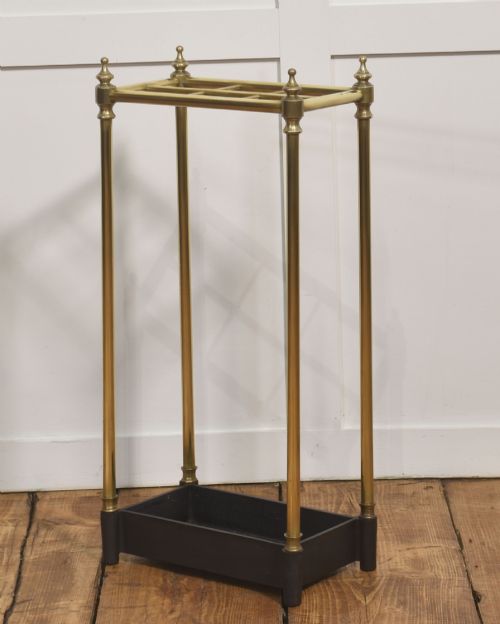
Metal components played a critical structural and decorative role, with cast iron, brass, and steel utilised for frames, rails, and retainers. Zinc and other durable metals formed the removable trays designed to catch water without rusting the surrounding framework.
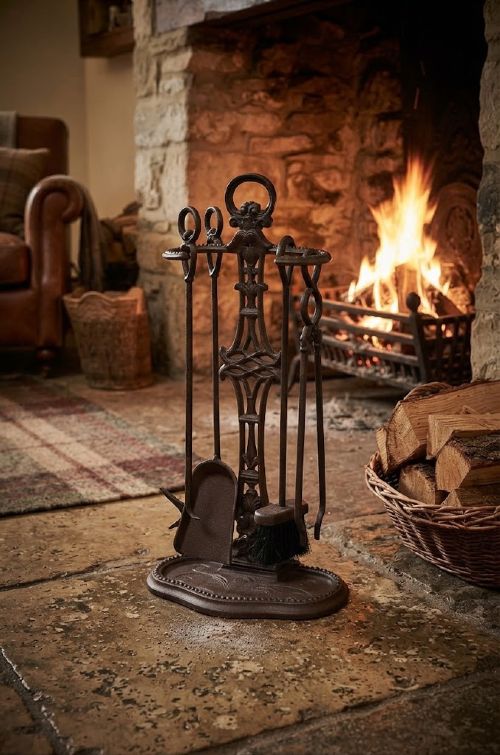
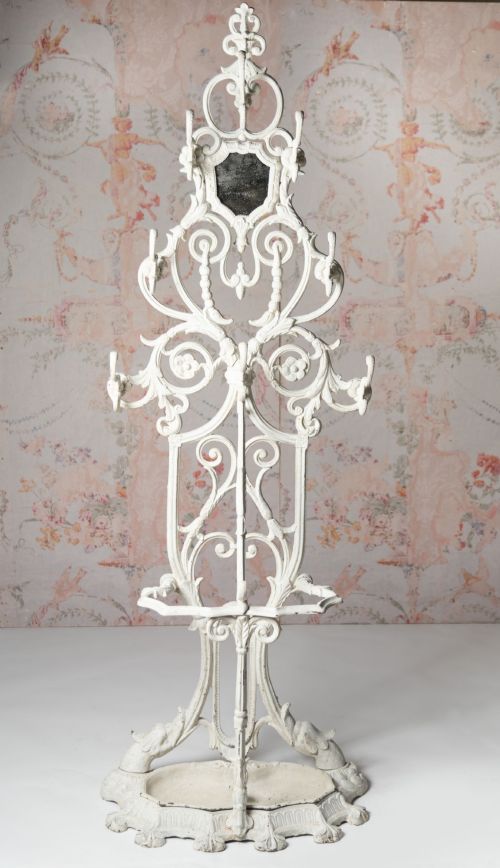
A gun dog motif keeps watch over the umbrella collection on at least one Victorian cast iron stand.
What varies in quality
Quality in a hall umbrella stand drip tray lies in the integrity of the materials and the retention of original components. Pieces that retain their original metal tray demonstrate superior historical completeness compared to those fitted with modern replacements.
The execution of design details distinguishes standard utility items from higher-grade workshop pieces. Well-defined cast iron work, crisp timber carving, and robust structural joinery mark the upper tier of the range.
Liberty Design·Heals of London
The Hall Umbrella Stand Drip Tray Glossary
- Drip tray
- A removable metal basin positioned at the base of a stand to collect water from wet umbrellas. These are frequently cast in zinc or iron.
- Demilune
- A half-moon shape often seen in the footprint of corner or wall-flush umbrella stands. This profile allows the stand to occupy minimal hallway space.
- Arts and Crafts
- A design movement prioritising traditional craftsmanship, visible grain, and simple utility over mass-produced ornamentation. Oak is the primary wood associated with this style in hall furniture.
- Cast iron
- A heavy alloy poured into moulds to create rigid, durable frames and decorative pierced patterns. It resists the weight of heavy walking sticks and umbrellas.
Hall Umbrella Stand Drip Tray: Frequently Asked Questions
What materials are used?
The pieces combine solid woods like oak, mahogany, and pine with metals such as cast iron, brass, steel, and zinc. Many items pair a wooden framework with a dedicated metal base.
This construction allowed the furniture to withstand daily moisture and heavy use in busy entrance halls.
How do I date them?
Dating relies on stylistic clues, timber choice, and manufacturing methods spanning the Victorian, Edwardian, and Art Deco periods. Aesthetic Movement and Arts and Crafts examples typically point to the late nineteenth century.
Later pieces from the 1930s often incorporate nickel or streamlined industrial designs.
Are the trays original?
Many listings specify whether the metal tray at the base is original to the piece. Original zinc or iron trays show appropriate age and fit the specific dimensions of the frame.
Replacements are sometimes present due to corrosion from standing water over decades of use.
How were they used?
These stands stood in country house and urban hallways to organise walking canes, umbrellas, and occasionally fire tools. Integrated hooks and mirrors often accompanied the umbrella rings for hats and coats.
The base tray captured rainwater to protect interior flooring.