





Carved Oak Stick Holder
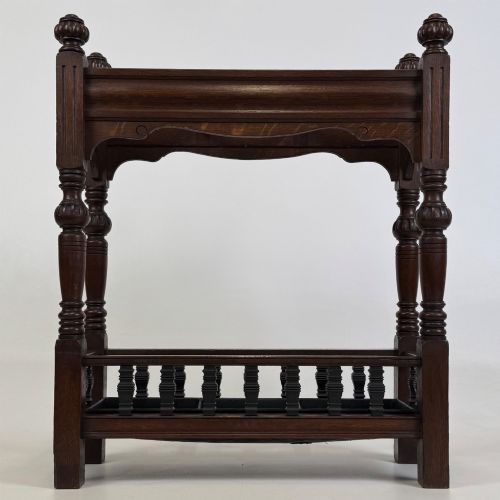
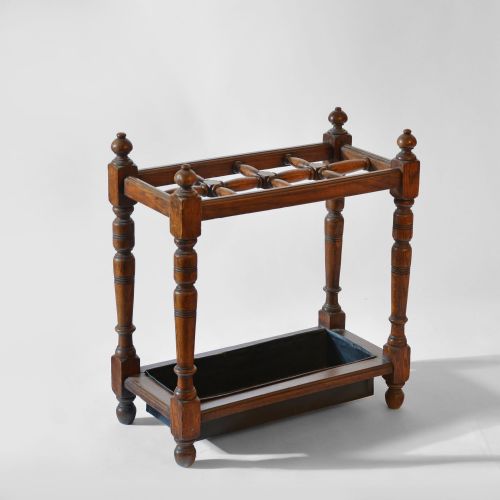
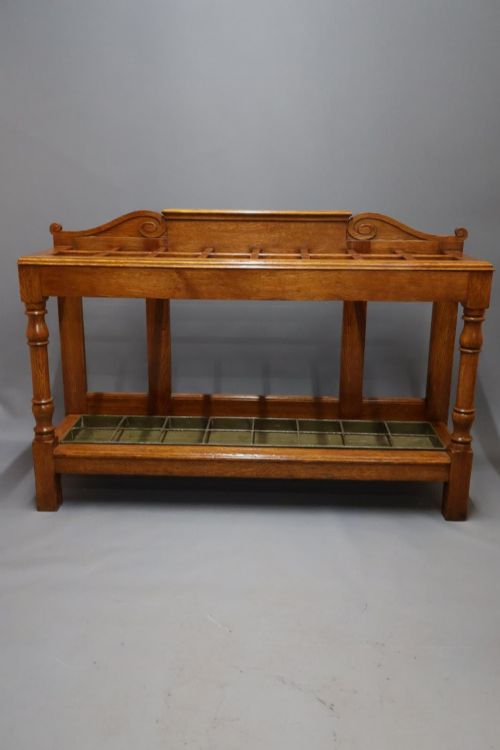
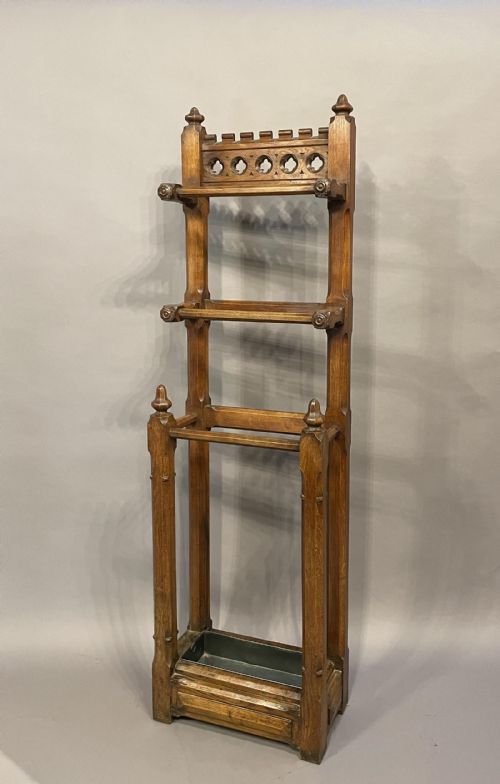
A carved oak stick holder brings practical utility and striking grain to a hallway, offering sturdy storage for umbrellas and walking canes.
Carved Oak Stick Holder
A carved oak stick holder is a functional hallway furnishing designed to hold wet umbrellas and walking sticks upright. These pieces range from compact umbrella stands to large hall stands incorporating mirrors and glove boxes.
The selections on this page span the Victorian and Edwardian eras, reaching into the early twentieth century. You will encounter robust country house items alongside simpler domestic examples.
Stylistic influences vary widely across the inventory, drawing on Gothic Revival, Arts and Crafts, Aesthetic Movement, and Black Forest traditions. Oak is the primary timber, frequently paired with metal liners or drip pans.
How they were made
Makers utilised solid oak, shaping panels through traditional joinery and hand carving. Structural elements often incorporate turned wooden supports like barley twists alongside caned panels or coopered barrel construction.
Functional additions such as brass, zinc, or metal inserts were integrated to catch water and protect the timber base from dampness. Some examples incorporate cast iron or bronze fittings to secure the frame.
Listings feature oak combined with brass, zinc, iron, and ceramic elements, spanning Victorian, Edwardian, and Arts and Crafts periods.
What varies in quality
Quality rests upon the depth and crispness of the hand carving, the selection of figured oak timber, and the integrity of the original construction. Superior examples display thoughtful detailing and substantial proportions.
The presence of original metal drip trays, patent fixings, and uncompromised structural frames elevate an item's standing. Lesser pieces show utilitarian assembly with simpler decoration and replaced hardware.
The Carved Oak Stick Holder Glossary
- Demi lune
- A half-moon shape allowing the stand to sit flush against a hallway wall. This profile was favoured for smaller entryways.
- Coopered
- Construction formed from vertical staves bound together like a barrel. This technique is often seen in circular umbrella buckets.
- Bergere
- Woven cane panelling used for decorative sides or backs on hall stands. It provides a lighter visual texture against heavy oak.
- Barley twist
- A spiral turning carved into wooden columns or uprights. It reflects popular decorative turning techniques of the period.
- Drip tray
- A metal liner placed at the bottom of the stand to catch water from umbrellas. Original trays add authenticity to the piece.
Carved Oak Stick Holder: Frequently Asked Questions
How do I clean a carved oak stick holder?
Dust the carved surfaces regularly with a soft, dry cloth to prevent dirt accumulation in the recesses. Apply a traditional beeswax periodically to nourish the oak and maintain its sheen.
Avoid using modern liquid polishes or placing the stand directly against damp walls. Keep metal drip trays clean and dry to protect the surrounding wood from moisture damage.
Where should I place a hall stand?
Position the piece in an entrance hall or porch where wet umbrellas and walking sticks are regularly deposited. Ensure the location allows adequate ventilation to help damp items dry.
Protect the timber from direct sunlight and severe temperature fluctuations near radiators. This placement prevents the oak from drying out or splitting over time.
How do I identify a Victorian stick stand?
Victorian examples often display heavy proportions, deep Gothic or Jacobean Revival carving, and dark patinated oak. Look for registration marks, patent numbers, or robust cast iron and brass internal components.
Compare the construction methods, such as pegged joints and hand-turned spindles, against known period manufacturing styles. Country house models tend to be larger and more heavily ornamented than later Edwardian pieces.
What is the difference between a stick stand and a hall stand?
A stick stand is designed specifically to hold umbrellas and walking canes in a compact floor-standing frame. It focuses entirely on vertical storage with a base drip tray.
A hall stand is a larger multi-functional item that combines a stick holder with coat hooks, hat pegs, a mirror, and sometimes a glove drawer. These substantial pieces dominated Victorian and Edwardian entranceways.