



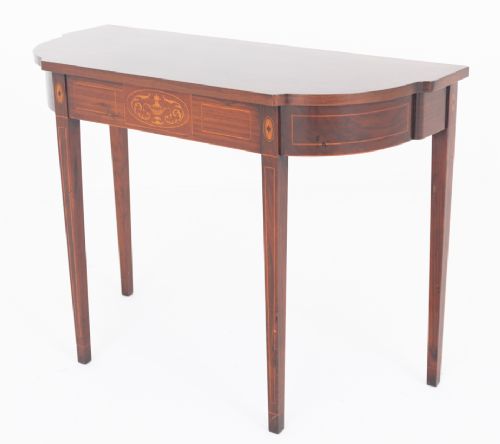


Half Moon Card Table
A half moon card table offers a clever folding top that transforms a graceful wall console into a proper gaming surface.
Half Moon Card Table
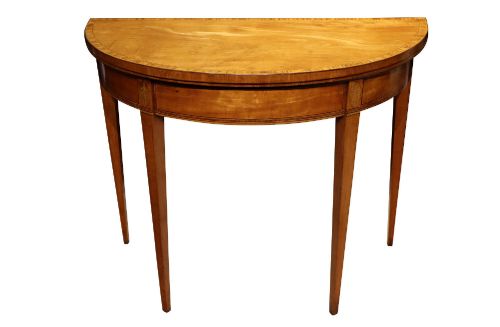
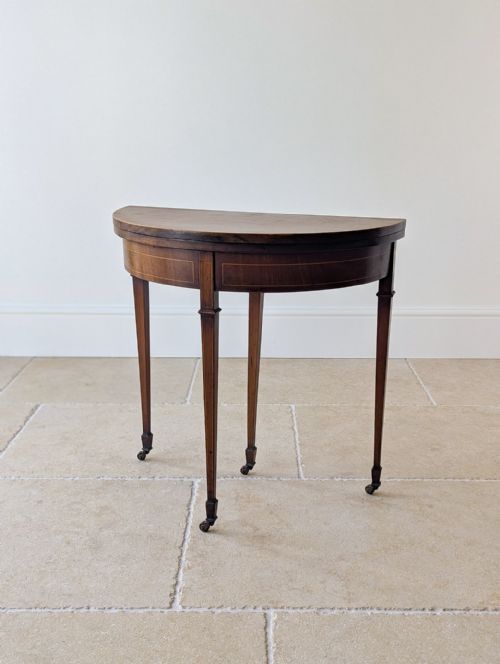
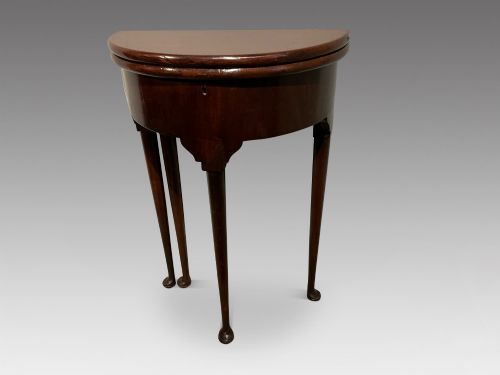
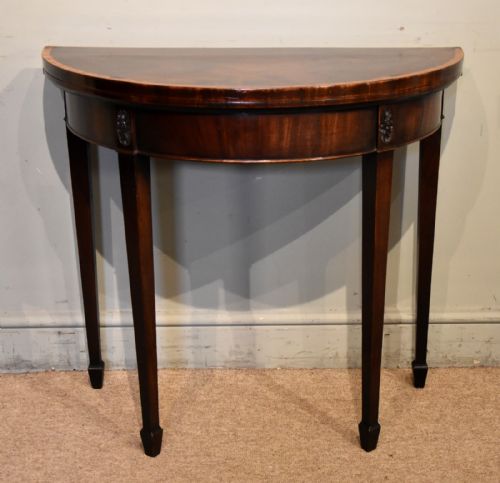
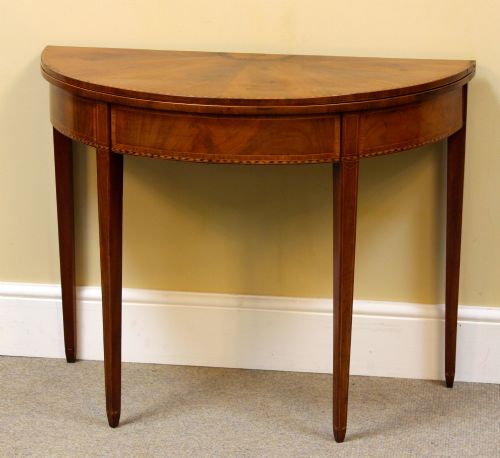
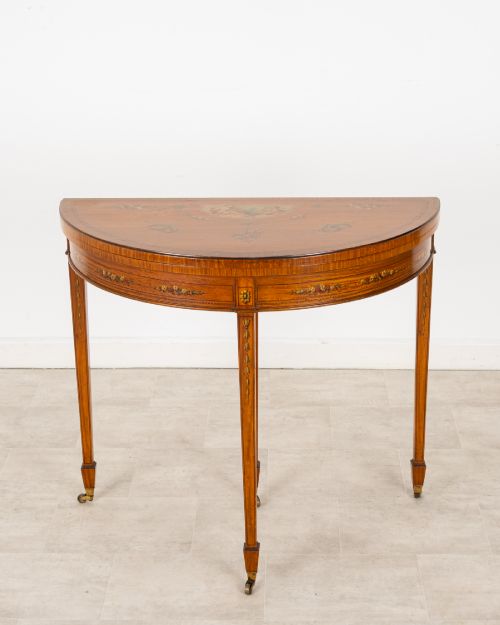
A half moon card table is a semicircular piece designed to sit flush against a wall when closed, opening to reveal a baize-lined surface for cards. You will find that mahogany and satinwood examples dominate the selection here, often hailing from the Georgian and Edwardian periods.
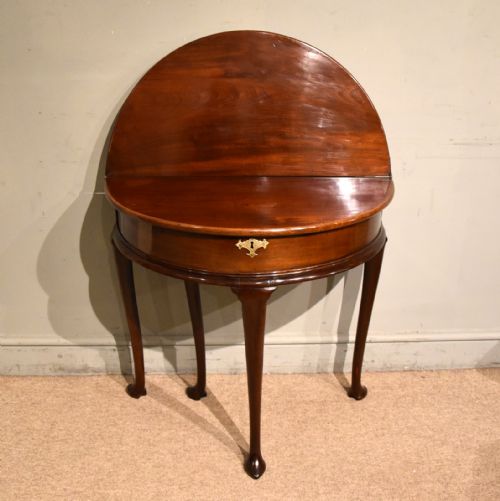
The form adapts easily from a console or side table into a functional games table through a hinged top or pivoting rear leg. Alongside standard card tables, the evidence includes tea tables and occasional console variants built to the same semicircular footprint.
Materials and Construction
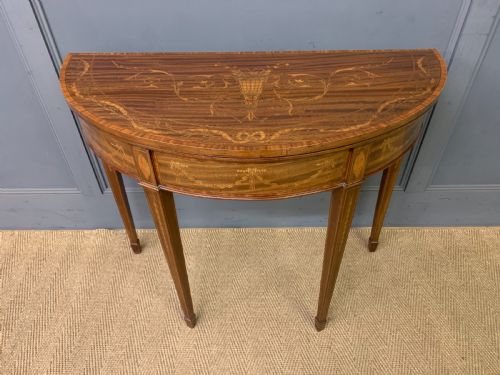
Cabinetmakers constructed these tables primarily using solid mahogany, walnut, and fruitwood frames beneath decorative wood veneers. Satinwood, boxwood inlay, and marquetry added contrasting borders and geometric patterns to the semicircular tops.
Makers utilised clever hinged mechanisms and swing legs to support the folding top leaf without straining the timber joints. Brass hinges and internal gatelegs provide the necessary stability when the table is fully opened.
Half Moon Card Table Retail Price Guide 2026
Typical asking prices for half moon card table among the pieces listed under this phrase on Sellingantiques today, from the lower quarter to the upper quarter. They describe what is for sale here now, not the wider market.
Several tables retain secret compartments hidden beneath the folding tops for stashing stray gaming counters and coin purses.
Judging Quality and Execution
Quality rests in the crispness of the inlay work, the choice of figured wood veneers, and the seamless alignment of the folding top. Superior examples display meticulous crossbanding in boxwood or kingwood that follows the severe curve of the demi-lune edge.
The integrity of the pivoting leg mechanism dictates how solidly the table stands during play. Finer pieces maintain tight joints and smooth folding action that reflects careful initial joinery rather than later repair.
The Half Moon Card Table Glossary
- Demi-lune
- A half-moon or semicircular shape common in the design of these console and card tables. It allows the furniture to sit flat against a wall.
- Crossbanding
- A strip of veneer applied to the border of a tabletop with the grain running perpendicular to the centre. This technique frames the primary wood.
- Marquetry
- Decorative patterns formed by fitting together small pieces of coloured wood veneer into the surface. It often depicts floral or classical motifs on the top.
- Fold-over
- A hinged tabletop design where the upper leaf swings open to double the surface area. The open leaf is then supported by a swing leg.
- Gateleg
- A hinged table leg that swings outward like a gate to support a drop-leaf or folding top. It provides sturdy reinforcement for card playing.
Half Moon Card Table: Frequently Asked Questions
How do you open a half moon card table?
The top leaf simply lifts and swings open on its hinges to reveal the felt or wood playing surface underneath. As the leaf moves across, the rear leg swings out from the frame to support the extended weight.
Take care to guide the leg properly rather than letting the top drop unsupported. This prevents strain on the original brass hinges and wooden pivot joints.
Where should I place a half moon card table?
The flat straight edge sits snugly against a hallway or living room wall when the table is closed. This makes it an ideal console or side table for displaying lamps and decorative objects.
When guests arrive, you can pull it out into the room and unfold the top for games or tea. The compact semicircular footprint takes up very little floor space in smaller rooms.
How do I date a Georgian card table?
Examine the timber species, leg shapes, and secondary woods used inside the frame construction. Georgian pieces frequently feature solid mahogany with hand-cut dovetails and subtle candle recesses inside the rule joints.
Later Edwardian and revival interpretations often show machine-sawn timber and brighter satinwood finishes. Comparing the internal construction details against documented period pieces clarifies the age.
What were these tables originally used for?
Wealthy households utilised these tables for evening card games such as whist, quadrille, and loo. The folding top provided a stable, dedicated surface that could be cleared away when entertainment ended.
Many examples also served dual purposes for tea drinking and general social gatherings. Their versatile design made them standard furnishings in fashionable drawing rooms.