



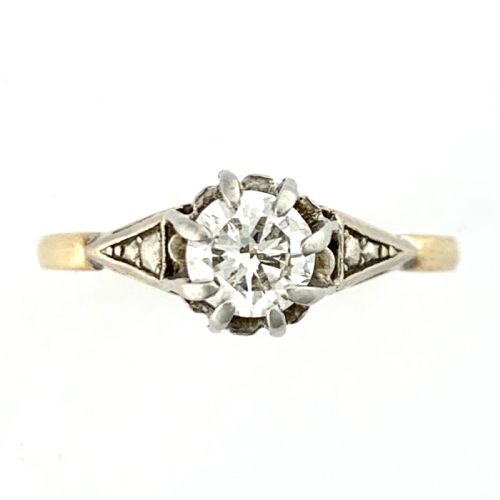

Half Carat Engagement Ring
A half carat engagement ring carries weight and history, offering the enduring brilliance of diamond and gold from eras past.
Half Carat Engagement Ring
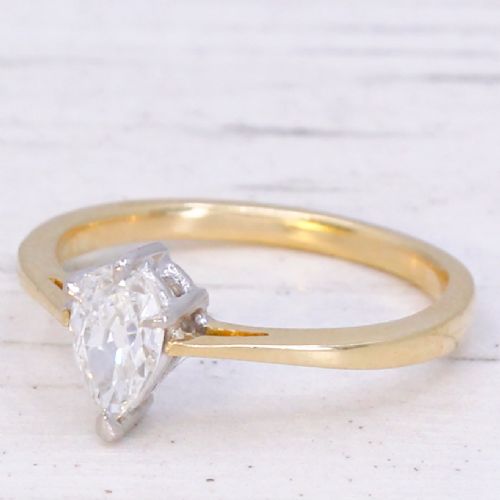
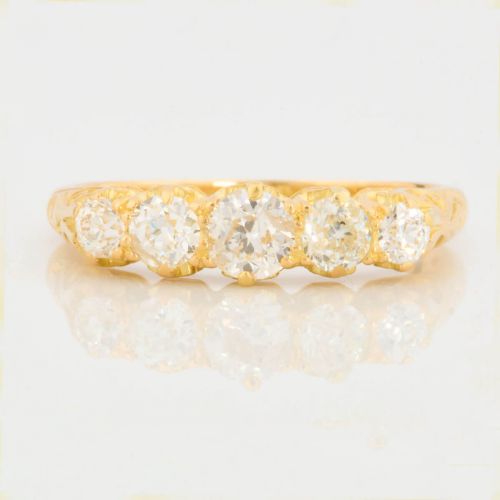
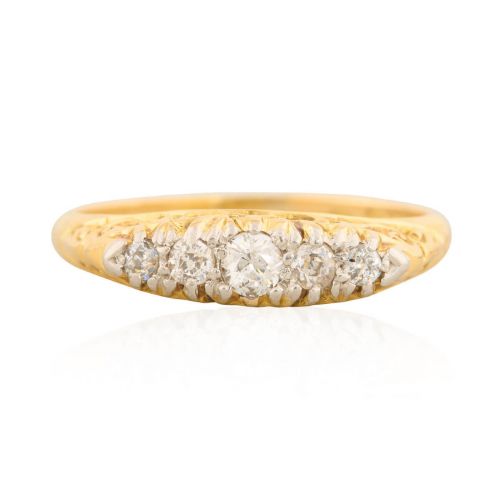
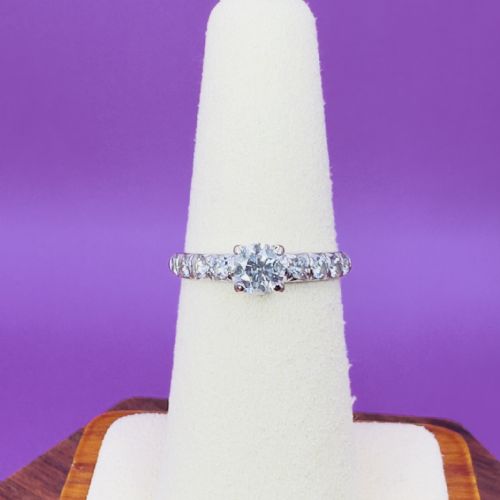
When searching for a half carat engagement ring, buyers encounter pieces spanning from the Victorian period through to the mid-century, including specific Art Deco and vintage examples. These rings primarily take the form of traditional solitaires, multi-stone five stone settings, and cluster designs.
The most common iterations on this page feature central diamonds paired with yellow gold, white gold, or platinum bands. Buyers frequently find stones cut in old pear, brilliant, or old cut styles set within nineteenth and twentieth-century mountings.
How they were made
The construction of these rings relies heavily on 18ct gold, white gold, and platinum to secure diamonds and rubies safely within the metalwork. Goldsmiths shaped these metals into robust settings such as half hoops, clusters, and traditional solitaire mounts.
Gemstones are shaped using historical cutting techniques like the old cut and brilliant cut, allowing the stones to catch the light within their handcrafted metal surroundings.
Chester assay offices marked rings with a distinct three sheaves of wheat symbol until the office closed in nineteen sixty-two.
What varies in quality
The distinction between tiers of these rings lies in the precision of the gemstone cutting and the integrity of the original metal settings. Finer examples display harmonious proportions between the central stones and the supporting shoulder diamonds or surrounding ruby clusters.
Another measure of quality involves the preservation of original hallmarks and the crispness of the gold or platinum work. Pieces that retain their structural depth and clear hallmarks demonstrate superior craftsmanship from their respective periods.
The Half Carat Engagement Ring Glossary
- Solitaire
- A ring featuring a single prominent gemstone set on a plain or decorated band. This classic design focuses visual attention entirely on the central diamond.
- Old Cut
- A precursor to the modern brilliant cut, featuring a small table, higher crown, and open culet. This facet arrangement produces a distinct softer glow under candlelight.
- Cluster
- A setting style where a central stone is surrounded by a tighter group of smaller gemstones. This arrangement maximises surface sparkle and presence on the finger.
- Half Hoop
- A ring design featuring a single row of evenly spaced gemstones across the upper half of the band. It offers a continuous line of stones while remaining comfortable for daily wear.
Half Carat Engagement Ring: Frequently Asked Questions
How do I care for antique gold rings?
Antique gold rings require gentle cleaning with warm soapy water and a soft brush to remove everyday debris from the settings. Avoid harsh chemical dips that can damage softer stones like opals or weaken older metalwork.
Store each ring separately in a fabric-lined box to prevent the metals and diamonds from scratching one another. Regular checks by a jeweller ensure the prongs holding the stones remain secure.
What is the difference between old cut and brilliant cut diamonds?
Old cut diamonds were shaped by hand during the Victorian and Edwardian eras, resulting in smaller tables and deeper pavilions that create a charming, softer luminescence. Modern brilliant cuts utilise precise mathematical proportions designed to maximise direct light return and brightness.
Choosing between them depends on whether you prefer the historical character of hand-faceting or the sharper sparkle of mid-century and later cutting techniques.
How do I identify the era of my ring?
Dating a ring involves examining the metal purity marks, maker's stamps, and official assay office hallmarks stamped inside the band. Chester, Birmingham, and London offices used specific date letters that correspond to exact years of production.
Stylistic clues such as setting techniques, shoulder engraving, and gemstone cutting styles further narrow down whether a piece belongs to the Victorian, Edwardian, or mid-century periods.