





Gustavian Three Drawer Chest
A gustavian three drawer chest brings neoclassical Nordic restraint into a room, offering practical storage through calm proportions and muted painted surfaces.
Gustavian Three Drawer Chest
A gustavian three drawer chest is a piece of Scandinavian storage furniture that combines French neoclassical inspiration with Swedish domestic craftsmanship. You will most frequently meet pieces dating from the eighteenth and nineteenth centuries, taking the form of commodes and chests of drawers.
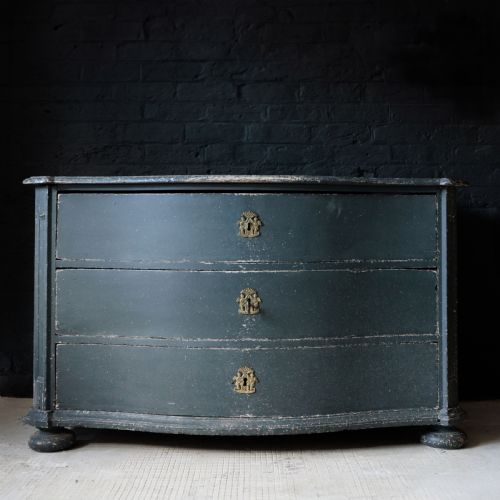
The regional variations range from strict Swedish Gustavian designs to Scandinavian country interpretations and French provincial influences. Many examples feature serpentine fronts or straight rectilinear carcases supported by tapered legs.
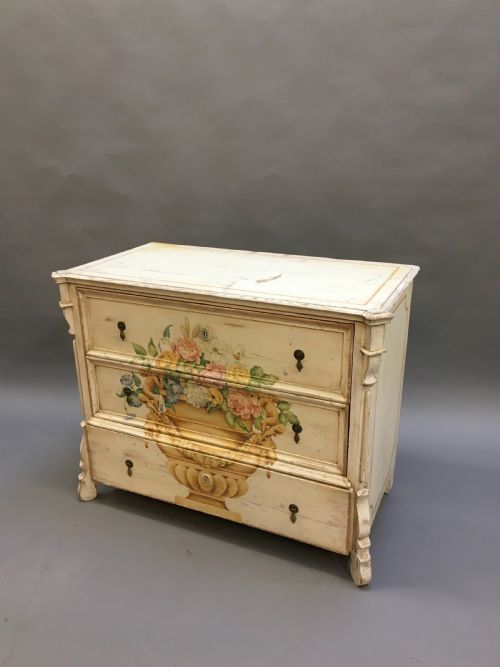
Makers utilised native timbers to construct these chests, often applying pale or dark paint finishes that have weathered over generations. The drawer arrangements follow standard three-tier formats suited to domestic chambers and living spaces.
Materials and construction methods
Carpenters built these chests using softwood, pine, oak, and satin birch as primary structural timbers. Boards were joined with traditional cabinetry techniques to accommodate seasonal wood movement in northern European climates.
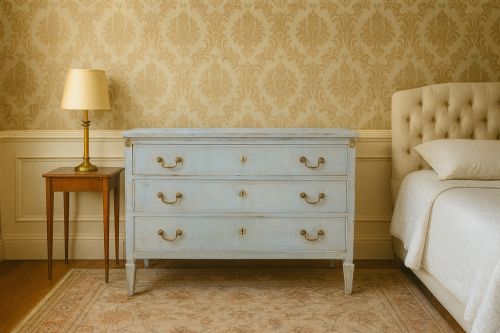
Surfaces were frequently finished with layered paintwork in shades of black or pale tones, sometimes over earlier priming coats. Brass hardware, including escutcheons and pull handles, was fitted to complete the drawer assemblies.
Some nineteenth-century makers painted their pine chests entirely black to emulate expensive ebony furniture.
Judging quality and craftsmanship
Quality rests in the crispness of the neoclassical carved details and the harmonious proportions of the carcase. Superior pieces display finely shaped serpentine fronts and well-balanced drawer tiers that reflect confident workshop design.
The integrity of the painted surface matters significantly, with original or early pigment layers holding greater appeal than later re-paintings. The underlying timber construction should remain sound, showing thoughtful joinery and appropriate material selection for the period.
The Gustavian Three Drawer Chest Glossary
- Commode
- A low chest of drawers or cabinet originating in French furniture design. This term often appears interchangeably with chest of drawers in Scandinavian listings.
- Serpentine
- A furniture front curved in a concave-convex-concave wave shape. It requires advanced woodworking skill to execute cleanly on drawer fronts.
- Gustavian
- The Swedish neoclassical style spanning the late eighteenth century, marked by restrained ornamentation and symmetrical lines. It draws heavily on French Louis XVI motifs interpreted through a Nordic lens.
- Satin Birch
- A pale northern European hardwood prized for its smooth grain and lustrous appearance. Cabinetmakers utilised it unpainted to highlight the natural figure of the wood.
Gustavian Three Drawer Chest: Frequently Asked Questions
How do I date a chest?
Dating relies on examining the construction marks, timber selection, and assembly methods used inside the carcase. Eighteenth-century examples often display hand-sawn boards and earlier joinery details compared to later nineteenth-century pieces.
Paint layers and hardware styles also offer chronological clues. Original surfaces wear down in specific patterns that differ from modern restorations.
Where should I place it?
These chests function well in bedrooms, hallways, or living rooms as statement storage pieces. Their restrained proportions allow them to sit comfortably against plain walls without dominating the interior.
Keep them away from direct heat sources and strong sunlight to protect the painted finishes and timber structures. Stable indoor humidity helps preserve the historic wood and joints.
Are painted finishes original?
Determining original paint involves inspecting surface wear, craquelure, and underlying preparation layers under magnification. Many pieces received subsequent coats of paint during the nineteenth century to refresh their appearance.
Both original and historic layered paint hold aesthetic value for collectors. The key is identifying whether the surface harmonises with the age of the underlying timber.
What is Scandinavian country style?
This descriptor refers to domestic furniture produced outside major urban centres, reflecting local interpretations of high-style neoclassical trends. The execution tends to be more robust, utilising local pine and straightforward construction.
These pieces prioritise utilitarian function while retaining regional decorative touches. They offer a simpler aesthetic compared to formal court furniture.