


Blue Gustavian Commode
A blue gustavian commode brings soft northern light and neoclassical restraint to an interior through pale painted finishes and sculptural drawer fronts.
Blue Gustavian Commode
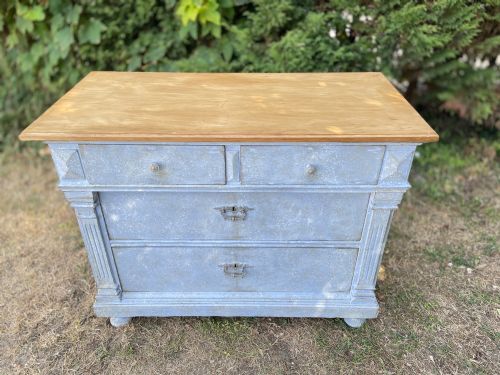
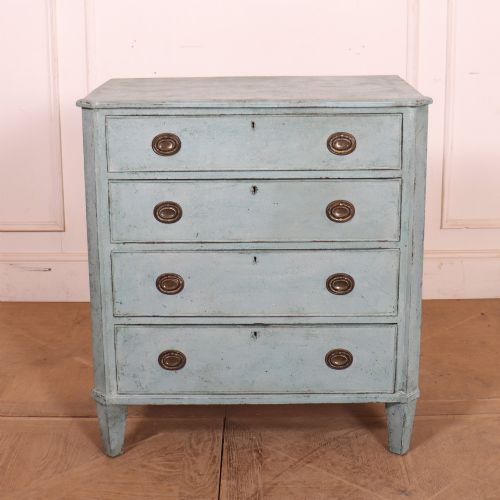
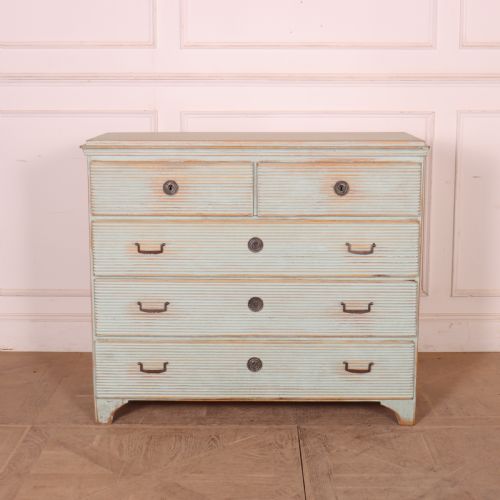
A blue gustavian commode is a storage chest designed with neoclassical proportion, fluted drawer fronts, and painted wooden surfaces originating from Swedish and continental workshops.
The pieces on this page span the eighteenth and nineteenth centuries, taking forms such as chests of drawers, commodes, and cupboards shaped by Scandinavian country and baroque revival traditions.
Buyers encounter examples ranging from Swedish neoclassical pieces with faux marble tops to Dutch and Danish continental commodes sharing similar painted finishes.
How they were made
Carpenters constructed these pieces using pine, oak, and softwood, shaping structural timbers for carcases and drawer frames.
Surfaces received layers of paint, often preserved as original scraped paint, complemented by brass and iron hardware alongside occasional faux marble painted tops.
Some nineteenth century makers added faux marble tops to deceive the eye into seeing stone where only clever brushwork on pine exists.
What varies in quality
The distinction between pieces lies in the handling of surface pigment and the crispness of carved details like fluting and diamond points.
Construction integrity across pine and oak carcases differentiates workshop output, alongside the survival condition of original painted finishes.
The Blue Gustavian Commode Glossary
- Gustavian
- A Swedish neoclassical design style spanning the late eighteenth and early nineteenth centuries. It takes inspiration from French Louis XVI aesthetics but adapts them with cleaner lines and restrained proportions.
- Commode
- A low chest of drawers used for domestic storage. These pieces typically feature multiple drawer tiers and often stand on tapered or bracket feet.
- Scraped paint
- A conservation term for historic painted surfaces revealed by gently removing later overpaint. This process uncovers the original pigment layers applied during the manufacturing period.
- Faux marble
- A decorative painting technique used to imitate the veining and colouration of natural stone. Craftsmen applied this finish to wooden table and commode tops to mimic more costly materials.
Blue Gustavian Commode: Frequently Asked Questions
How do I style a blue gustavian commode?
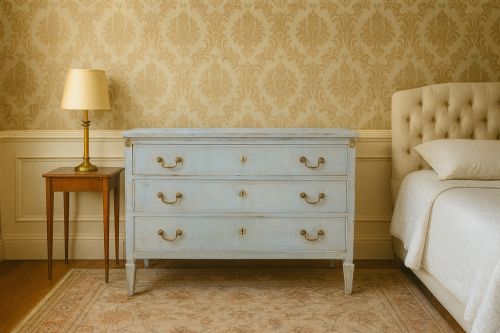
Place the commode against a neutral wall to let the pale painted finish stand out as a focal point in a hallway or bedroom.
Keep surface styling minimal with a simple ceramic lamp or botanical arrangement to respect the restrained neoclassical lines.
Are these commodes practical for daily storage?
The deep drawer configurations provide ample space for linens, clothing, or tableware in modern living spaces.
Drawer mechanisms operate within traditional wooden runners that require simple periodic waxing for smooth movement.
How do I distinguish eighteenth and nineteenth century pieces?
Eighteenth century examples often show structural joinery methods characteristic of earlier baroque or early neoclassical periods, such as hand-cut dovetails and heavier timber framing.
Nineteenth century pieces frequently reflect revival styles like the baroque revival or later interpretations of gustavian forms with machine-sawn components.
What maintenance do painted wooden surfaces need?
Dust the painted exterior gently with a dry microfiber cloth to prevent dirt accumulation without harming historic pigment.
Avoid placing the commode in direct sunlight or near heat sources to protect the aged softwood and pine from drying out.