



Grey Winter Landscape Art
Grey winter landscape art captures cold northern light and snow across centuries of painting, offering moody views that anchor a room.
Grey Winter Landscape Art
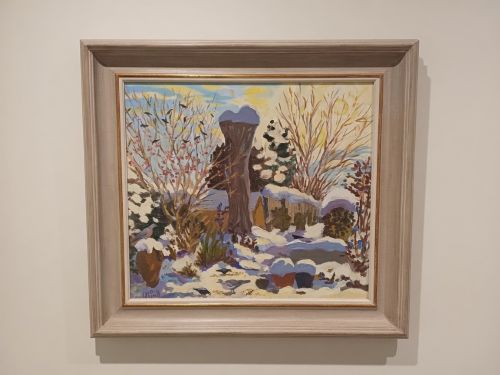
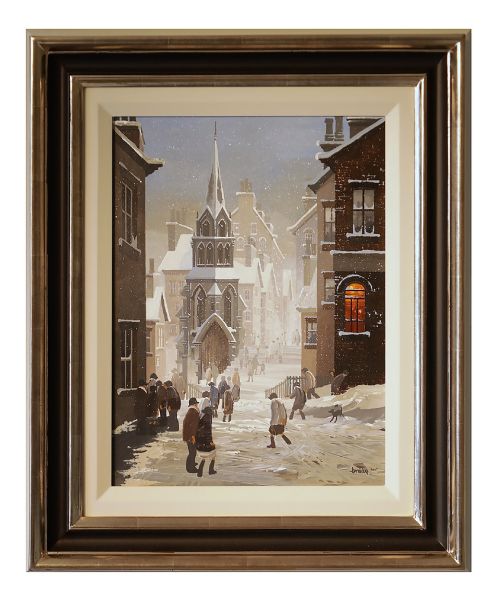
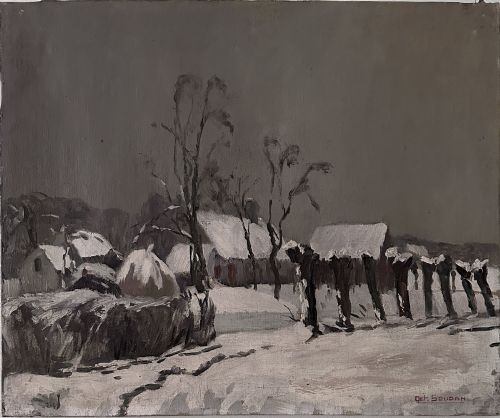
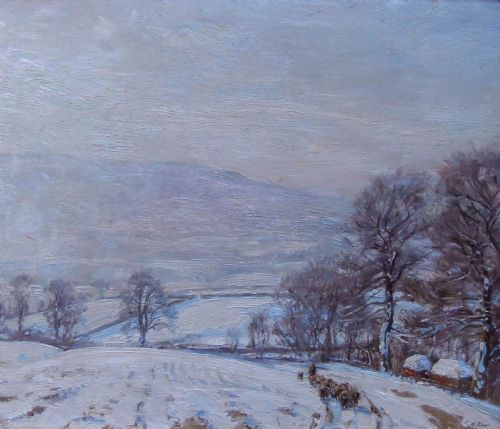
Grey winter landscape art encompasses painted scenes of snow, frost, and cold weather executed across the nineteenth and twentieth centuries. These works record rural valleys, village streets, and harbours under heavy skies, using restrained palettes to evoke the quiet of winter.
Buyers seeking grey winter landscape art most frequently encounter works from the early twentieth century, particularly British regional scenes and Dutch compositions. Painters of this era captured rural life and snowbound fields using expressive brushwork and muted tones.
The selection ranges from Victorian watercolours of the fens to mid-twentieth-century oil paintings of Yorkshire dales and Canadian wilderness. These pieces bring natural atmosphere and historical depth to interiors through their varied regional interpretations of cold weather.
How they were made
Artists built grey winter landscape art using oil paint on canvas or wood panels, alongside watercolours and pastels on paper. Oil pigments allowed for thick application to render snow texture, while watercolours achieved the soft washes of winter mist.
The application of paint varied from the precise detail of nineteenth-century depictions to the looser brushwork of British Impressionism. Hand-mixed pigments relied heavily on lead white, bone black, and earthy ochres to create the characteristic overcast skies and frost.
Materials in these listings include oil paint, canvas, watercolour, pastel, paper, and wood panels spanning the nineteenth and twentieth centuries.
What varies in quality
Quality in grey winter landscape art rests on the artist's handling of tonal subtlety and atmospheric light. The finest works manage complex shifts in grey and white without losing depth, conveying the crisp chill of the scene.
Composition and brushwork separate standard decorative pieces from accomplished fine art. A skilled hand captures the structural elements of bare trees and snow-covered roofs with economy and precision.
Lucy Pratt·Brian Shields·Thomas Hicks·Fred Lawson·Herbert Royle·Charles Jones·Pieter Cornelis Steenhouwer·George Graham·Ernest Higgins Rigg·William Cave Day·Arthur Anderson Fraser
The Grey Winter Landscape Art Glossary
- British Impressionism
- A painting style developed in the late nineteenth and early twentieth centuries focusing on light and everyday subjects outdoors. Artists captured transient weather effects with visible brushstrokes.
- Dutch Golden Age Style
- An artistic approach influenced by seventeenth-century Dutch realism, often featuring muted lighting and domestic landscapes. It emphasises atmospheric weather and topographical accuracy.
- Watercolour
- A paint consisting of pigment suspended in a water-based solution, typically applied to paper. This medium creates translucent washes suitable for capturing mist and snow.
- Pastel
- A dry painting medium in the form of a stick, made of powdered pigment and a binder. It produces velvety textures ideal for soft winter light.
Grey Winter Landscape Art: Frequently Asked Questions
What periods do these paintings come from?
The works span from the nineteenth century through to the later decades of the twentieth century. Early examples sit alongside modernist and contemporary interpretations of cold weather scenes.
Most pieces date from the early decades of the twentieth century, particularly the 1920s and 1930s. Victorian watercolours and later post-impressionist pastels also feature.
How should I frame an antique winter painting?
Frame choice depends on the period and medium of the artwork, with oil paintings traditionally housed in heavier gilded wood frames. Watercolours and pastels require conservation-grade mounting under glass to protect the paper from moisture.
Matching the frame to the era of the piece ensures historical harmony. Simple moulding often suits mid-century works better than ornate Victorian styles.
How do I care for oil paintings on canvas?
Keep oil paintings away from direct sunlight and dramatic fluctuations in temperature and humidity to prevent the canvas from warping. Dust the surface gently with a soft, dry brush without applying pressure.
Avoid using liquid cleaners or water on the painted surface. Professional conservation is recommended for any deeper cleaning or repair.