
Grey Watercolour Art
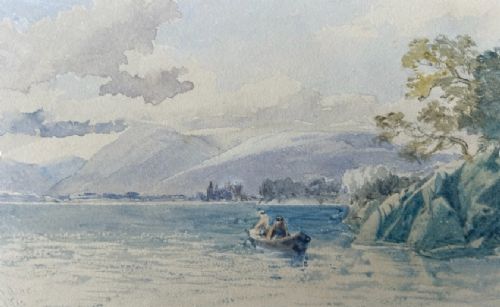
Grey watercolour art captures tonal atmospheres across British landscapes, maritime scenes and intimate portraits from the nineteenth and twentieth centuries.
Grey Watercolour Art
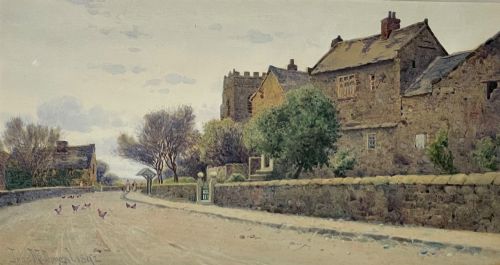
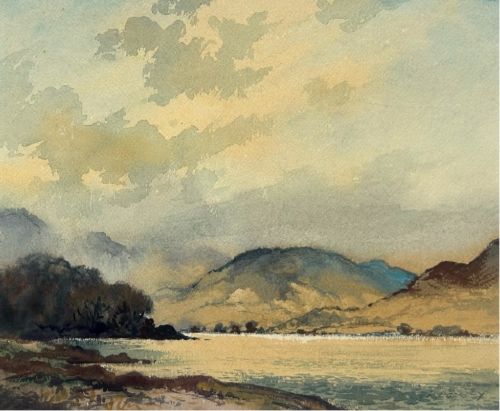
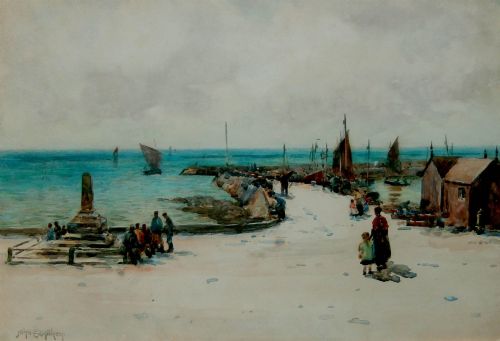
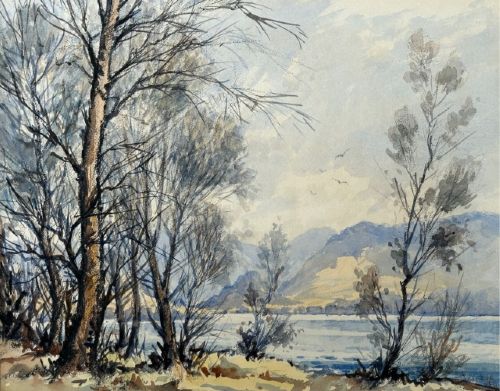
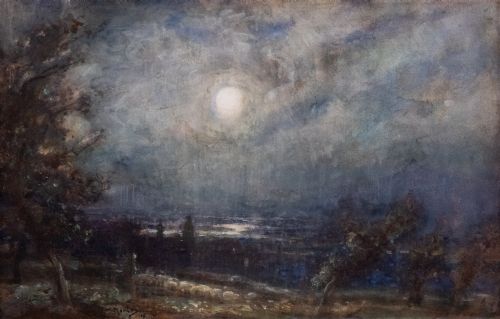
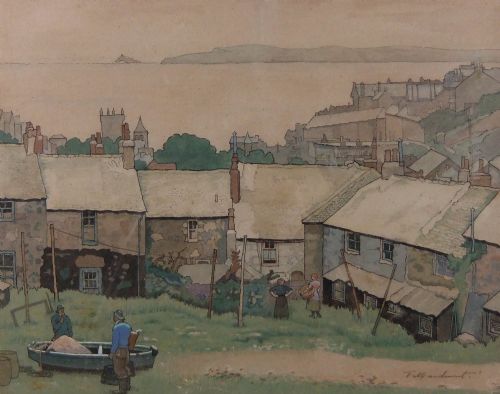
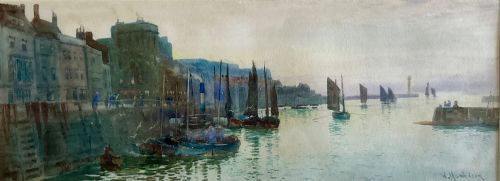
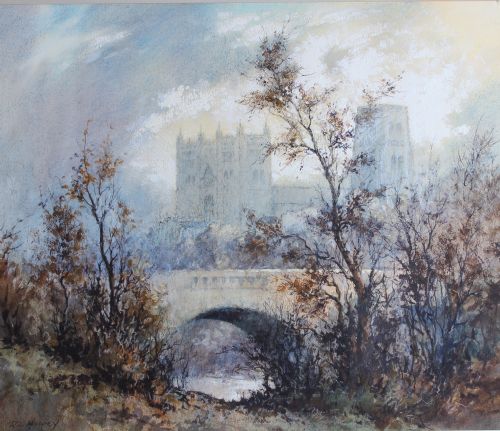
When you search for grey watercolour art, you encounter original works on paper spanning the nineteenth century through the mid-twentieth century. The selection ranges from Victorian coastal views and Edwardian moorland scenes to mid-century British landscapes and maritime watercolours.
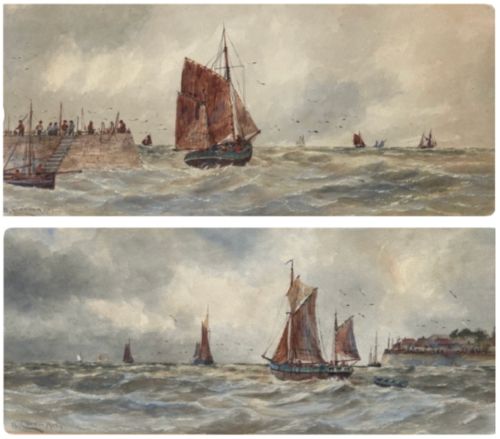
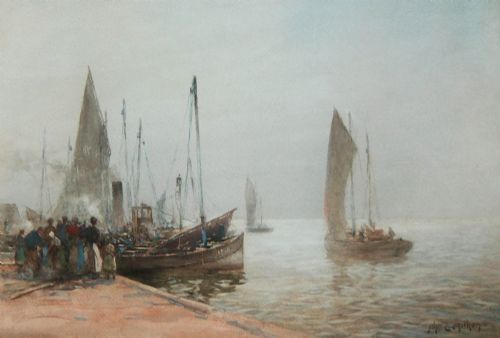
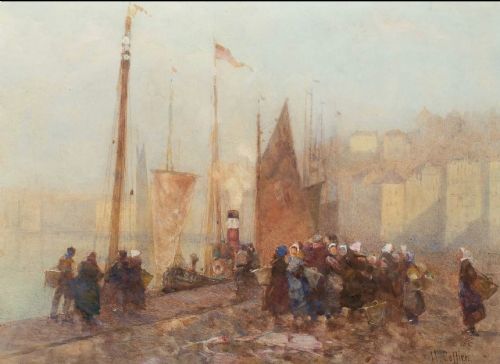
Most pieces you meet on this page originate from British artists working in traditional painterly styles such as British Impressionism. Subjects include fishing boats, Scottish castles, architectural studies and quiet northern rivers rendered in subtle monochrome or muted palettes.
The material supports include watercolour pigment, ink and gouache applied to paper, frequently framed under glass with wood mouldings. These watercolours offer direct insight into historic topographical recording and individual artistic vision.
Materials and construction
Artists deployed watercolour pigment and bodycolour on heavyweight rag paper, sometimes combining ink or pencil underdrawing to establish architectural precision and coastal topography. Washes were layered from pale monochrome tones to deeper greys to create atmospheric depth in maritime and landscape subjects.
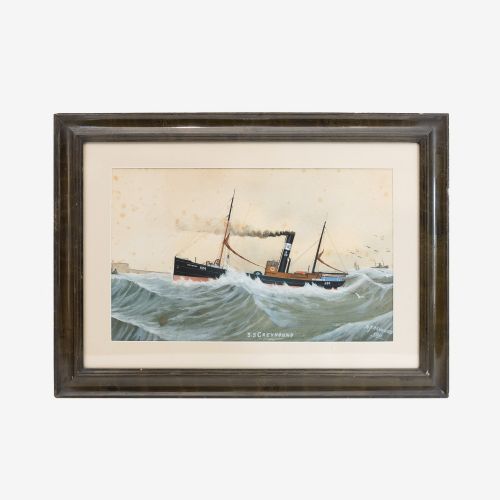
Many works incorporate gouache highlights to add opacity and contrast against translucent grey washes, particularly on maritime scenes depicting foam and metal hulls. Framing historically involved wooden mouldings and glass protection to shield the delicate paper supports from atmospheric moisture and light degradation.
Listings span works dated from the Victorian era through the 1960s, employing paper, watercolour pigment, gouache, ink and gold leaf.
Evaluating quality and handling
Quality rests upon the confidence of the brushwork and the artist's command of tone within a restricted palette. Superior examples demonstrate fluid control of washes that preserve the luminosity of the paper beneath, whereas lesser works appear flat and heavy-handed.
The significance of the subject and the documentary strength of the composition elevate certain pieces. Works signed by recognised practitioners or featuring detailed topographical records of named vessels and locations command greater attention than anonymous sketches.
Thomas Miles Richardson Jnr·William Cannon·James Smetham·John McDougal·Robert Leslie Howey·James E. Aitken·John E. Aitken·Thomas William Morley·Hector Caffieri·Thomas Maidment·William Matthison·Alexander Harwood·Cecil Beaton·Albert Ludovici Jnr·Michael Healy·Frank Kelsey·Warwick Goble·John Moxon·F.J. Snell·Charles William Adderton·Commander Eric Tufnell·Vincenzo D’Esposito·Arthur Wardle·Robert Little·Fred Lawson
The Grey Watercolour Art Glossary
- Watercolour pigment
- Finely ground colour particles suspended in a water-soluble binder, used on paper to create translucent washes.
- Gouache
- An opaque watercolour paint containing an added white pigment to create solid areas of tone and highlight.
- Wash
- A fluid layer of diluted watercolour paint spread evenly across paper to create broad areas of tone or sky.
- Monogram
- A cipher or initials combined into a single mark used by an artist to sign a work instead of a full signature.
- Provenance
- The documented history of ownership of an artwork, establishing its authenticity and passage through time.
Grey Watercolour Art: Frequently Asked Questions
How should I frame and hang antique watercolours?
Keep watercolours away from direct sunlight to prevent the grey pigments and paper from fading over time. Use acid-free mounts and framing materials to protect the paper from chemical discoloration.
Ensure the room humidity remains stable to avoid warping the paper or encouraging mould growth behind the glass.
What subjects appear most often in grey watercolours?
British coastal scenes, stormy seas and northern rivers dominate the works, reflecting the natural climate of the artists. Architectural studies and portraits also feature prominently.
Industrial vessels and naval ships frequently appear in works from the early twentieth century.
How do I distinguish a Victorian watercolour from a later piece?
Victorian watercolours often rely on heavier narrative detail and tighter brushwork in landscapes. Paper stocks from the nineteenth century generally possess a heavier, fibrous texture.
Twentieth-century pieces tend toward looser washes and expressive mark-making associated with modern British art.
Why do some watercolours use gouache alongside transparent pigment?
Artists added gouache to introduce opaque highlights and crisp details that transparent watercolour alone could not achieve. This technique was particularly useful for rendering white crests on waves and clouds.
It provides strong tonal contrast against dark grey washes.