
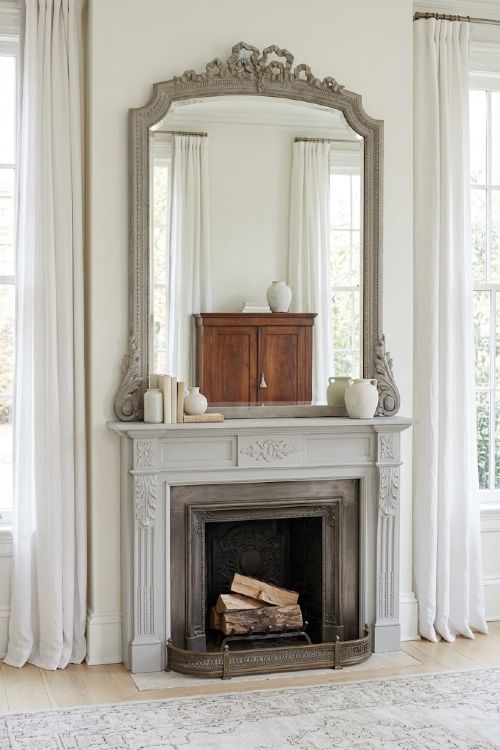


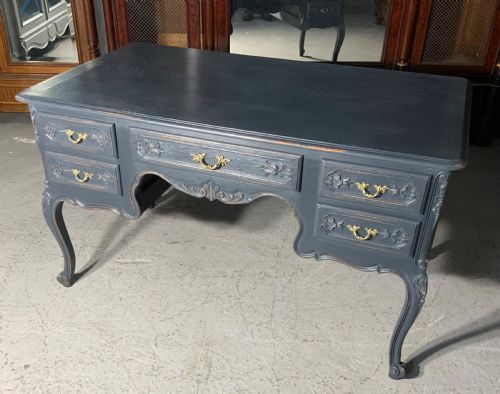


Grey Vanity Table
A grey vanity table combines period form with a neutral painted finish, offering a practical surface for grooming that sits easily in a modern bedroom.
Grey Vanity Table
A grey vanity table primarily encompasses dressing tables, washstands, and painted chests equipped with mirrors, spanning the Victorian, Edwardian, and Art Deco periods. These pieces serve as functional bedroom furniture designed for personal grooming and ablutions, utilising traditional timber frameworks given a painted surface treatment.
Associated seating and mirrors frequently accompany these dressing pieces, including cabriole leg stools, music stools, and swing mirrors. These items reflect the domestic routines of the nineteenth and early twentieth centuries while adapting readily to contemporary interiors.
Materials and construction
Makers utilised solid timbers such as mahogany, walnut, oak, and satinwood as the structural foundation for these dressing tables and washstands. Many surfaces received a painted finish, while others exposed the natural grain of the wood beneath decorative inlays.
Functional stone components, notably marble tops, provide durable surfaces resistant to moisture, particularly on washstands. Brass hardware, including mounts, handles, and embellishments, secures structural elements and adds decorative contrast to the painted wood.
Object types span dressing tables, washstands, writing desks, music stools, and swing mirrors influenced by French Rococo, Gustavian, and Sheraton styles.
Distinctions in quality
Quality rests upon the integrity of the timber framework, the crispness of carved or inlaid details, and the preservation of original painted surfaces. Pieces featuring integrated marble slabs and substantial brass mounts demonstrate superior material selection.
Cohesion within a suite or the retention of matching accessories like upholstered stools and swing mirrors elevates a piece. Finer examples maintain structural stability in their drawers and joints while showing balanced proportions across the legs and mirrors.
The Grey Vanity Table Glossary
- Washstand
- A piece of furniture designed for holding a basin and jug for washing, frequently fitted with a marble top. These items often double as vanity surfaces in modern interiors.
- Swing mirror
- A looking glass mounted on pivoted side supports that allow the angle of the glass to be adjusted. They sit atop dressing chests or tables.
- Cabriole leg
- A furniture leg that curves outward and then tapers inward, ending in a pad or foot. This form derives from classical design and appears on Victorian stools and tables.
- Satinwood
- A durable, hard timber with a natural golden sheen and smooth grain. Makers utilised it for fine inlays and decorative veneers on Edwardian and nineteenth-century furniture.
- Gustavian
- A Swedish neoclassical style characterised by pale painted finishes, restrained carving, and functional elegance. This aesthetic informs the painted writing desks and tables seen in this period.
Grey Vanity Table: Frequently Asked Questions
What is a grey vanity table?
A grey vanity table is a period dressing table, washstand, or painted desk finished in a neutral grey tone. These pieces provide surface space for grooming and writing while incorporating historical design elements from the Victorian to the Art Deco eras.
They bridge historical craftsmanship and modern interior palettes through their repainted or original muted surfaces. Buyers use them as functional bedroom focal points that offer storage and mirror arrangements.
How were antique washstands used?
Antique washstands were originally constructed for bedroom hygiene before the widespread adoption of plumbed indoor bathrooms. They held ceramic basins and pitchers for morning washing and dental care.
Today, their marble tops and storage cupboards make them ideal vanity tables or hallway surfaces. The stone top easily withstands modern cosmetics and toiletries.
How do I identify an Edwardian dressing table?
Edwardian dressing tables often display lighter timbers like satinwood, subtle inlaid details, and Sheraton Revival influences. They frequently incorporate swing mirrors and delicate tapering legs rather than heavy Victorian mouldings.
The construction tends to be lighter in scale, reflecting early twentieth-century preferences for brighter, airier bedroom furnishings. Painted finishes and subtle brass hardware are common characteristics.
Can I use a washstand as a vanity?
A washstand serves as an effective vanity table because its original marble top provides a durable, water-resistant surface for daily use. Many examples include lower shelves or small drawers for organising grooming items.
Pairing the washstand with a suitable stool or chair creates a functional dressing area. The neutral grey painted finishes blend easily with modern bathroom and bedroom decor.
What is an Art Deco dressing room suite?
An Art Deco dressing room suite consists of matching bedroom furniture produced during the interwar period, typically featuring streamlined forms and coordinated wood veneers. These suites often include a dressing table, matching stools, and wardrobes designed as a unified ensemble.
They represent a shift away from historical revival styles toward geometric simplicity and modern symmetry. The group creates a cohesive aesthetic within a contemporary bedroom.