
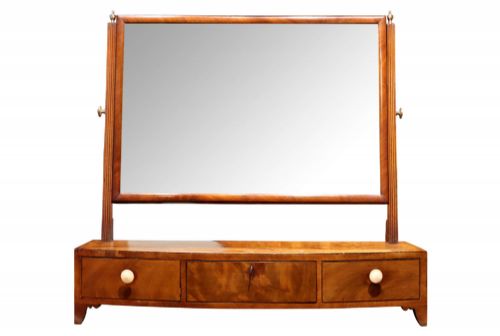
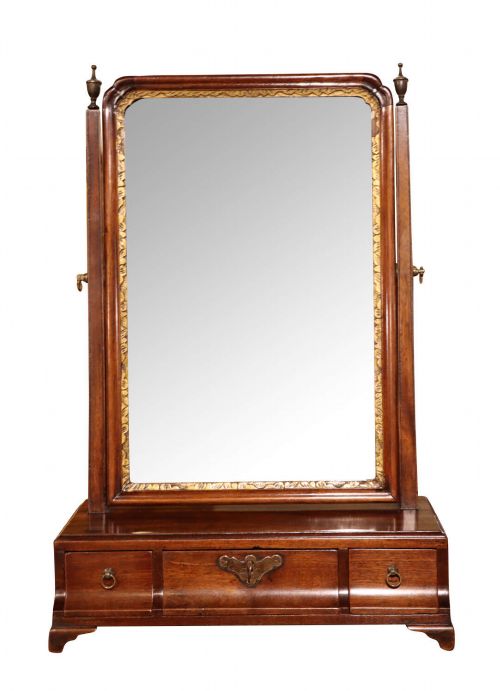


Three Mirror Dressing Table
A three mirror dressing table offers the practical multi-angle glass every morning routine requires, housed within period frames spanning Georgian elegance to Art Deco geometry.
Three Mirror Dressing Table
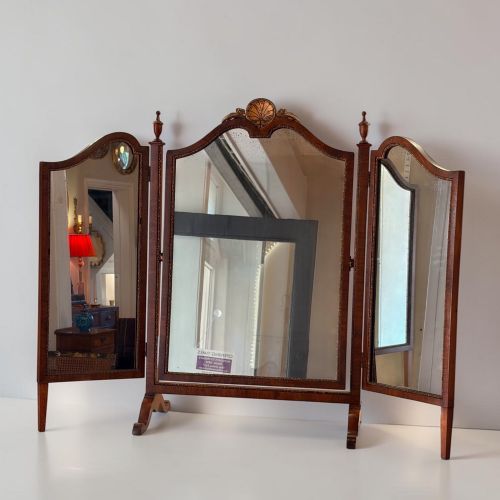
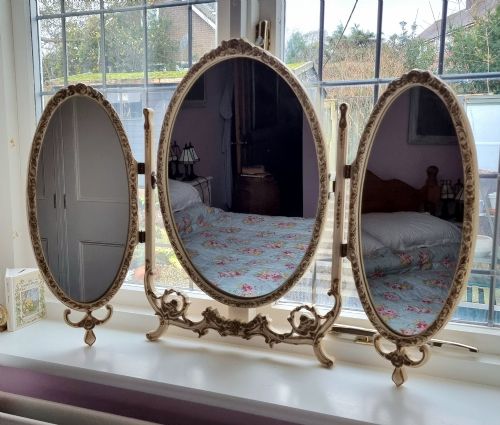
When you search for a three mirror dressing table, you encounter a varied group of bedroom furnishings and dressing mirrors ranging from compact Georgian box base toilet mirrors to expansive French suites. The configuration typically centres on a large central glass flanked by two adjustable hinged wings, creating the triptych effect seen across Victorian, Edwardian, and twentieth-century examples.
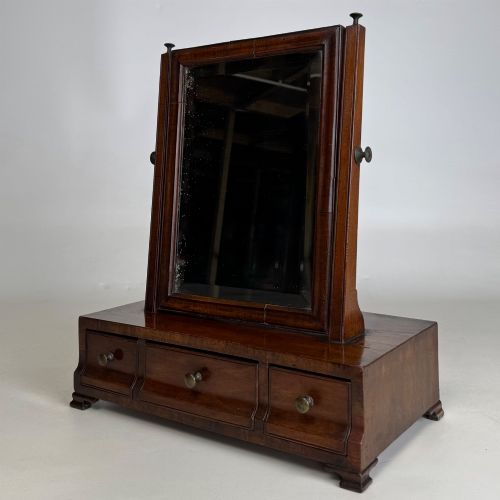
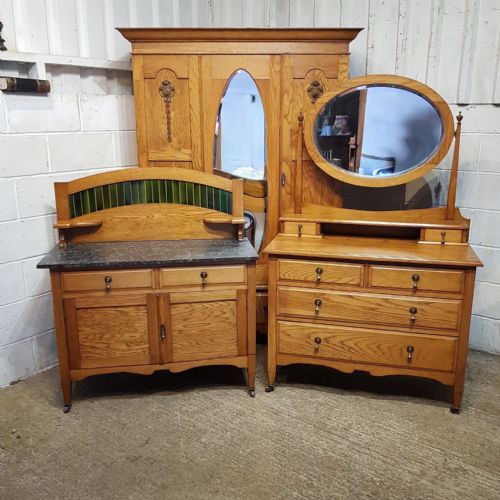
The pieces on this page appear in several distinct forms, including standalone swing mirrors with three-drawer bases, complete bedroom suites incorporating matching wardrobes, and dedicated dressing tables with integrated folding mirrors. Mahogany, oak, and walnut provide the structural timber framework, whilst French designs introduce fruitwood and gilt finishes alongside brass embellishments.
What varies in quality
The distinction between standard examples and the finest pieces often rests on the choice of timber figure, such as highly figured flame mahogany or burr walnut, paired with meticulous marquetry or boxwood stringing. Superior construction shows in the precision of the drawer dovetails and the integrity of the brass swing mirror hardware.
Proportion and decorative restraint set apart the better specimens, whether in the sweeping curves of a serpentine oval mirror base or the balanced execution of French neoclassical and Arts & Crafts styling. The weight and clarity of the glass plates and the stability of the hinged side mirrors further define the calibre of the piece.
Squashed bun feet anchor select Victorian dressing mirrors, offering a surprisingly stout foundation to otherwise graceful swinging glass.
Gaylayde·B Cohen & Sons
The Three Mirror Dressing Table Glossary
- Triptych
- A three-part construction where a central panel is flanked by two smaller folding wings. This arrangement allows the user to adjust the outer mirrors for angled reflections.
- Box Base
- A shallow wooden plinth or box fitted beneath a swing mirror, frequently containing one, two, or three small drawers for storage. It provides a stable foundation for the upright mirror supports.
- Serpentine
- A curved line that undulates inwards and outwards, commonly seen along the front edge of dressing mirror drawer bases. It requires skilled woodworking to shape accurately.
- Stringing
- A thin inlay of contrasting wood, such as boxwood, set into the surface of furniture to create decorative borders and linear patterns. It is characteristic of Regency and Georgian cabinet work.
Three Mirror Dressing Table: Frequently Asked Questions
How do I date a dressing mirror?
Dating relies heavily on timber choices, construction methods, and stylistic cues such as Georgian boxwood stringing or Art Deco geometric marquetry. Examining the drawer dovetailing and the composition of the mirror glass provides further chronological clues.
Earlier pieces from the Georgian and Regency eras typically feature hand-cut joints and simpler proportions, whereas Edwardian and 1930s examples often incorporate suite matching and distinct revival styles.
Are the mirrors original to the tables?
Many surviving pieces retain their original glass plates, which can sometimes show light foxing or age-related speckling. Replacement mirrors do occur due to the fragile nature of old glass.
Inspecting the backing boards, frame fixings, and bevel style helps determine whether the glass matches the age and manufacture of the supporting woodwork or base.
How do I care for antique wood surfaces?
Maintenance involves keeping wooden frames and dressing table surfaces away from direct sunlight and fluctuating heat sources to prevent veneer cracking. Regular dusting with a soft, dry cloth preserves the polished finish.
Applying a traditional beeswax polish occasionally helps nourish timbers like mahogany and walnut without building up heavy chemical residues that dull the grain.
What is the difference between a toilet mirror and a dressing table?
A toilet mirror is a smaller, portable glass usually fitted with a drawer base designed to sit on top of an existing chest of drawers or table. A dressing table is a larger, freestanding piece of furniture with an integrated surface and often built-in mirrors.
Both serve similar grooming functions but occupy different spatial footprints within a bedroom setting.