




Grey Stone Artwork
Grey stone artwork gathers pieces rendered in paint, paper, and soapstone across various centuries.
Grey Stone Artwork
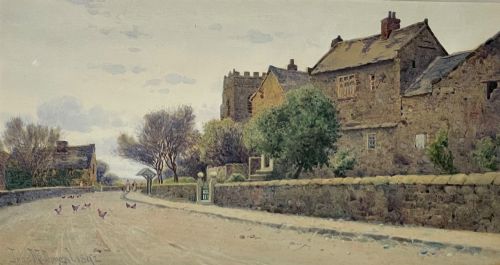
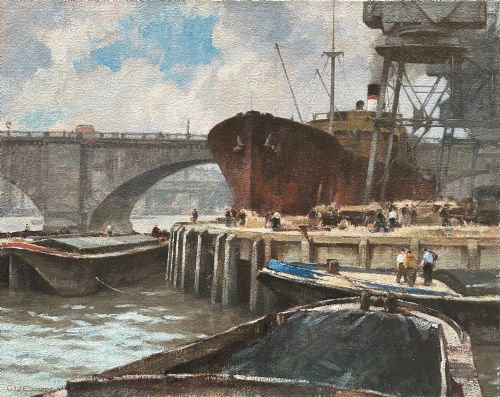
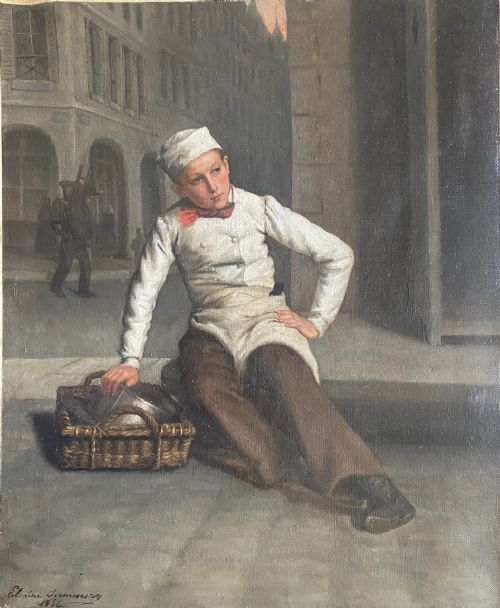
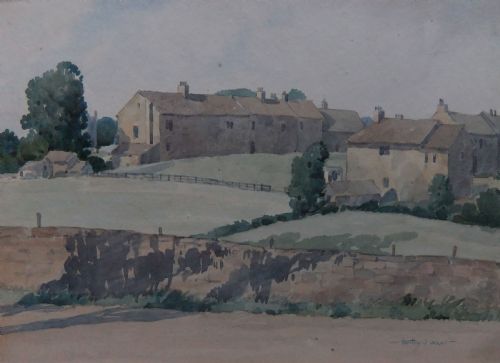
Grey stone artwork encompasses paintings, watercolours, and sculptures originating from the nineteenth and twentieth centuries. Buyers seeking grey stone artwork encounter depictions of British landscapes, French scenes, and carved figures.
Subject matter ranges from country houses and village views to mountain streams and portraits. Sculptural representation appears through soapstone carvings depicting animal groups.
Materials and methods
Makers utilised watercolour pigment on paper and oil paint applied to canvas or wood panels. Pigments capture atmospheric light across British Impressionist and realist compositions.
Soapstone undergoes carving to shape three-dimensional figures such as monkeys. Traditional framing and support structures utilise wood.
Soapstone monkeys sit quietly among the painted landscapes, watching over the canvas and paper works.
Evaluating the pieces
Quality rests on the handling of medium and compositional balance by the artist. Works by established painters exhibit distinct brushwork and tonal depth.
Carvings distinguish themselves through the definition of form and surface smoothness in the stone. Finer examples maintain crisp detail in the subject matter.
John McDougal·Florence Adelina Hess·Rowland Henry Hill·Noel Harry Leaver·Ernest Higgins Rigg
The Grey Stone Artwork Glossary
- Watercolour
- A paint consisting of colour suspended in a water-soluble binder, used on paper to create translucent washes.
- Oil painting
- Pigments bound with an oil medium, typically applied to canvas or wood panel, allowing for rich colour layering.
- Soapstone
- A talc-schist metamorphic rock that is relatively soft and easily carved into detailed sculptures.
- Trompe l'oeil
- An art technique involving realistic imagery to create the optical illusion that depicted objects exist in three dimensions.
- Panel
- A flat piece of wood used as a rigid support surface for oil paintings.
Grey Stone Artwork: Frequently Asked Questions
What periods do these pieces span?
The works stretch from the Georgian and Victorian eras through the Edwardian period into the nineteen-fifties.
Artists from different decades recorded landscapes and figures using traditional painting and carving methods.
How are the oil paintings supported?
Painters applied oils to stretched canvas or rigid wooden panels depending on the format.
Support structures reflect the standard practices of nineteenth and twentieth-century studios.
What subjects appear in the watercolours?
Watercolours depict village scenes, bridges, mountain streams, and country houses across Britain and Europe.
Artists captured these views on paper using pigment washes.
How do soapstone carvings differ from paintings?
Soapstone carvings provide three-dimensional forms like animal groups shaped from mineral stone.
Paintings utilise two-dimensional pigment on paper, canvas, or panel surfaces.