



Grey Sky Watercolour
Grey sky watercolour works capture atmospheric British coastal and inland views through delicate washes on paper.
Grey Sky Watercolour
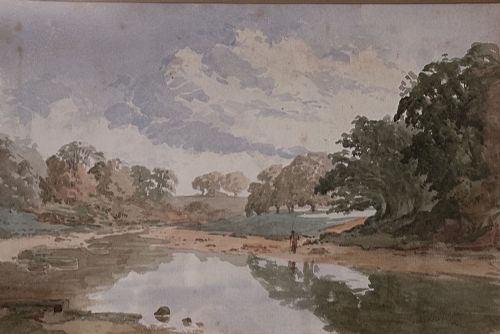
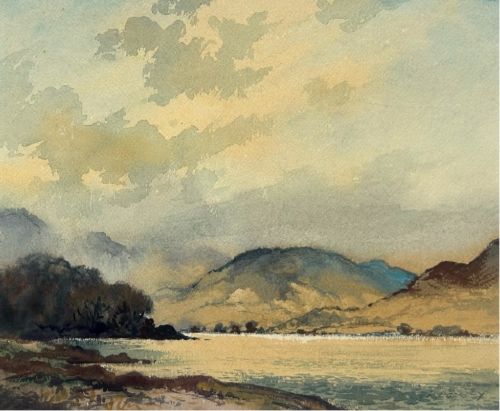
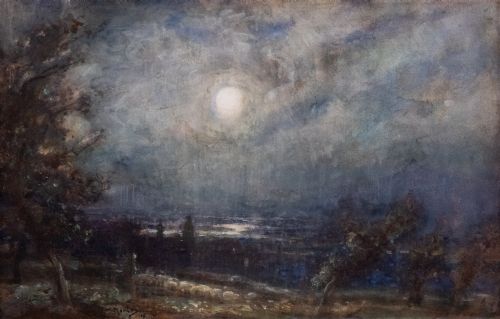
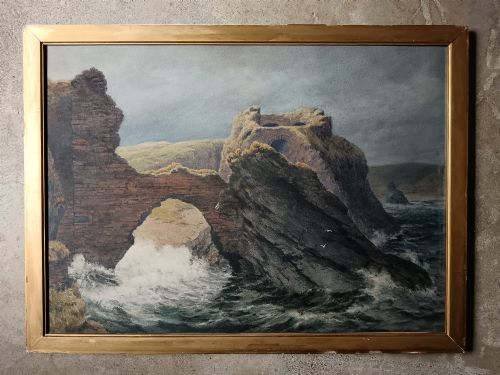
A grey sky watercolour presents a landscape, marine scene or architectural view dominated by overcast conditions and muted light. These works range from late Victorian maritime studies to mid-century British topographical paintings.
The most common examples on this page date from the late nineteenth century through to the mid-twentieth century. Subjects span Scottish and English coastal harbours, northern lakes, and fenland landscapes.
Works on paper appear mounted and framed, often behind glass within wood or gilt wood surrounds. They record specific locations across Britain, from Yorkshire and Lancashire to the Thames in London.
Materials and technique
Artists apply watercolour pigment and watercolour paint directly onto paper supports, relying on the white of the paper to render pale cloud cover and watery light. Diluted washes create the subtle gradations characteristic of overcast skies.
Framing typically involves glass to protect the paper surface, set within wood or gilt wood frames that complement the tones of the painting.
Listings span periods from the Victorian era through the 1960s, utilising watercolour pigment on paper within wood and gilt wood frames.
Judging the work
Quality rests upon the artist's handling of atmospheric tone and the transparency of the pigment washes. Stronger examples capture the weight of heavy weather without muddying the paper.
Compositional balance and the precision of topographical detail elevate a piece above standard topographical records. The fluency of the brushwork in rendering shifting cloud formations dictates the visual success of the painting.
Robert Leslie Howey·John E. Aitken·Thomas William Morley·John Moxon·Charles William Adderton·Cuthbert Crossley·James Orrock·George Hamilton Constantine·A. G. Hayward·Edmund Morris Wimperis·Thomas James Lloyd·Fred Lawson·Claude Muncaster·Tom Dudley·Henry J. Kinnaird·Frank Saltfleet·Thomas Bush Hardy·John D. Walker·Edward Wesson·Arthur Anderson Fraser·R. I. Barrow
The Grey Sky Watercolour Glossary
- Watercolour paint
- A water-soluble medium composed of pigment and binder that produces translucent colour washes when diluted with water.
- Topographical landscape
- A painting that depicts a specific real-world location with geographical accuracy and recognizable landmarks.
- Gilt wood
- Wood framing finished with a thin layer of gold leaf or metallic paint, frequently found on nineteenth-century and early twentieth-century frames.
- British Impressionism
- An art movement focusing on natural light, outdoor settings and looser brushwork, adopted by various British painters in the late period.
Grey Sky Watercolour: Frequently Asked Questions
What subjects do these watercolours show?
The paintings depict British landscapes, rivers, and coastal scenes under overcast conditions. Common motifs include fishing boats, harbours, and rural views.
Views range from Yorkshire and Lancashire to Scottish castles and the Thames in London.
How should I hang a watercolour painting?
Watercolours on paper require protection from direct sunlight to prevent the pigments from fading over time. Keep them on interior walls away from moisture and heavy temperature changes.
Ensure the frame remains properly sealed behind glass to protect the paper.
How can I tell the period of a painting?
Dating relies on the artist's active dates, framing materials, and stylistic markers such as Victorian, Edwardian, or mid-century aesthetics. Signatures and titles written on the reverse also provide clues.
Paper types and framing methods often correspond to the era in which the work was produced.
Are these works signed by the artists?
Many examples feature signatures or monograms from the painter, occasionally accompanied by titled mounts or inscriptions on the back. These markings help confirm authorship and location.
Unsigned pieces are attributed through known stylistic traits and subject matter.