



Antique Moorland Painting
An antique moorland painting captures the wild, uncultivated beauty of British uplands through the brush of Victorian and Edwardian artists.
Antique Moorland Painting
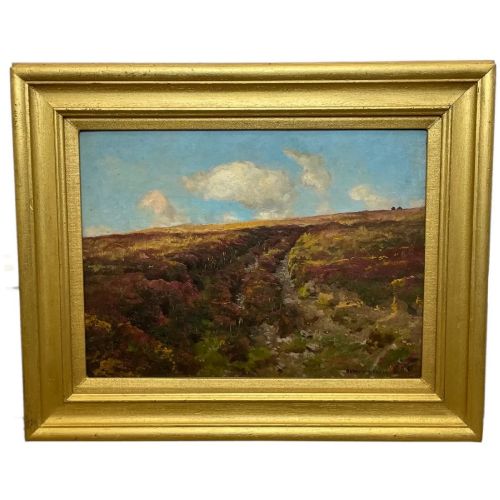
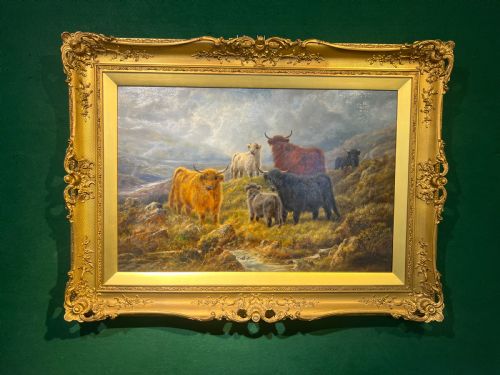
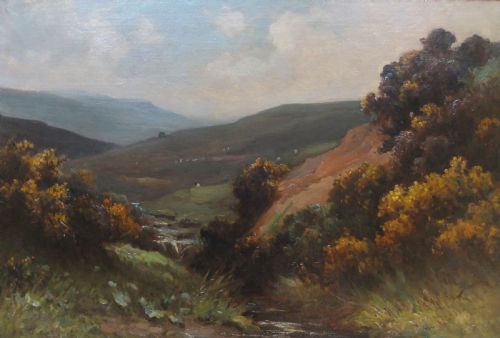
An antique moorland painting depicts expansive British uplands, capturing the rugged terrain of regions like Dartmoor, Exmoor, and the Scottish Highlands. These works typically feature local wildlife, grazing sheep, or solitary figures navigating wide horizons under dramatic skies.
The pieces available encompass both intimate watercolours on paper and larger oil paintings on canvas or wood panel. Victorian and early twentieth-century examples dominate, reflecting a period of intense artistic fascination with untamed rural landscapes.
How they were made
Artists utilised oil on canvas, wood panel, or board to build rich textures and deep tones suitable for heavy upland weather. Alternatively, watercolour and gouache on paper allowed for rapid, luminous studies of changing light and moisture across open terrain.
Finished works were generally housed in gilt or gilt wood frames, adding weight and a distinct decorative boundary to the scene. The support materials range from traditional stretched canvas to sturdy paper mounted securely behind protective glass.
Several sheep make repeat appearances across the centuries, apparently unbothered by the dramatic British weather.
What varies in quality
The sophistication of the brushwork and the artist's command of atmospheric light distinguish finer examples from standard topographical records. Superior paintings convey the specific weight of moorland weather and the texture of heather rather than relying on formulaic foliage or flat colour washes.
Compositional balance and the integration of figures, livestock, or sporting animals dictate the overall impact of the piece. Stronger works demonstrate careful handling of perspective that draws the viewer into the vastness of the terrain.
Tom Campbell·Arthur Wardle·Joseph Knight·Charles Walter Simpson·Owen Bowen·James Orrock·John A Houston·Florence Hess·Colin Graeme Roe·Joseph Farquharson·John Charles Tunnard·Edmund Morris Wimperis·Arthur H Enock·Frederick Richard Lee·Charles James Adams·Robert Cleminson·Alfred Graham·Albert Kinsley·W Turnbull·W Hallam·William H Pigott·Moritz Eduard Lotze·John William Buxton Knight·John Bates Noel·Peter Ghent
The Antique Moorland Painting Glossary
- Watercolour
- A paint consisting of pigment suspended in a water-soluble binder, frequently applied to paper to achieve transparent washes of colour. It requires swift, confident execution since alterations are difficult to make.
- Gouache
- An opaque watercolour paint containing an added white pigment to create a heavier, denser finish with solid areas of colour. Artists use it to introduce highlights and opaque details into works on paper.
- Wood Panel
- A rigid wooden support used by painters as an alternative to stretched canvas. Panels offer a stable surface that prevents the cracking often seen in aged fabric supports.
- Gilt Wood
- Timber framing coated with a thin layer of gold leaf or metallic gilt paint. This traditional finish adds brightness and historical weight around the perimeter of the artwork.
Antique Moorland Painting: Frequently Asked Questions
What subjects appear in these paintings?
These works primarily focus on upland terrain, featuring rolling hills, heather-clad slopes, and remote valleys. Artists frequently included grazing sheep, Highland cattle, or sporting dogs to animate the vast open spaces.
Human presence is usually minimal, often limited to a lone drover, a shepherd with a flock, or a traveller walking through the countryside. The emphasis remains on the shifting weather and the natural topography of regions like the Scottish Highlands or West Country moors.
How do I care for a watercolour moorland painting?
Works on paper require protection from direct sunlight to prevent the pigments and paper stock from fading over time. Keeping them away from excessive humidity ensures the paper and any underlying mount board remain stable.
Displaying the piece behind proper glass with adequate spacing between the glazing and the artwork prevents moisture damage. Professional framing using acid-free materials preserves the integrity of nineteenth-century watercolours for decades.
Are oil paintings on wood panel fragile?
Wood panels provide a rigid and durable support for oil paint, often resisting the tears and punctures that affect canvas. However, wood reacts to significant fluctuations in temperature and humidity by expanding and contracting slightly.
Stable indoor environments help prevent the wood from warping and keep the paint layer from developing fine cracks. Regular gentle dusting of the surface and frame keeps the pigment looking vibrant without risking moisture contact.
How can I tell the period of a landscape?
Stylistic cues, framing choices, and framing materials often provide reliable indicators of a painting's era. Victorian works tend to feature heavier, ornate gilt frames and a dramatic, narrative approach to weather and wildlife.
Early twentieth-century pieces, including those influenced by British Impressionism or the Scottish School, often exhibit looser brushwork and lighter palettes. Examining the back of the canvas or panel can also reveal historic labels, inscriptions, or artist signatures.