
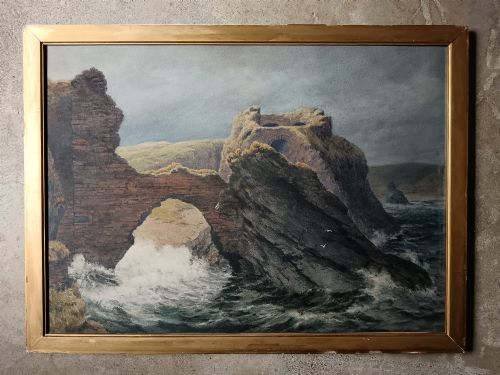


Grey Sky Landscape Watercolour
These grey sky landscape watercolour works capture atmospheric British coastal and rural scenes across the nineteenth and twentieth centuries.
Grey Sky Landscape Watercolour
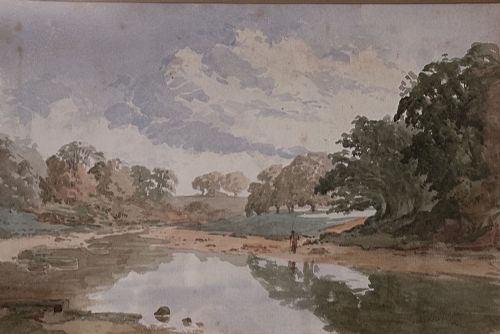
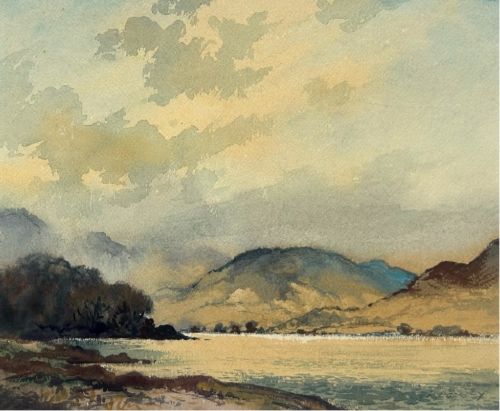
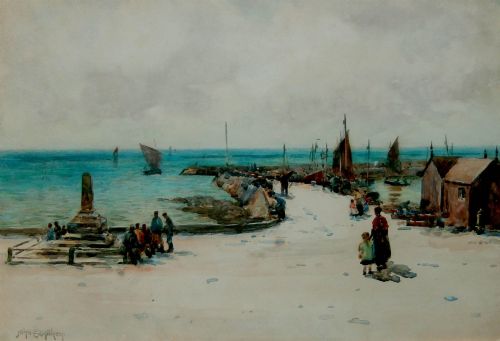
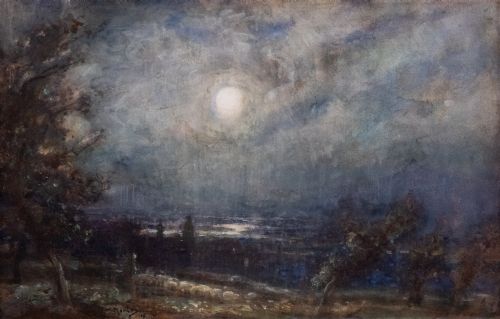
A grey sky landscape watercolour presents topographical views of lakes, rivers, fens, and maritime harbours executed primarily on paper support. The works span from the Victorian period through to mid-century modern art, reflecting changing British artistic movements.
Most examples concentrate on atmospheric weather conditions over coastal havens, abbeys, and northern English or Scottish landscapes. Artists employed delicate washes to render overcast skies, stormy seas, and winter fens with subtle tonal graduation.
Buyers encounter framed pieces utilising traditional wood and gilt wood surrounds alongside protective glass. The visual focus consistently rests on the naturalistic rendering of regional topography under subdued daylight.
Materials and Technique
Artists applied watercolour pigment and watercolour paint directly onto prepared paper sheets. This aqueous medium allowed for rapid application of translucent washes, particularly suited to capturing shifting cloud formations and expansive coastal skies.
Finished works received protection beneath glass and were housed within wood or gilt wood frames. The combination of water-soluble pigments on paper demanded skilled brushwork to achieve the luminous atmospheric effects characteristic of British impressionism and realism.
Several artists clearly braved very damp British weather to capture these moody skies.
Factors of Quality
Quality rests upon the artist's ability to manipulate pigment on paper to convey atmosphere and spatial depth within the landscape. Works that capture convincing light over northern lakes or coastal waters demonstrate superior technical execution.
The preservation of the paper support and the vibrancy of the original watercolour paint influence the visual impact of the piece. Well-balanced composition and confident brushwork distinguish accomplished practitioners from more routine topographical recorders.
John E. Aitken·Thomas William Morley·John Moxon·Charles William Adderton·Cuthbert Crossley·James Orrock·George Hamilton Constantine·Edmund Morris Wimperis·Thomas James Lloyd·Fred Lawson·Claude Muncaster·Tom Dudley·Henry J. Kinnaird·Frank Saltfleet·Thomas Bush Hardy·John D. Walker·Arthur Anderson Fraser·R I Barrow
The Grey Sky Landscape Watercolour Glossary
- Watercolour paint
- A medium consisting of colour pigments suspended in a water-soluble vehicle, applied to paper support for these landscape works.
- Gilt wood
- A decorative wooden framing material covered with a thin layer of gold leaf or gilt, frequently used to house nineteenth and early twentieth-century fine art.
- Topographical landscape
- A painting or drawing that accurately depicts specific geographical locations, such as identifiable rivers, abbeys, or coastal towns.
- Victorian period
- The historical era spanning the reign of Queen Victoria, providing the foundation for many nineteenth-century maritime and rural watercolours in the evidence.
Grey Sky Landscape Watercolour: Frequently Asked Questions
What periods do these watercolours date from?
The pieces span from the mid-nineteenth century through the Victorian and Edwardian eras into the mid-twentieth century.
Most works cluster around the late Victorian period and the early decades of the twentieth century.
How should I frame and display them?
These works on paper require framing behind glass to protect the delicate watercolour pigment from airborne pollutants and moisture.
Keep them away from direct sunlight to prevent the watercolour paint from fading over time.
Are the locations in the titles identifiable?
Many pieces document specific British and European locations, including Yorkshire, the English Lake District, and Scottish coastal towns.
Artists frequently inscribed topographical details directly onto the work or the accompanying mount.
What framing materials are typical?
Surrounds generally consist of traditional wood or gilt wood mouldings selected to complement the era of the painting.
Original frames occasionally accompany the paper support, though some pieces have undergone later reframing.