


Grey Seascape Watercolour
A grey seascape watercolour captures the shifting moods of coastal weather through restrained tones and fluid pigment.
Grey Seascape Watercolour
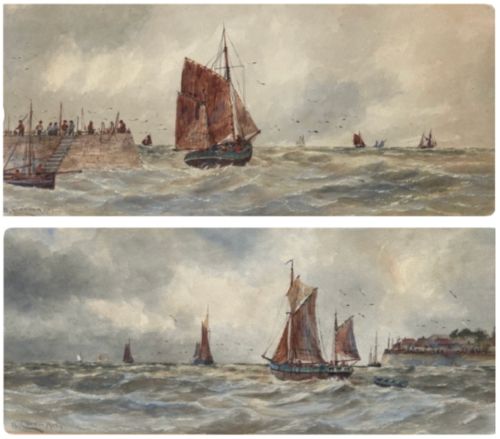
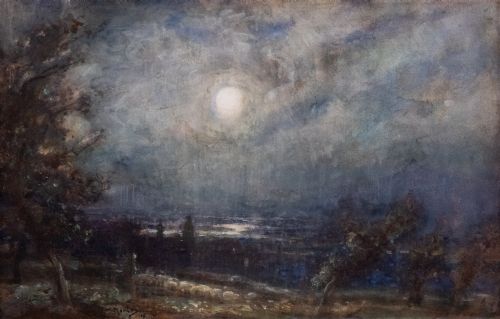
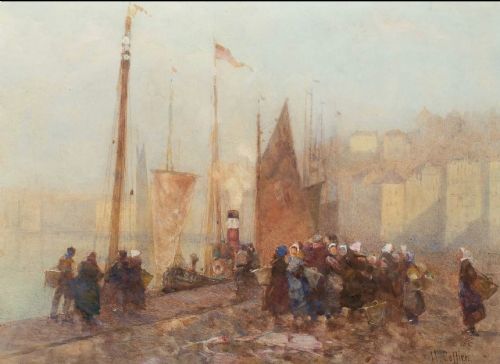
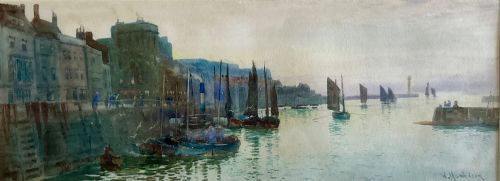
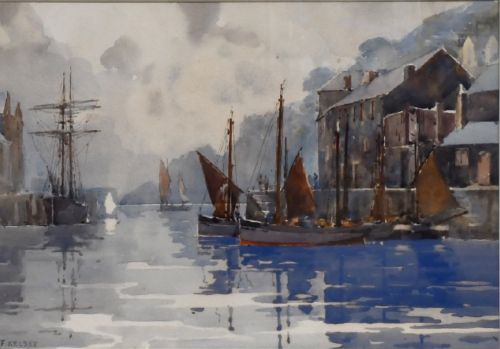
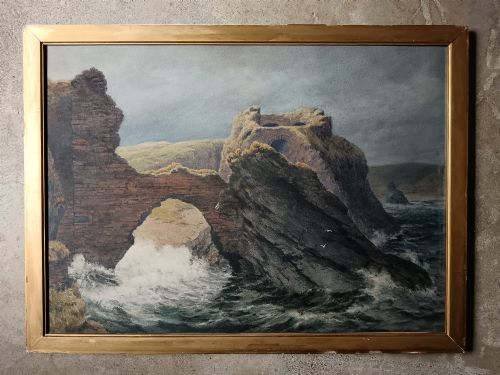
A grey seascape watercolour presents maritime scenes, coastal harbours, and shipping vessels rendered primarily in muted tones of grey, slate, and silver. These works typically depict British and European coastal locations, ranging from busy fishing ports to open seas under overcast skies.
The pieces available on this page span from the late nineteenth century through to the mid-twentieth century, encompassing Victorian marine art, Edwardian coastal studies, and early twentieth-century British impressionism. Common formats include framed paintings on paper, often protected beneath glass within traditional wooden frames.
Subjects frequently centre on maritime activity, featuring fishing cobles, steam and sail vessels, harbour walls, and lighthouses. Artists captured specific locations such as Whitby, Scarborough, and various West Country ports, recording the working life of the sea with observational directness.
Materials and technique
These works are executed using watercolour pigment applied to paper supports, occasionally incorporating ink for fine structural detail or structural definition. The medium relies on the white of the paper shining through thin washes to create luminosity in the sky and water.
Artists built up coastal scenes through transparent washes for the sea and sky, combined with more opaque touches of pigment to describe the hulls of ships, rigging, and stone quays. Framing typically involves wood and glass, which helps to protect the delicate water-soluble pigments from atmospheric moisture.
Several artists braved North Sea gales to sketch cobles bobbing about in grey chop, proving that damp boots are an occupational hazard of marine art.
Assessing visual success
Quality in these watercolours depends upon the artist's ability to command atmosphere and movement using minimal pigment and restrained tone. Successful works convey the weight of a choppy sea or the heavy moisture of an overcast coastal day through confident brushwork rather than laboured detail.
Compositional strength and atmospheric tension separate accomplished marine paintings from routine topographical sketches. The strongest examples demonstrate a sure handling of light upon water and sky, capturing the particular character of a harbour or shoreline with economy and precision.
Thomas Bush Hardy·Frank H Mason·Ernest Dade·Vincenzo D Esposito·Edward Wesson
The Grey Seascape Watercolour Glossary
- Watercolour pigment
- Finely ground colour particles mixed with a binder soluble in water, applied in washes to paper. This medium allows for translucent effects particularly suited to depicting water and shifting skies.
- Coble
- An open traditional fishing boat with a high bow and flat bottom, common on the Northeast coast of England. These craft frequently appear in marine watercolours of Yorkshire fishing villages.
- Wash
- A layer of diluted watercolour pigment spread smoothly across the paper to create uniform areas of tone, such as the sea or sky. Controlled washes form the atmospheric foundation of maritime painting.
- Maritime art
- Painting and visual media focused on ships, shipping, sea views, and coastal life. This broad genre includes specific sub-genres such as marine watercolours and harbour scenes.
Grey Seascape Watercolour: Frequently Asked Questions
What periods do these watercolours come from?
The works represented span the late nineteenth century through to the mid-twentieth century. Key periods include the Victorian era, the Edwardian period, and early twentieth-century British art.
Most pieces date from the 1870s to the 1950s, reflecting shifts in British and European maritime painting traditions over several decades.
How should I frame and display a watercolour?
Watercolours require framing behind glass with a mount that keeps the paper from touching the glazing directly. This prevents moisture accumulation and protects the pigment from surface damage.
Display the artwork away from direct sunlight to prevent the watercolour pigments from fading over time.
What subjects are most common?
Coastal scenes, working harbours, fishing boats, and shipping in choppy waters dominate the subject matter. Artists frequently recorded specific ports and coastal landmarks around Britain and continental Europe.
Common motifs include steam and sail vessels, piers, lighthouses, and beached fishing craft under overcast or moody skies.
How do I identify the artist?
Many pieces feature signatures, monograms, or inscriptions written by the artist in the lower corners of the paper. These often include the name of the depicted location, such as Whitby or Scarborough.
Examine the back of the frame or the paper backing for old gallery labels, exhibition tags, or handwritten notes regarding the title and date.