


Grey Paper Wall Art
Grey paper wall art brings together historic drawings and paintings executed on tinted grounds, offering subtle tonal backgrounds that allow watercolours and pastels to settle.
Grey Paper Wall Art
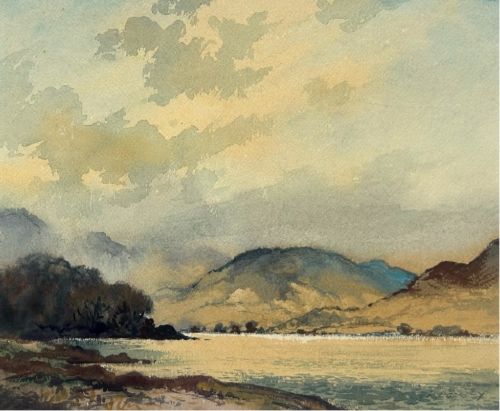
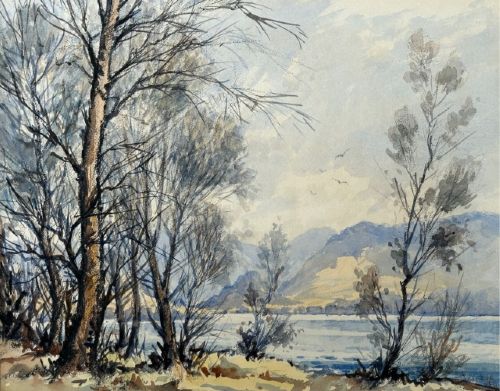
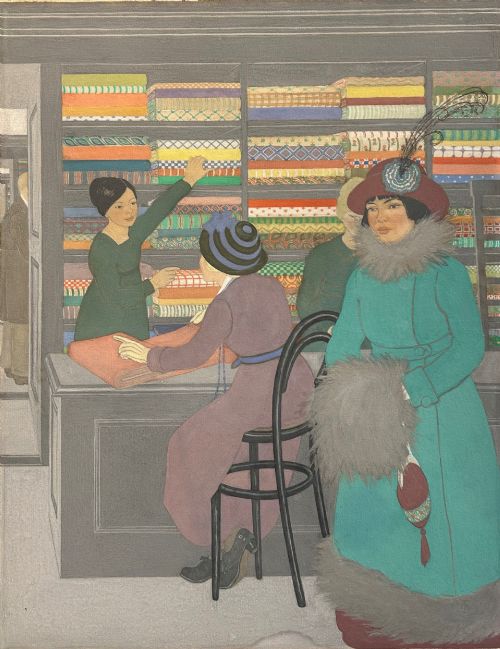
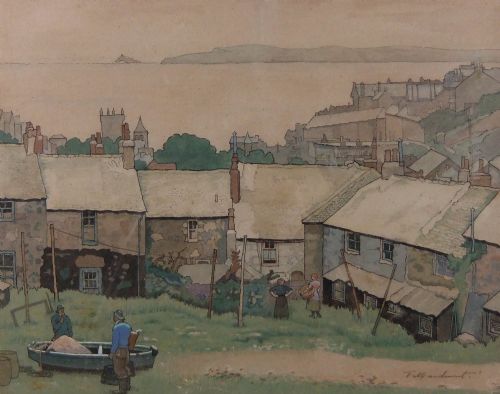
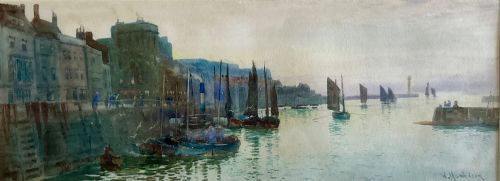
When buyers search for grey paper wall art, they encounter historic works on paper spanning from the Victorian era through the mid-20th century. These pieces encompass landscape watercolours, maritime scenes, portrait drawings, and cityscapes produced across Britain and Europe.
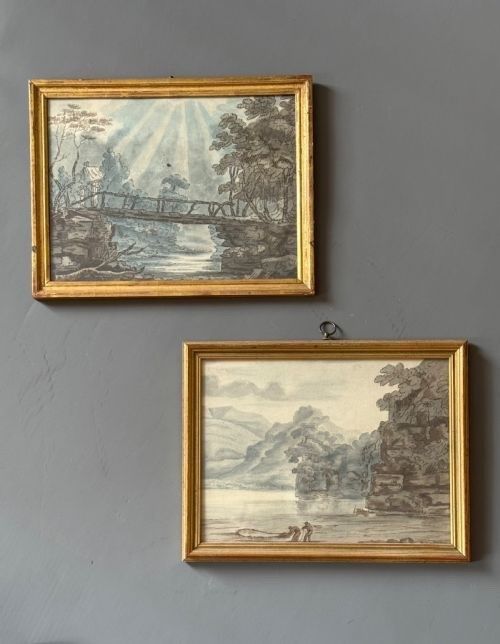
The versions most frequently met on this page are mid-century pastels and watercolours, alongside early 20th-century marine views and 19th-century landscape drawings. These works utilise the inherent tone of the tinted support to build atmospheric depth without relying solely on heavy pigments.
Framed works dominate the selection, preserving delicate graphic media under glass. The support material ranges from tinted drawing paper to coloured card, each providing a stable ground for charcoal, ink, and watercolour pigment.
Materials and technique
Artists apply watercolour pigment, pastel, ink, and charcoal directly onto prepared paper supports. The visible grey tone of the paper acts as an intermediate value, saving the creator from painting every background shadow from scratch.
Many works combine media, layering dense charcoal or soft pastel over fluid watercolour washes or pen and ink lines. Wood frames and glass protection complete the construction, safeguarding the fragile paper surfaces from atmospheric moisture and handling.
Materials span paper, watercolour pigment, glass, ink, wood, charcoal, and pastel across multiple historic periods.
Distinctions in quality
Quality rests upon the sureness of the hand and the relationship between the drawn marks and the surrounding paper ground. A superior piece demonstrates confident handling of pigment or pastel where the bare paper tone actively participates in the composition rather than acting merely as a flat background.
Condition and preservation also define the upper tier of works. Examples protected beneath glass with stable paper supports maintain their original tonal values, whereas neglected sheets suffer from discolouration or damp staining that compromises the subtlety of the tinted ground.
Robert Leslie Howey·Marc Chagall·Thomas Maidment·Shiro Katamatsu·John Rattenbury Skeaping·Edward Seago
The Grey Paper Wall Art Glossary
- Watercolour
- A paint consisting of pigment suspended in a water-soluble binder. It is applied in translucent washes that allow the underlying paper tone to shine through.
- Pastel
- A dry drawing medium composed of powdered pigment and a binder. It creates velvety textures that adhere closely to textured paper supports.
- Lithograph
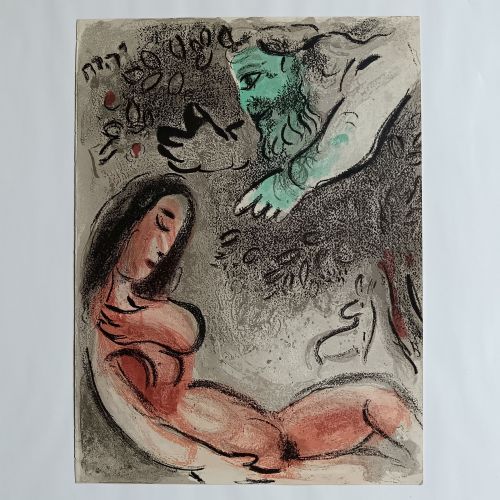
- A print produced from a flat stone or metal plate treated to retain ink in designated areas. This technique allows for multi-coloured graphic reproductions on paper.
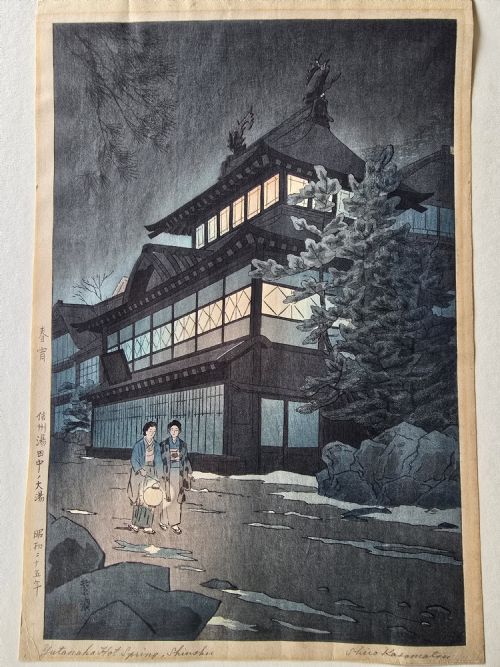
- Woodblock print
- A relief print created by carving an image into a block of wood, applying pigment, and pressing it onto paper. It produces crisp lines and flat areas of colour.
- Charcoal
- A dry drawing material made from burnt organic matter. Artists use it for bold linear work and deep tonal shadows on tinted paper.
Grey Paper Wall Art: Frequently Asked Questions
What periods do these pieces represent?
The inventory spans multiple centuries, with particular concentrations in the Victorian era, the early 20th century, and the mid-20th century. Styles range from traditional British marine painting to mid-century continental views.
Each period utilises distinct paper stocks and framing conventions that help date the physical object accurately.
Are these works original?
The selection includes unique hand-drawn and painted works alongside period prints such as woodblock prints and lithographs. Individual listings specify whether an artwork is a signed original painting or a historic print.
Close inspection under magnification reveals the hand of the artist through brushstrokes, pencil granulation, or ink application.
Why use tinted paper?
Tinted supports provide an immediate mid-tone value that saves artists from filling the entire page with background colour. Highlights stand out sharply against the darker paper, while dark pigments sink into the grain.
This technique creates a natural atmospheric depth, particularly useful for maritime scenes and winter landscapes.