

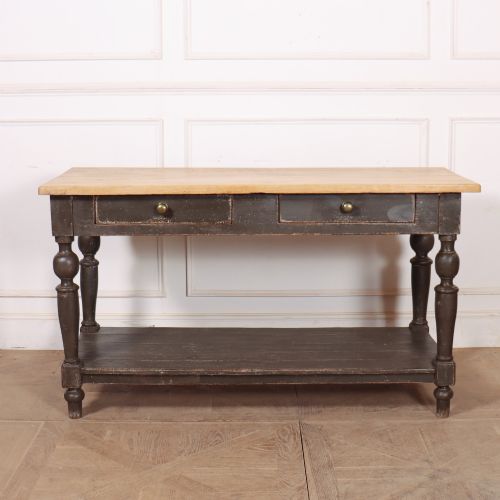
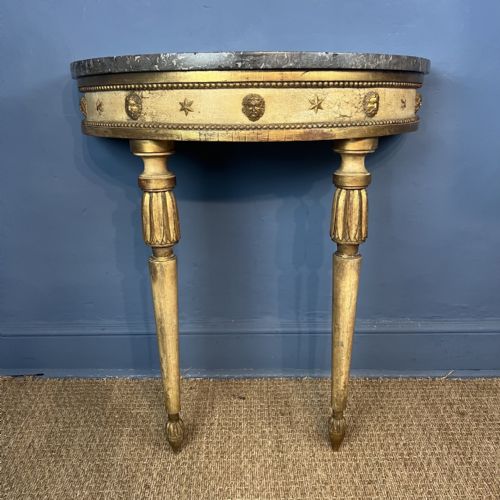
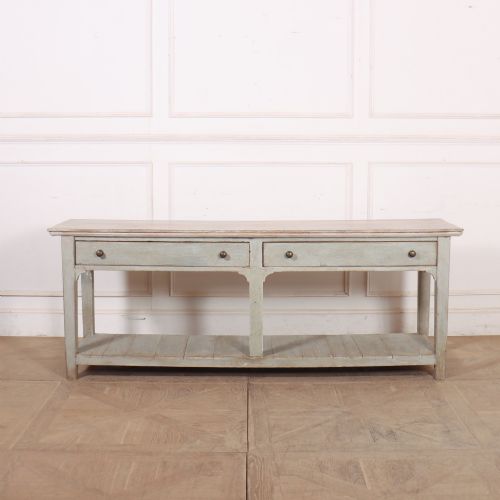
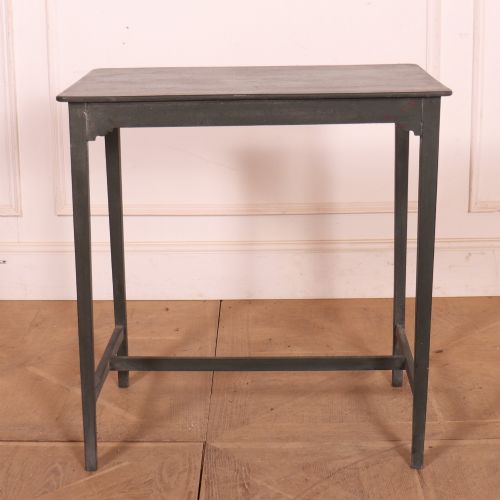
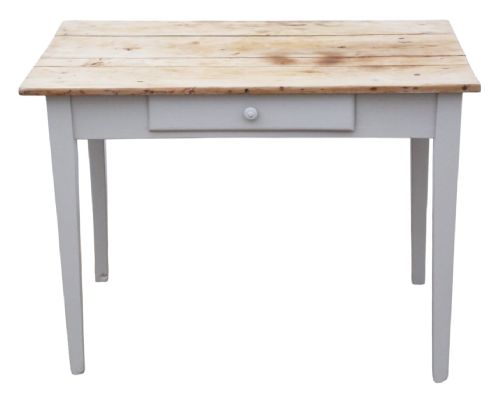

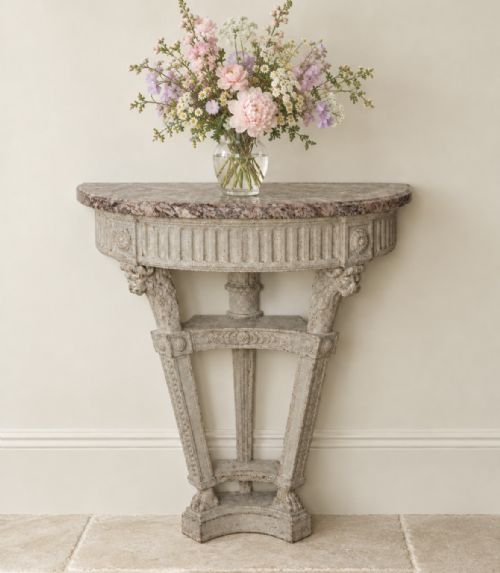
Grey Painted Console
A grey painted console brings architectural form and aged painted surfaces into an interior.
Grey Painted Console
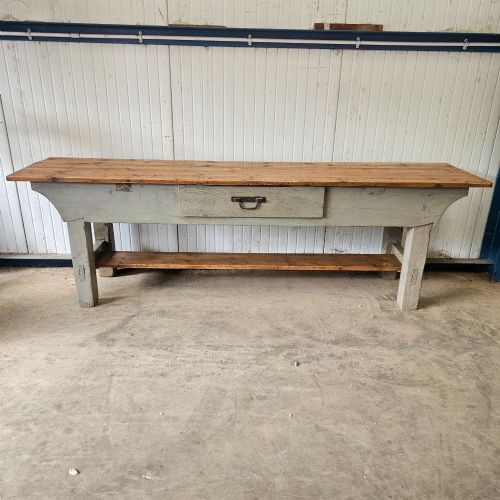
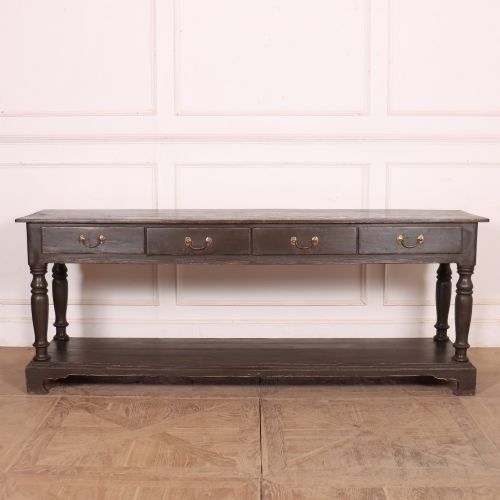
When searching for a grey painted console, you are looking at sturdy tables designed to sit flush against a wall, often featuring decorative painted finishes over wood. These pieces range from restrained English country designs to ornate French styles.
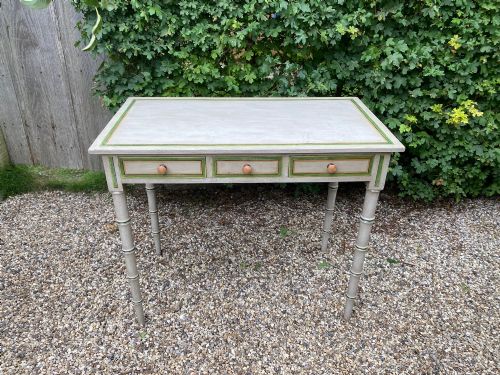
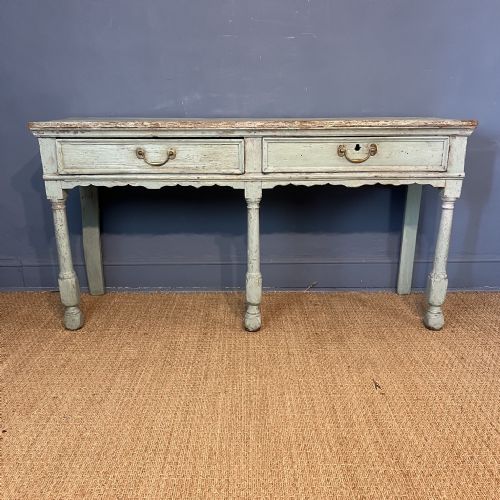
The versions most likely to meet you on this page date from the eighteenth and nineteenth centuries, spanning regional English, French, Italian and Swedish origins. They appear as side tables, demilune tables, writing desks and traditional console tables.
Makers and joiners constructed these tables in pine, oak and carved wood, frequently pairing them with marble tops or wooden surfaces. Their aesthetic leans heavily into period styles such as Georgian, Regency, Gustavian and French Provincial.
Materials and Construction
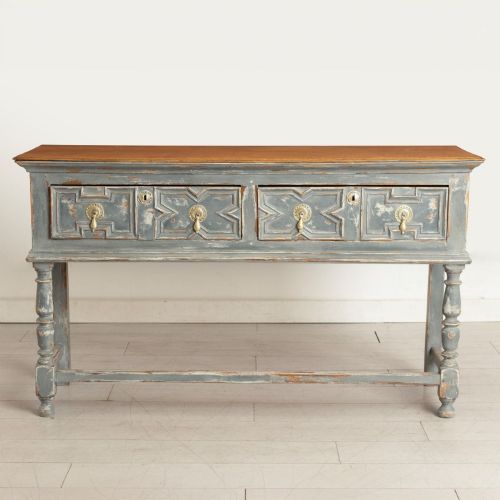
Cabinet makers built the foundational structures of these tables using solid timber such as pine, oak and walnut, often applying hand-carved details and applied mouldings. Surfaces were then finished with layers of paint, sometimes incorporating gilt highlights or scrubbed wooden tops.
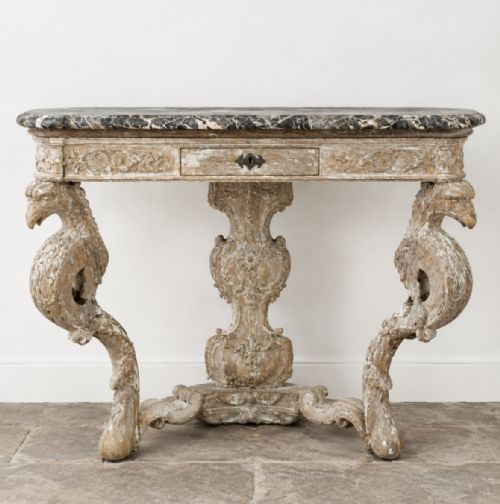
Many examples integrate heavier slabs of marble directly onto the wooden frames, particularly in continental French and Italian workshops. Brass and metal fittings appear as structural accents or hardware on related forms like writing tables and servers.
Tables recorded as faux bamboo show how cabinet makers turned ordinary pine into convincing oriental cane.
Judging Quality and Character
Quality rests in the integrity of the timber frame, the depth and history of the painted surface, and the harmony of the proportions. Original period paintwork that has aged naturally carries greater distinction than later, unsympathetic repainting.
The finesse of the carved wood details and the weight and fit of an integrated marble top separate standard utility pieces from finer salon furniture. Construction joints and the retention of original brass or metal hardware further define the standard of the piece.
The Grey Painted Console Glossary
- Console table
- A table designed to be fixed against a wall, traditionally supported by legs at the front and brackets at the back. These forms frequently feature decorative carving and painted finishes.
- Demilune
- A half-moon shape characteristic of certain console and side tables. This design allows the furniture to sit compactly against flat walls.
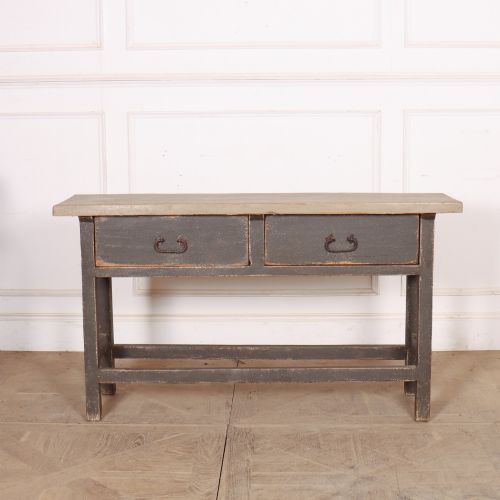
- Potboard dresser base
- A heavy base cabinet featuring a lower open shelf used historically for storing pots and kitchen utensils. They appear here in painted pine and oak.
- Trumeau
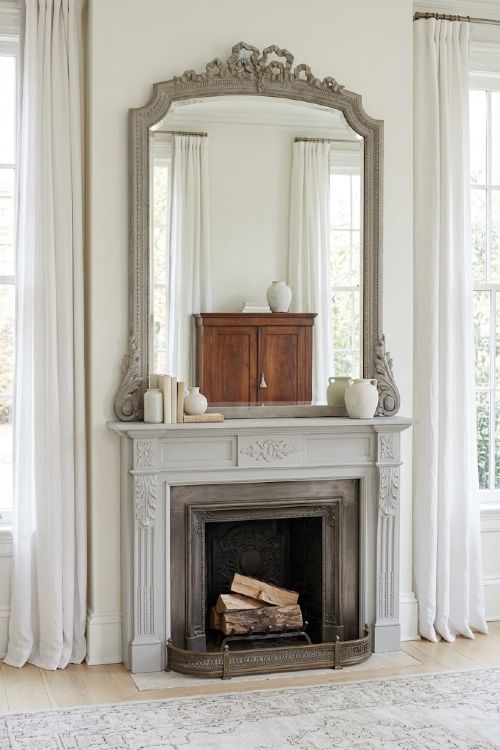
- A decorative wall mirror or panel integrated above a console table. It combines woodwork and mirror glass into a single wall-mounted arrangement.
Grey Painted Console: Frequently Asked Questions
What is a grey painted console used for?
These tables serve as decorative surface space in hallways, living rooms and dining areas. They hold lamps, mirrors and decorative objects while adding architectural presence to a room.
Because they sit flat against a wall, they occupy minimal floor space whilst providing a strong visual anchor for an interior scheme.
How do I identify an 18th century console table?
Eighteenth-century examples display hand-cut joinery, aged timber substrates and traditional paint layers that show natural craquelure and wear. Their proportions reflect the classical design canons of the Georgian or continental periods.
Examining the underside and drawer construction reveals hand tools marks and period construction methods distinct from later reproductions.
Are these tables solid wood?
The structural frames and tops are built from solid timbers including pine, oak and walnut. Regional makers selected these woods for their strength and stability before applying painted finishes.
Secondary timbers used in internal drawer construction generally match the regional workshop practices of the period.
What is the difference between Swedish and French consoles?
Swedish pieces often reflect the bright, pared-down neoclassical Gustavian style with pale grey or cream paint and subtle fluted legs. French consoles from similar eras tend towards greater ornamentation, incorporating rococo curves or marble tops.
Both regional traditions utilise painted wood, but the carved detailing and silhouette reflect distinct continental design histories.
How do I care for antique painted wood?
Maintain the painted finish by dusting gently with a soft, dry cloth and avoiding modern chemical cleaning products. Keep the furniture away from direct heat sources and strong sunlight to prevent the timber and paint from drying out.
Stable indoor humidity preserves both the underlying wood and the historic painted surface.