






Grey Painted Architectural Salvage
Grey painted architectural salvage brings authentic historic character to a room through weathered doors, panels and architectural fittings.
Grey Painted Architectural Salvage
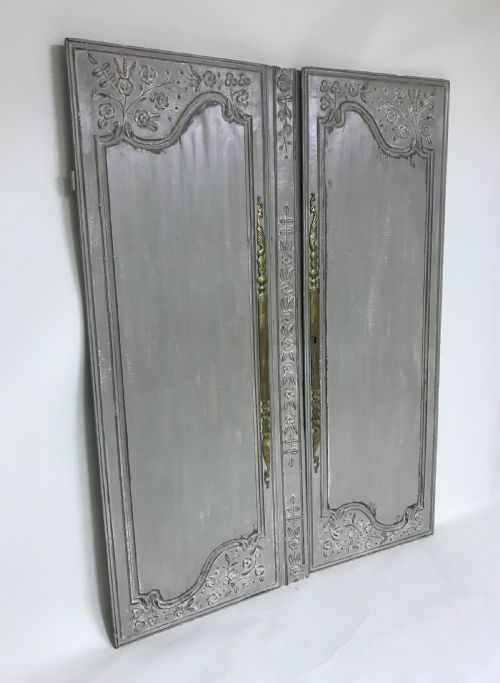
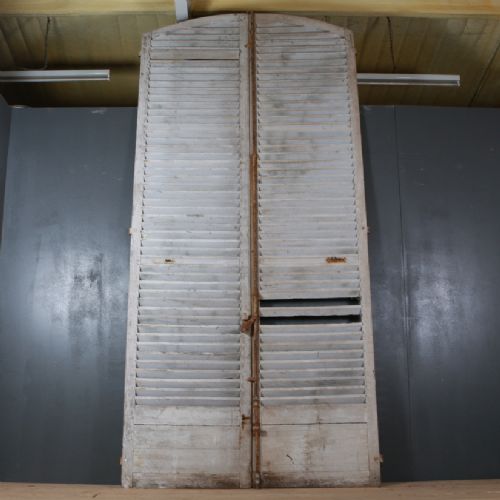
Grey painted architectural salvage comprises substantial historic fixtures sourced from buildings, predominantly featuring French doors, carved panels, pelmets and architectural ornaments spanning the eighteenth, nineteenth and early twentieth centuries. These pieces carry the aesthetic weight of periods such as the Georgian era, French Provincial and Louis XVI, translated into practical interior elements.
The items most frequently encountered on this page are pairs of wooden doors and decorative panels finished in layered paint, alongside structural elements like brackets, corbels and pelmets. Such items serve to anchor modern rooms in historic context, functioning either as architectural wall art or as operational fixtures within a property.
Originating largely from European domestic and public buildings, these salvage items combine utility with ornamental carving. They demonstrate the transition of interior architecture across multiple centuries, offering buyers tangible pieces of historic joinery and decorative plasterwork.
Materials and construction methods
Makers constructed these pieces using solid timbers such as walnut and cherrywood, shaped by hand carving to produce intricate mouldings, panels and classical motifs. Iron and brass components often accompany the woodwork, providing functional hardware and structural reinforcement.
Surfaces were finished with traditional paint layers, sometimes applied over gesso or directly onto carved timber, which over time developed a characteristic patina. Plaster was also utilised for heavy decorative elements such as corbels, relying on traditional casting techniques of the eighteenth and nineteenth centuries.
Grey Painted Architectural Salvage Retail Price Guide 2026
Typical asking prices for grey painted architectural salvage among the pieces listed under this phrase on Sellingantiques today, from the lower quarter to the upper quarter. They describe what is for sale here now, not the wider market.
Some French theatrical columns from 1910 wait quietly here to stage a dramatic return in a very modern sitting room.
Distinctions in quality and execution
Quality in these pieces is dictated by the depth and precision of the hand carving, where superior examples exhibit crisp detail in acanthus leaves, classical motifs and panel mouldings. The integrity of the underlying timber, whether walnut, cherrywood or general structural timber, further separates robust joinery from simpler utility items.
The character of the paint surface also plays a central role, with historic layered paint displaying natural wear and adhesion that enhances the visual weight of the carving. Lesser pieces may exhibit crude later modifications or loss of original detail through aggressive stripping.
The Grey Painted Architectural Salvage Glossary
- Pelmet
- A wooden framework placed above a window or doorway to conceal curtain fittings. In architectural salvage, these are often heavily carved decorative pieces.
- Corbel
- A structural bracket projecting from a wall to support a weight. Plaster or timber examples frequently feature classical scrollwork and acanthus motifs.
- Gesso
- A paint mixture consisting of a neutral binder mixed with chalk, gypsum or pigment. It was applied to wood surfaces to create a smooth base for fine decoration.
- Architectural salvage
- Building materials and decorative fixtures rescued from demolition or renovation projects for reuse. These items retain historical craftsmanship.
Grey Painted Architectural Salvage: Frequently Asked Questions
How are antique doors used in modern interiors?
Antique doors function effectively as room dividers, wall hangings or operational interior doors when fitted with appropriate hardware. They introduce vertical proportion and historic texture to plain modern spaces.
Pairs of painted doors can also be mounted against a wall to simulate an oversized headboard or to create a focal point behind furniture.
What periods do these salvage pieces represent?
The pieces span from the eighteenth century through the Georgian period and into the early twentieth century. This timeframe covers various design movements including French Provincial and neoclassical styles.
Earlier examples tend to feature deeper hand carving and heavier timber construction, while twentieth-century pieces often reflect simpler vernacular designs.
How should historic painted surfaces be maintained?
Historic painted wood requires minimal intervention, generally needing only gentle dusting with a dry cloth. Avoid harsh chemical cleaners that can strip away original layers of paint and gesso.
Keeping these pieces away from excessive moisture and direct heat sources helps preserve the stability of the timber and the adherence of the historic finish.
What is the difference between a panel and a pelmet?
A panel is a flat or carved wooden section designed to be mounted on a wall or integrated into door construction. They display decorative motifs and frame proportions characteristic of their period.
A pelmet is specifically designed for the upper boundary of an opening, functioning as a decorative cornice above windows or doorways rather than a flat wall decoration.