



Grey Marine Oil Artwork
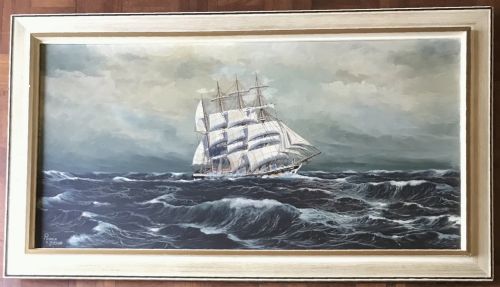
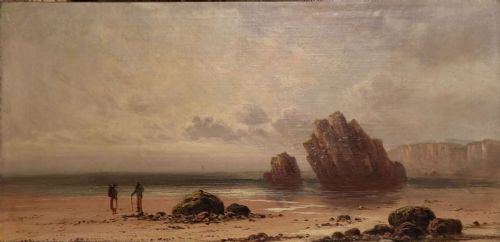
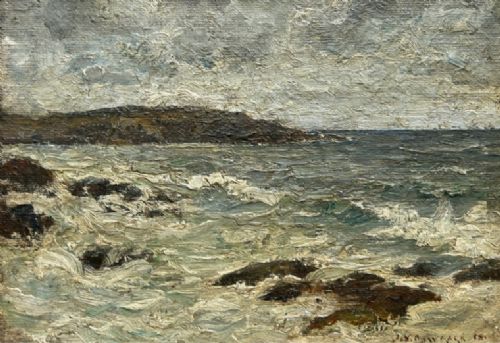
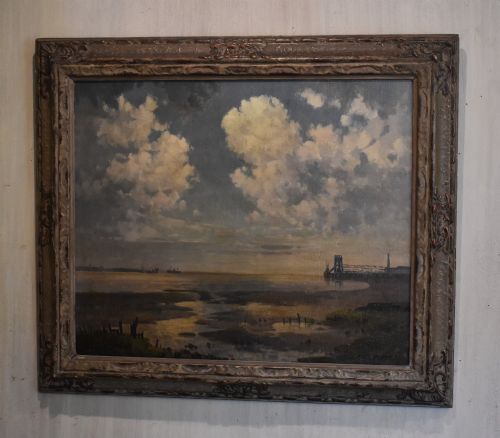
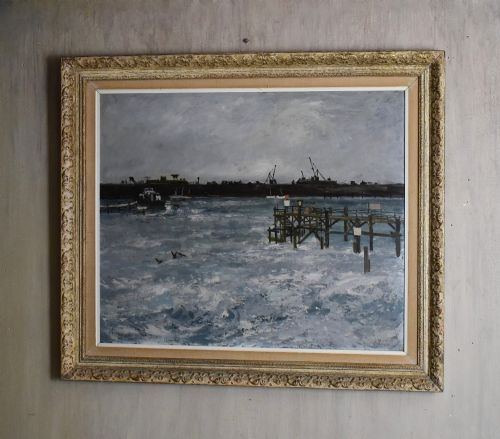
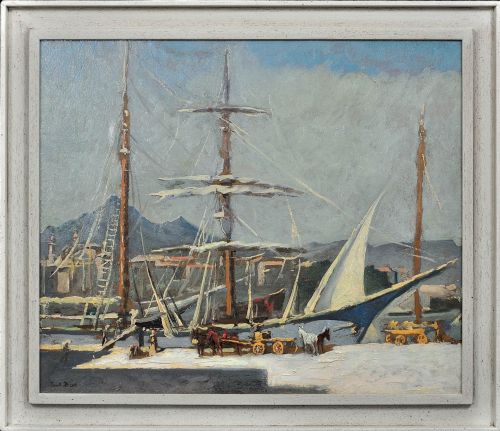
Grey marine oil artwork brings together centuries of coastal painting, capturing tumultuous seas, harbour walls, and working vessels through pigment and brush.
Grey Marine Oil Artwork
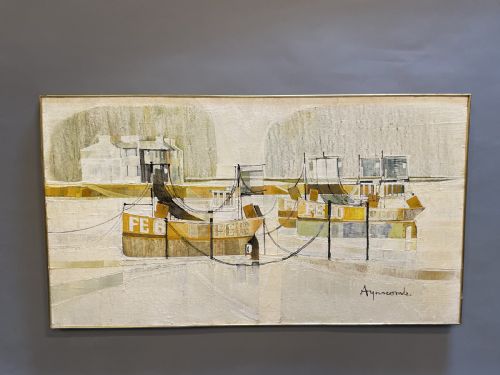
Grey marine oil artwork encompasses painted depictions of the sea, rivers, and harbours, executed primarily in oil paints across various historic periods. These pieces range from Victorian coastal scenes and 19th-century ship depictions to mid-20th-century modernist interpretations of industrial estuaries and fishing ports.
Buyers encountering this selection will find works spanning from the 18th century through the 1960s, touching upon British Impressionism, Post-War British art, and 20th-century realism. Common motifs include sailing vessels, coastal figures, piers, and stormy waters rendered on canvas, board, or wood supports.
Factors of Quality
Quality in these maritime paintings rests upon the artist's handling of light, atmosphere, and spatial depth, particularly when conveying the heavy, overcast tones characteristic of coastal weather. Skilled brushwork distinguishes a compelling, energetic sea spray or a convincing expanse of grey sky from a flat, uniform application of pigment.
The strength of the composition and the fidelity of the architectural or nautical details - such as the rigging of a barge or the perspective of a harbour wall - play a significant role in separating accomplished academic or impressionist works from standard decorative paintings.
Listings feature works spanning the 18th century to the 1960s, executed in oil paint on canvas and board.
Kenneth Cozens·Clive Browne·Peter Brannan·Paul Bret·Raymond Picque·Fred Pailhes·Edward Henry Eugene Fletcher·William Greaves·Owen Bowen·George Gregory·John Callow·Herbert Royle·Paul Jean Clays·John Davison Liddell·Herbert James·Frank Myers Boggs·Fred Dade·Bertram Priestman·John W. Gilroy
The Grey Marine Oil Artwork Glossary
- Impasto
- Paint applied thickly to a canvas or board, standing out in relief from the surface and giving a palpable texture to the waves or clouds.
- Marine art
- Artistic representation of the sea, ships, coastal views, and maritime activities, encompassing both tranquil harbours and stormy open waters.
- Oil paint
- A slow-drying paint made by combining pigment particles with a drying oil, typically linseed oil, allowing for subtle blending and deep colour saturation.
- Board
- A rigid flat panel, often made of wood, utilised as a sturdy alternative to stretched canvas for supporting oil paintings.
- Sea stack
- A geological landform consisting of a steep and often vertical column or columns of rock in the sea, frequently depicted in coastal landscape art.
Grey Marine Oil Artwork: Frequently Asked Questions
What subjects appear in marine oil paintings?
These works typically depict coastal landscapes, busy harbours, sailing barges, and open seas under varying weather conditions. Artists frequently record specific locations, from northern English ports to Mediterranean harbours.
Industrial shipping, fishing boats, and coastal figures going about daily tasks also form a substantial part of the subject matter, documenting maritime life across different eras.
How should I display an oil painting at home?
Oil paintings on canvas or board benefit from placement away from direct sunlight and sudden fluctuations in temperature or humidity. Proper wall hanging protects the structural integrity of the wooden stretcher or support panel.
Matching the frame to the period of the artwork helps preserve its historical context, while adequate lighting allows the subtle tones of grey and blue in the marine scene to emerge.
How do I identify the period of a marine painting?
Stylistic clues, such as the brushwork associated with impressionism or mid-century modernism, offer initial indicators of a painting's era. Clothing styles of depicted figures and the types of vessels shown also help narrow down the date.
Signatures, artist biographies, and framing methods provide further evidence, while exhibition labels or inscriptions on the reverse of the canvas or board often record specific dates.
What is the difference between canvas and board supports?
Canvas consists of woven fabric stretched tightly across a wooden frame, offering a slight give under the brush and a characteristic texture. Board provides a completely rigid surface made of wood or composite material.
Artists choosing board often worked quickly outdoors to capture transient atmospheric conditions, whereas larger formal compositions were more frequently executed on canvas.