



Grey Marble Top Dresser
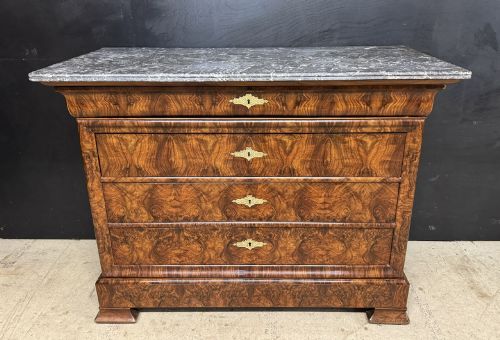
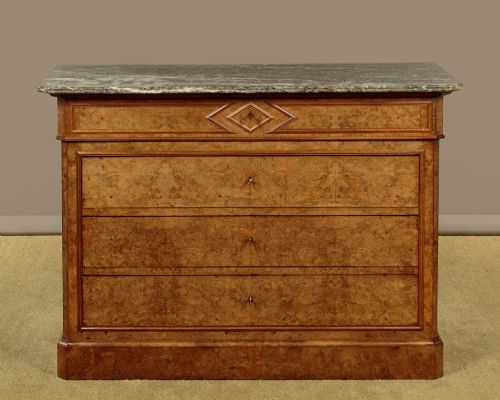
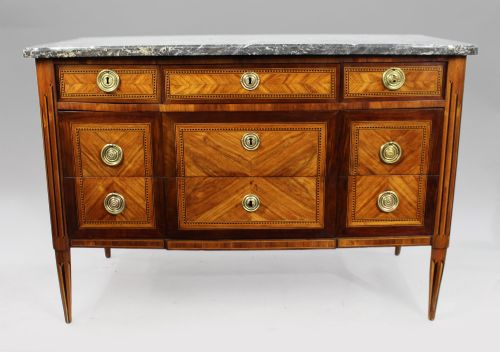
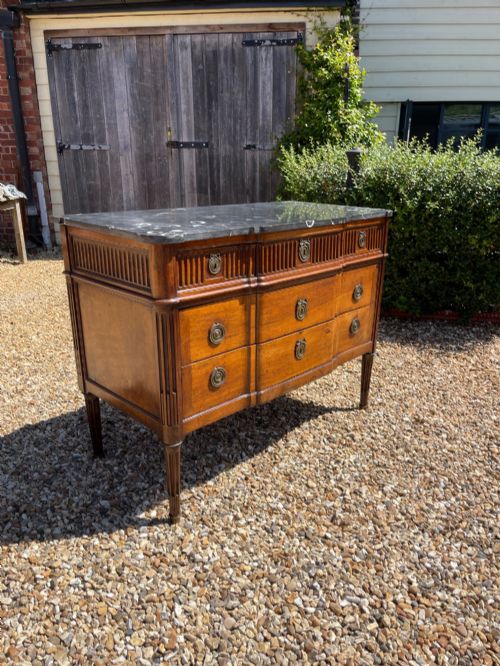
These grey marble top dresser pieces offer a solid stone surface set upon timber cabinetry, bringing utility and classical proportion to a room.
Grey Marble Top Dresser
When searching for a grey marble top dresser, buyers encounter a variety of forms including commodes, chests of drawers, and sideboard bases spanning the eighteenth to the early twentieth century. The selection leans heavily towards French regional and revival designs, alongside English and Italian examples.
Most pieces on this page take the form of commodes and chests of drawers fitted with stone slabs, reflecting domestic storage needs across different European traditions. Walnut, mahogany, cherrywood, and painted pine provide the structural timber bodies for these heavy stone surfaces.
The styles present range from austere Gustavian and Directoire lines to elaborate Louis XVI parquetry and Louis Philippe flame mahogany. Buyers are most likely to meet nineteenth-century walnut and mahogany iterations alongside eighteenth-century regional cherrywood pieces.
How they were made
Cabinetmakers constructed the frames and drawer boxes using dense hardwoods such as mahogany, walnut, and cherrywood, often applying decorative veneers like tulipwood or burr walnut over pine carcasses. Dovetail joints secured the drawer construction, while brass handles and escutcheons provided functional hardware.
The defining element rests upon the timber frame: a heavy slab of grey marble, shaped and polished to fit the precise contours of the commode or sideboard top. Some regional or decorative pieces substitute solid stone with faux marble surfaces.
Grey Marble Top Dresser Retail Price Guide 2026
Typical asking prices for grey marble top dresser among the pieces listed under this phrase on Sellingantiques today, from the lower quarter to the upper quarter. They describe what is for sale here now, not the wider market.
Periods represented span from the eighteenth century through the nineteenth century up to nineteen-ten.
What varies in quality
Quality reveals itself in the selection of timber veneers, the crispness of the parquetry or inlay work, and the structural integrity of the drawer joints. Superior examples display carefully matched grain patterns and substantial brass mounts.
The integration of the marble top dictates much of the visual success, where a thick, well-figured slab sits flush and secure upon the cabinet base without awkward overhang or mismatched proportions.
The Grey Marble Top Dresser Glossary
- Commode
- A low chest of drawers or cabinet, originating in France during the seventeenth century. These pieces typically feature multiple drawer tiers beneath a stone top.
- Parquetry
- A geometric mosaic of wood pieces used for decorative veneer on furniture surfaces. Craftsmen arrange contrasting timbers to create repeating patterns.
- Directoire
- A transitional French style spanning the late eighteenth century, characterised by restrained neoclassical lines and reduced ornamentation. It bridges the gap between Louis XVI and Empire designs.
- Biedermeier
- A Central European style from the first half of the nineteenth century that prioritised clean lines and utilitarian comfort over excessive decoration. Flame mahogany veneers frequently feature in these pieces.
Grey Marble Top Dresser: Frequently Asked Questions
How do I clean the marble top?
Wipe the stone surface with a soft cloth dampened in warm water and mild, neutral soap. Avoid acidic cleaners or vinegar, which etch the polished finish.
Dry the marble thoroughly afterwards to prevent water spots and maintain the natural lustre of the grey stone.
Are these pieces French?
Many of the pieces recorded here originate from French workshops, spanning eighteenth-century regional cherrywood commodes and nineteenth-century mahogany or walnut examples. Nations such as England and Italy also contribute painted dresser bases and marble-topped sideboards to the selection.
What is a commode?
A commode functions as a low chest of drawers or storage cabinet designed for domestic interiors. They typically stand at waist height and carry a heavy stone surface.
In historical contexts, they served bedrooms and reception rooms alike for storing linens and personal items.
How do I spot a replacement marble top?
Examine the underside of the stone and the top edge of the wooden carcass to check for alignment and historical seating marks. Replacement slabs often sit differently on the frame or show modern cutting techniques.
Original tops generally exhibit edge profiles and wear patterns consistent with the age of the timber base below.