

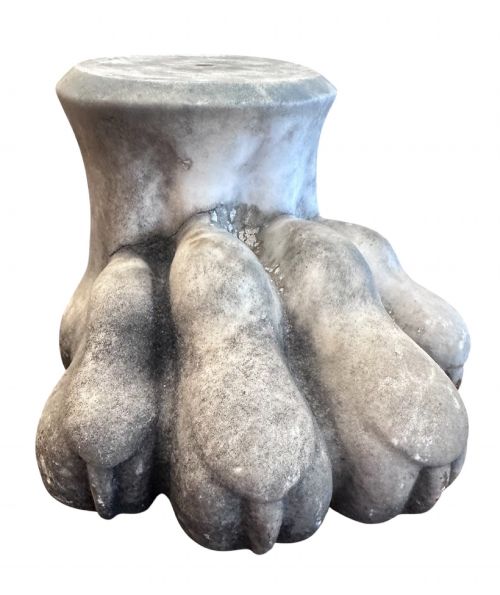


Grey Marble Base
These grey marble base pieces anchor grand tour bronzes, period animals, and occasional tables with solid stone foundations.
Grey Marble Base
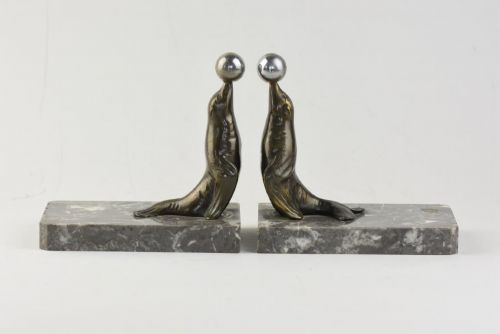
A grey marble base anchors sculptures, bookends, and clocks, providing substantial weight and a classical foundation for the figures mounted upon it. These pieces span the nineteenth century and the art deco era, appearing frequently in french furniture and decorative arts.
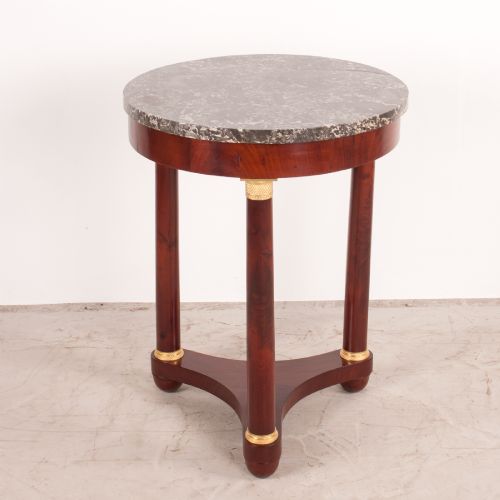
Occasional tables and gueridons form a major part of the selection, utilising the stone as an inset top rather than a floor-standing footing. These tables combine mahogany, walnut, and flame mahogany frames with round stone surfaces.
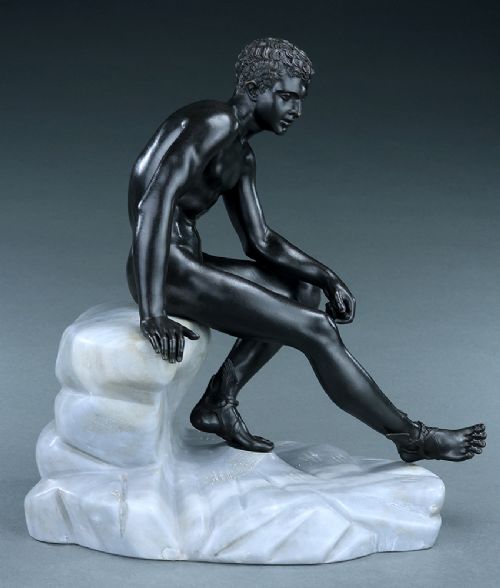
Grand tour sculptures and animal figures utilise the stone as integral plinths, supporting bronze greyhounds, mercury, and hermes figures. These sculptural works demonstrate the nineteenth-century taste for classical subjects.
How they were made
Craftsmen combined heavy natural stone with cast metals like bronze, brass, spelter, and ormolu. The stone was cut and polished to form flat plinths, blocks, or circular tabletops designed to receive metal mounts and figures.
Cabinetmakers utilised mahogany, flame mahogany, and walnut for the wooden structures of the tables, turning pedestals and framing stone inserts with precision joinery.
Listings feature nineteenth-century furniture and sculptures combining marble, mahogany, bronze, and ormolu.
What varies in quality
Quality rests in the selection and preparation of the stone, where dense, finely grained grey marble with crisp edges distinguishes superior items from simpler utilitarian slabs.
The integration between the stone and the mounted bronze, wood, or spelter shows the maker's hand, particularly in the precision of fit and the finishing of surrounding brass or ormolu mounts.
The Grey Marble Base Glossary
- Gueridon
- A small circular table on a central pillar, often fitted with a marble top. These tables served various occasional uses in nineteenth-century interiors.
- Grand Tour
- The nineteenth-century practice of collecting classical antiquities and bronze reproductions in Italy. Pieces from this tradition frequently feature stone plinths.
- Spelter
- A zinc alloy used as a less costly alternative to bronze for decorative figures. It often received a bronze-like patina before mounting on stone bases.
- Ormolu
- Gilt bronze applied as a decorative mount to furniture and clock cases. It provides a bright metallic contrast against dark stone and wood.
- Scagliola
- A composite material made from selenite, glue, and pigments, imitating marble and other fine stones. It appears on architectural columns and decorative surfaces.
Grey Marble Base: Frequently Asked Questions
What is a gueridon table?
A gueridon is a small circular table supported by a central pillar, frequently topped with stone.
These tables function well as accent pieces in reception rooms and halls.
How are bronze sculptures mounted on stone?
Figures attach to the stone plinth using threaded rods or pins secured through the base.
This method ensures stability for heavy metal figures resting on stone.
How do I clean grey marble?
Clean the stone surface using a soft, damp cloth without harsh chemical detergents.
Regular dusting preserves the polished finish of nineteenth-century marble.
What period are most bronze figures from?
The majority of these sculptural works date from the nineteenth century during the grand tour period.
French and Italian workshops produced many of these classical animal and human figures.