




Grey French Nightstands
Grey french nightstands bring quiet continental elegance to a bedroom, offering practical bedside storage paired with classic painted or polished finishes.
Grey French Nightstands
Grey french nightstands encompass a variety of antique bedside storage forms, most commonly appearing as pairs of compact cabinets, small chests of drawers, and side tables. These pieces span multiple periods from the eighteenth century through the early twentieth century, reflecting traditional continental cabinet-making traditions.
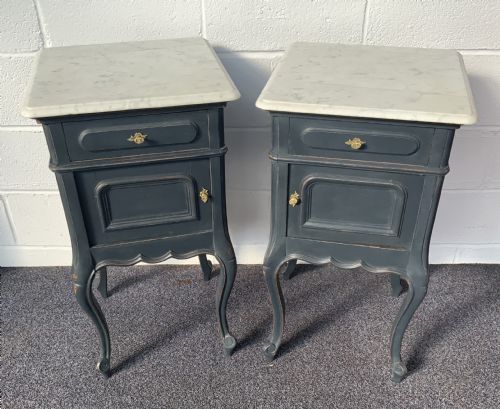
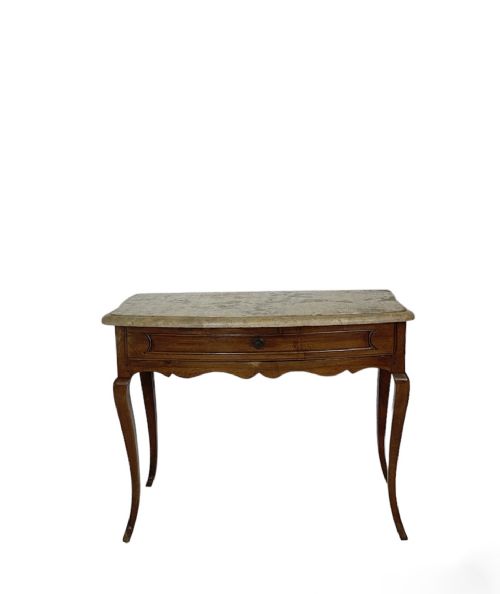
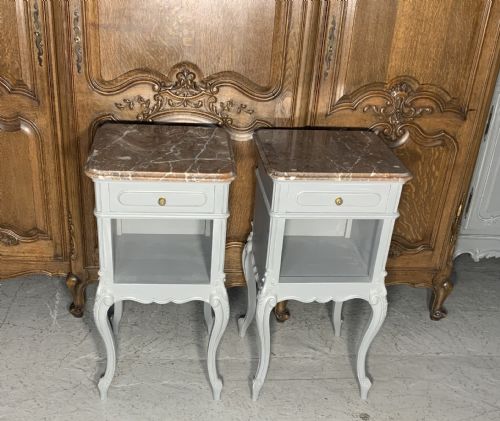
The selection on this page leans heavily toward twentieth-century painted pairs alongside nineteenth-century examples and earlier lamp tables. Buyers frequently encounter bedside cabinets finished in specific grey paint shades, often accompanied by contrasting marble tops or carved wooden details.
Object types vary from open bedside tables to enclosed cupboards and small chests, originating from French Provincial, Louis XVI, and Gustavian design influences. Walnut, pine, and painted wood dominate the forms, providing both sturdy utility and distinct historical character.
How they were made
Construction relies heavily on traditional timber framing using woods such as walnut, mahogany, oak, and pine. Joinery techniques reflect the period of origin, from hand-carved ornamentation on earlier pieces to simpler panel construction in later nineteenth and twentieth-century examples.
Surface treatments combine traditional paint applications, evident in historical and modern grey finishes, with natural wood polishing. Many pieces incorporate fitted stone elements, specifically Belgian Sainte-Anne marble or faux marble tops, requiring skilled stonemasonry alongside cabinet-making.
Several cabinets arrive ready-dressed in specific modern paint shades like Railings and Downpipe, bridging antique forms with contemporary palettes.
What varies in quality
Quality differences emerge in the crispness of carved wooden details and the overall balance of proportions. Finer examples display harmonious lines rooted in Louis XVI or French Provincial idioms, whereas simpler utility pieces maintain more utilitarian structures.
Materials dictate another tier of distinction, separating solid walnut and carved oak frameworks from simpler pine carcasses. The integration of genuine marble tops versus painted wooden surfaces further separates standard regional pieces from more decorative expressions.
The Grey French Nightstands Glossary
- Louis XVI Style
- A neoclassical design vocabulary characterised by straight lines, symmetry, and restrained classical ornamentation. It frequently informs the refined leg placement and geometric paneling found on these tables.
- Gustavian
- The Swedish interpretation of French neoclassical design, favouring pale painted surfaces and simplified carving. This style heavily influences the lighter grey decorative finishes seen on continental furniture.
- Sainte-Anne Marble
- A specific variety of dark grey or mottled limestone quarried in Belgium, prized for its dramatic white veining. It provides a durable and luxurious surface top for high-end bedside cabinets.
- French Provincial
- Furniture styles originating from regional cabinet-makers outside Paris who adapted court fashions into sturdier domestic forms. These pieces often feature softer curves and simpler hardware.
Grey French Nightstands: Frequently Asked Questions
What materials are used for the tops?
The tops of these nightstands typically consist of polished wood, natural marble, or painted surfaces designed to mimic stone. Walnut, mahogany, and pine form the wooden variants.
Marble tops, including Belgian Sainte-Anne varieties and faux painted finishes, offer a cooler, durable surface for everyday bedside use. These stone additions often reflect the higher quality tier of continental furniture production.
How do I identify a Louis XVI style nightstand?
Louis XVI style nightstands are distinguished by their straight, tapered legs and geometric symmetry. Ornamentation remains restrained, utilising fluted columns and understated classical carvings rather than heavy curves.
This aesthetic provides a clean silhouette that contrasts with the more exuberant lines of earlier baroque or rococo furniture. The style aligns closely with the early twentieth-century painted pieces popular in continental interiors.
Where were these bedside cabinets made?
These pieces originate primarily from France, encompassing both Parisian workshops and regional provincial centres. The design influences draw directly on traditional French cabinet-making traditions from various historical periods.
Some related pieces reflect wider continental interpretations, such as Gustavian styles originating from Scandinavia. Each piece carries the structural characteristics of its specific geographical and chronological workshop.