



Grey French Armchair
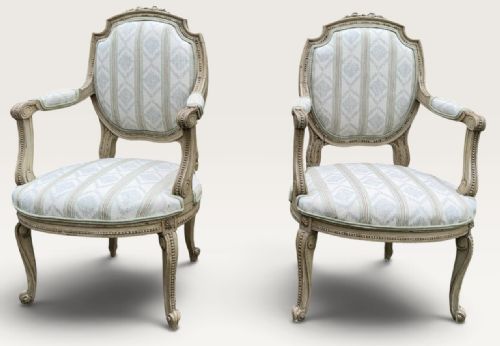
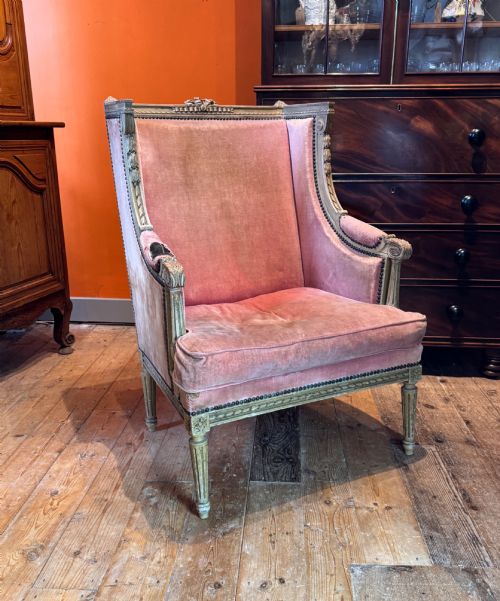
A grey french armchair brings understated continental elegance to a room, offering carved wooden frames finished in muted paint alongside comfortable upholstered seating.
Grey French Armchair
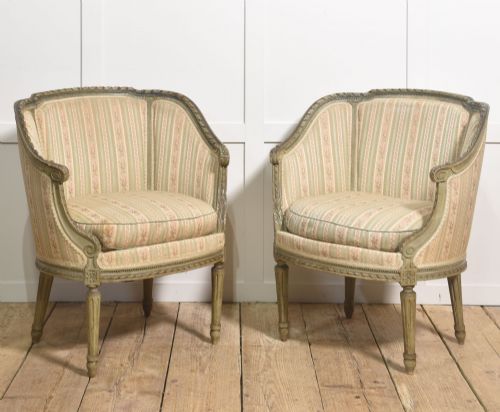
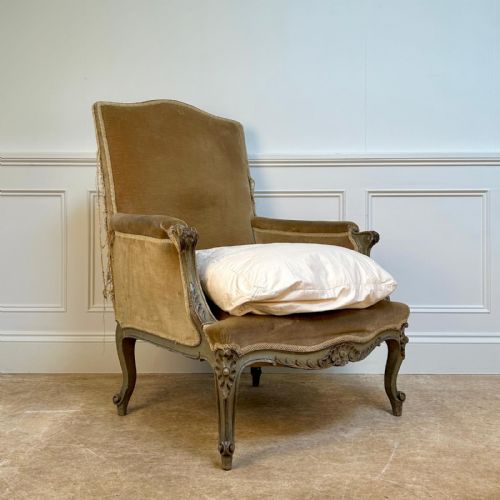
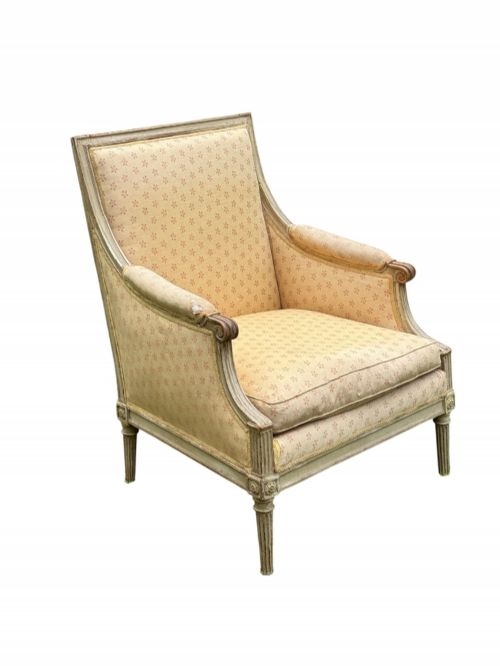
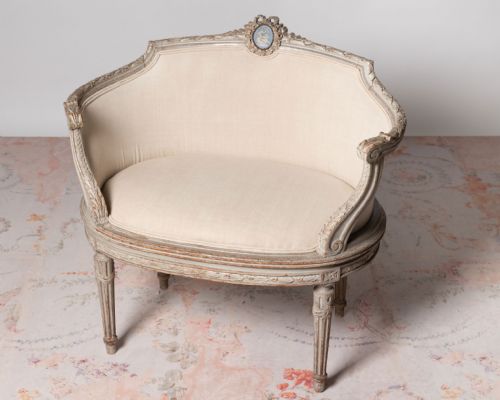
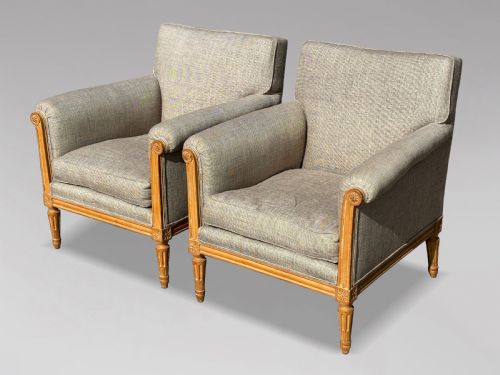
A grey french armchair typically encompasses open armchairs, bergères with enclosed sides, and tub chairs originating from the eighteenth, nineteenth, and early twentieth centuries. These seats draw upon Louis XV, Louis XVI, Directoire, and neoclassical design vocabularies characterised by curved or straight structural lines.
Buyers frequently encounter nineteenth-century and early twentieth-century interpretations, including revival pieces and chairs retaining original paint finishes or later painted surfaces. Examples range from salon seating to provincial pieces upholstered in linen, silk, or needlepoint panels.
Craftsmanship and preservation
The distinction between tiers rests upon the crispness of hand-carved woodwork, the integrity of the frame construction, and the preservation of original painted surfaces rather than later decorative overcoats. Period examples retaining their authentic patinated paint finish command greater regard among collectors.
Quality also shows in the subtlety of proportion and the fidelity of revival styles to eighteenth-century prototypes, alongside the quality of textiles chosen for upholstery, whether period needlepoint or fresh linen.
Listings feature beech, walnut, and fruitwood frames, alongside painted wood, fabric, linen, brass, and textile materials.
Henri Jacob
The Grey French Armchair Glossary
- Bergère
- An enclosed upholstered armchair with solid upholstered sides resting on a low frame. This form provides a deep, enclosed seat popular in period French seating.
- Fauteuil
- An open-arm armchair with exposed wooden armrests and upholstered back and seat. The wooden framework is typically carved and painted.
- Louis XVI
- A neoclassical style defined by straight lines, symmetry, and geometric motifs such as fluted legs and square backs. It contrasts with the earlier flowing curves of the Louis XV style.
- Caning
- Woven rattan or split cane used to form breathable panels for chair backs and seats. It lightens the visual weight of the wooden frame.
- Needlepoint
- Stitched canvas embroidery worked in wool or silk, frequently utilised for decorative seat and back panels on nineteenth-century chairs.
Grey French Armchair: Frequently Asked Questions
What defines a grey french armchair?
These chairs combine classical continental woodwork with muted painted finishes, spanning eighteenth-century origins down to early twentieth-century revivals. They typically feature exposed wooden frames in beech or walnut paired with upholstered seats.
Buyers find distinct forms including open fauteuils, enclosed bergères, and tub chairs. The grey colourway often derives from original paintwork, later decorative updates, or neutral linen upholstery.
How do I identify Louis XV and Louis XVI styles?
Louis XV seating relies on asymmetrical curves, cabriole legs, and undulating cartouche-shaped backs. The design emphasises flowing organic lines without rigid symmetry.
Louis XVI pieces introduce straight lines, symmetry, and neoclassical restraint. Look for fluted cylindrical legs, rosette carvings, and rectangular or oval backrests.
Are these chairs comfortable for daily use?
Many examples provide deep, supportive seating designed for salons and parlours. Bergères and upholstered armchairs offer substantial padding for relaxation.
Comfort often depends on whether the internal webbing and upholstery have been recently restored. Some antique frames are sold specifically for recovering to suit modern seating preferences.
How should I care for original paint finishes?
Preserved painted surfaces require gentle dusting with a dry, soft cloth to prevent abrasion. Avoid chemical cleaners or excessive moisture that might lift fragile historic paint layers.
Keeping the chair away from direct sunlight and dramatic humidity changes protects both the wooden substrate and the delicate painted patina.