

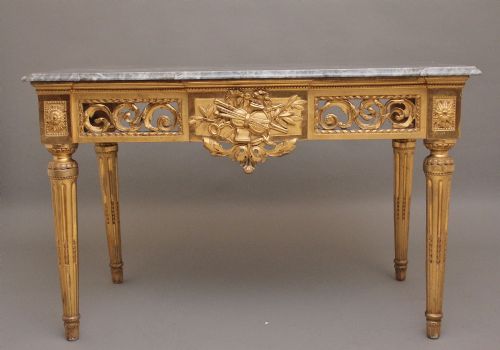
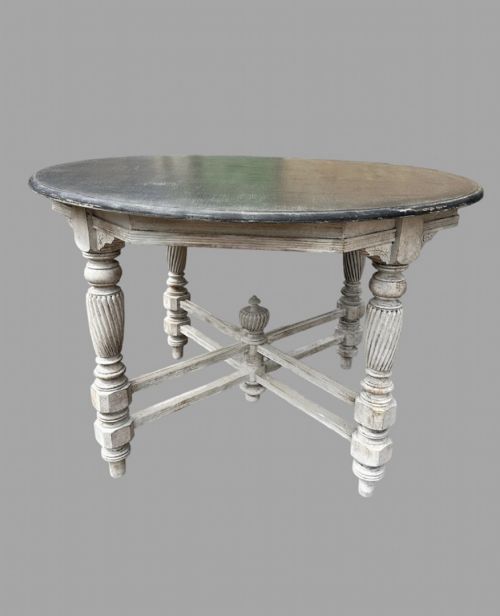


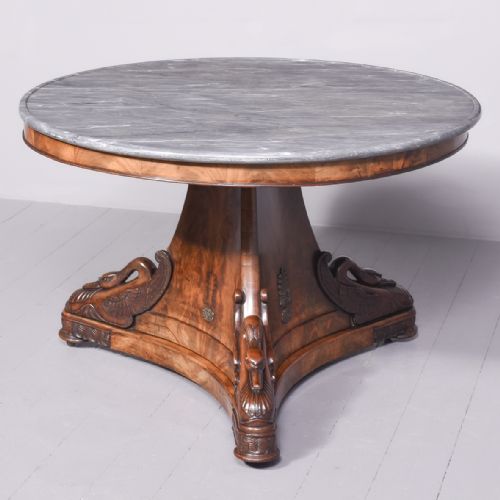


Grey Entry Table
A grey entry table brings architectural presence to a hallway, pairing stone surfaces with painted or gilded woodwork.
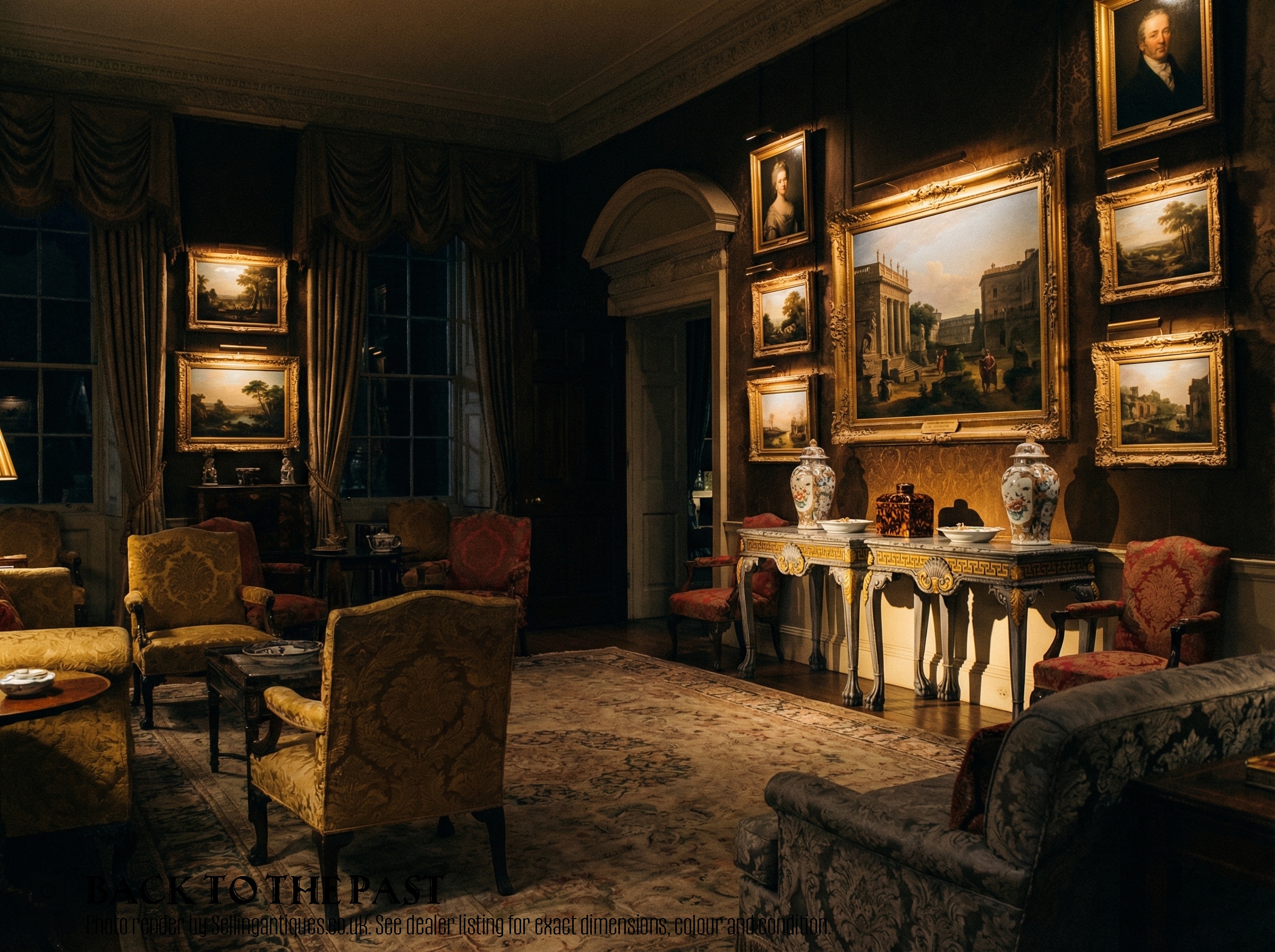
Grey Entry Table
A grey entry table serves as a functional anchor in a hallway, drawing the eye toward a wall while offering a surface for decorative items. When searching for a grey entry table, buyers encounter console tables, centre tables, and side tables configured for narrow spaces.
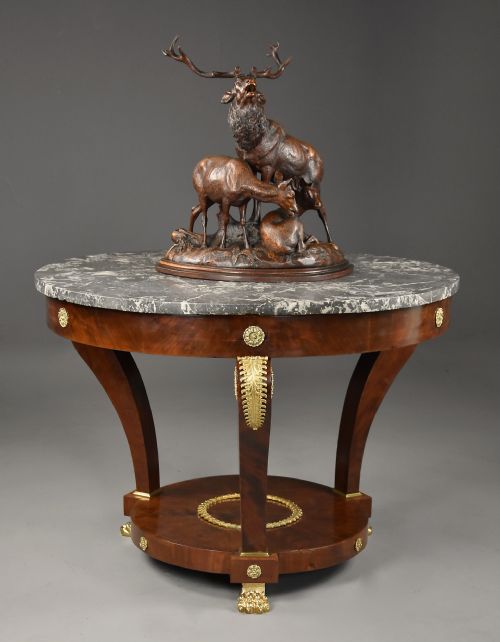
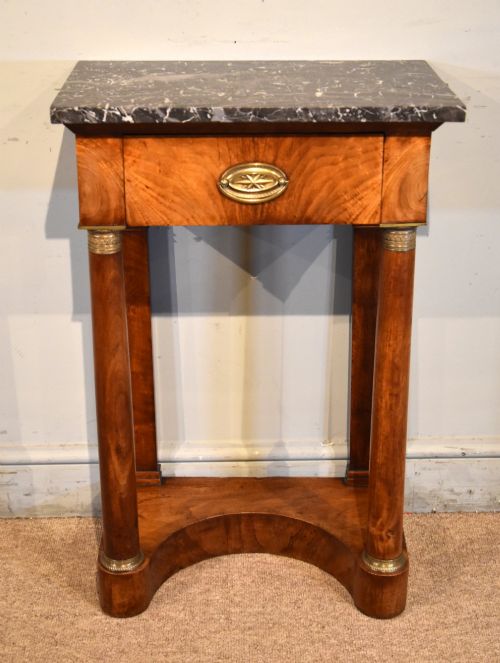
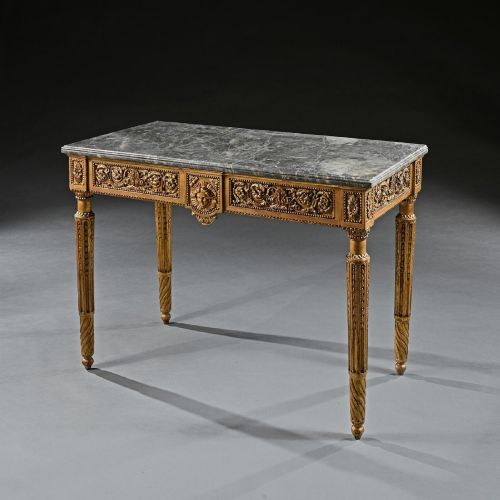
The pieces listed span multiple centuries, including the 18th century, 19th century, and Edwardian periods, alongside styles such as French Empire, Neoclassical, and Regency. Console tables and demilune variants dominate the selection, often featuring painted wood or marble surfaces.
How they were made
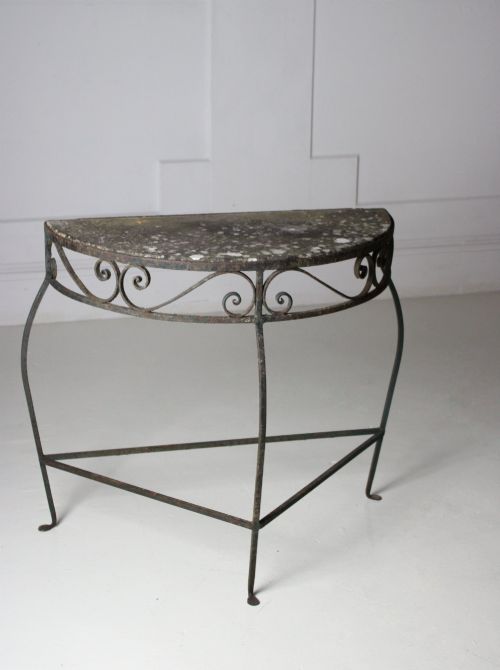
Construction relies upon traditional timber framing in mahogany, walnut, and painted wood, paired with heavy stone surfaces. Giltwood and wrought iron details frequently accent the primary structure.
Surface finishes involve layered paint, gilt, and polish applied to carved wood. Marble tops sit flush upon the wooden or gilded frames, secured by their own considerable weight.
Grey Entry Table Retail Price Guide 2026
Typical asking prices for grey entry table among the pieces listed under this phrase on Sellingantiques today, from the lower quarter to the upper quarter. They describe what is for sale here now, not the wider market.
Listings feature 18th-century and 19th-century pieces, utilising marble, giltwood, mahogany, and painted wood across console, centre, and side table forms.
What varies in quality
The refinement of the carved wood elements distinguishes finer examples from simpler provincial work. Crisp detailing in giltwood and smooth integration of marble tops mark superior production.
Proportion and material selection dictate the visual weight of each piece. Heavy timbers and integrated brass or gilt accents denote careful workshop execution.
The Grey Entry Table Glossary
- Console table
- A table designed to stand against a wall, frequently secured to it with brackets for stability. These pieces often feature decorative front legs while relying on wall support.
- Gueridon
- A small French round table, typically supported by a central pillar or three legs. These function well as centre tables in an entrance hall.
- Demilune
- A half-moon shape used for tables designed to fit flush against a wall. This profile saves floor space in narrower corridors.
- Giltwood
- Timber coated with a thin layer of gold leaf or gesso. This treatment provides a reflective surface that catches hallway light.
- Neoclassical
- A style drawing inspiration from classical antiquity, marked by restrained symmetry and architectural motifs. Pieces from this tradition emphasise geometric balance.
Grey Entry Table: Frequently Asked Questions
Where should I place a console table?
A console table fits best against an entrance wall or in a hallway where floor space is restricted. Its shallow depth allows clearance for passage while holding lamps or small objects.
Pairing the table with a mirror or painting above creates a balanced focal point upon entering the home.
How do I clean a marble top?
Marble requires gentle cleaning with a damp cloth and mild soap to protect the polished surface. Acidic liquids can etch the stone and should be wiped away immediately.
Regular dusting keeps the stone clear without wearing down the natural finish over time.
What is the difference between a console and a centre table?
A console table stands flat against a wall, often with structural support from the vertical surface behind it. It is shaped to occupy minimal depth in a room or corridor.
A centre table stands independently in the middle of a space, accessible from all sides with freestanding legs or a central pedestal.
How do I identify Regency furniture?
Regency pieces draw heavily on classical Greek and Roman designs, featuring clean architectural lines and dark timbers like mahogany and rosewood. Brass inlays and mounts frequently accent the woodwork.
Proportions remain balanced, reflecting the early nineteenth-century shift toward archaeological accuracy in design.