


Grey Coastal Landscape Painting
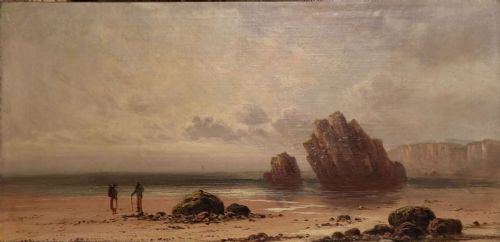
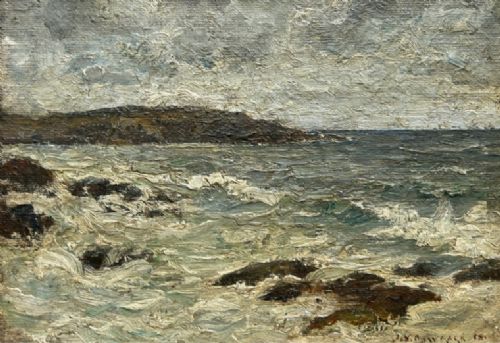
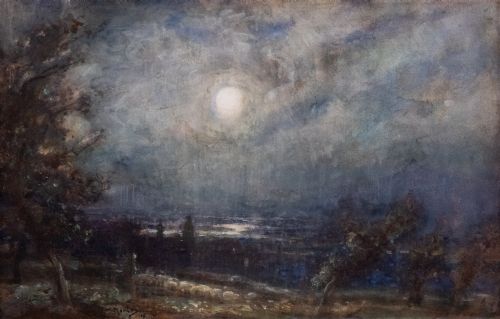
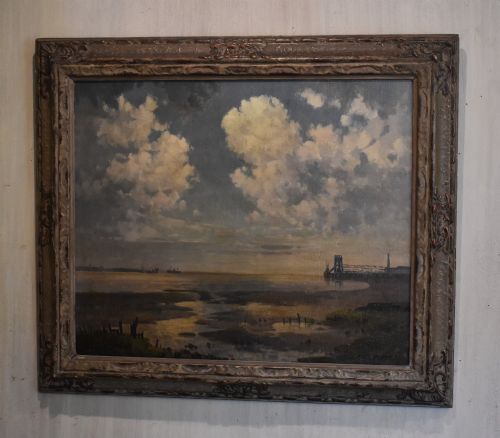
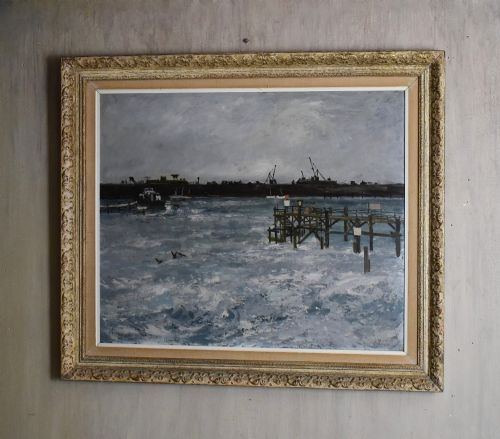
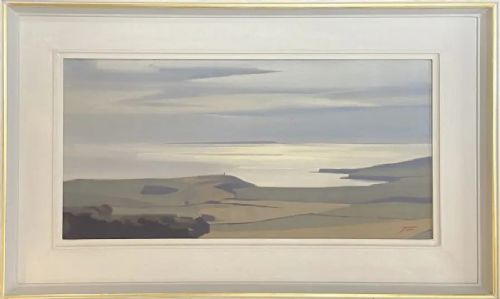
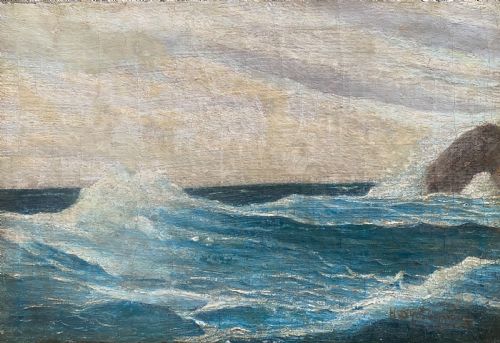
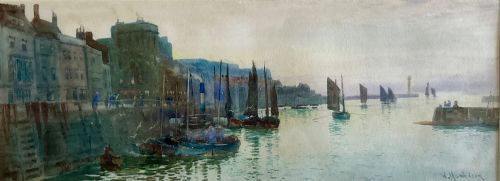
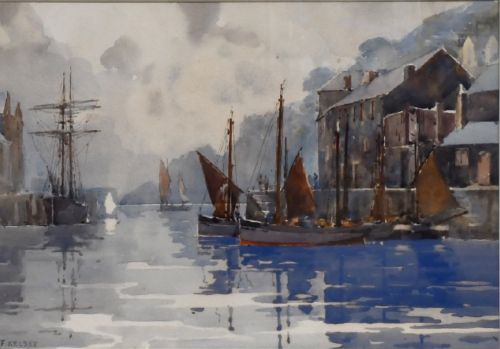
A grey coastal landscape painting captures the muted tones and restless movement of the sea under overcast skies.
Grey Coastal Landscape Painting
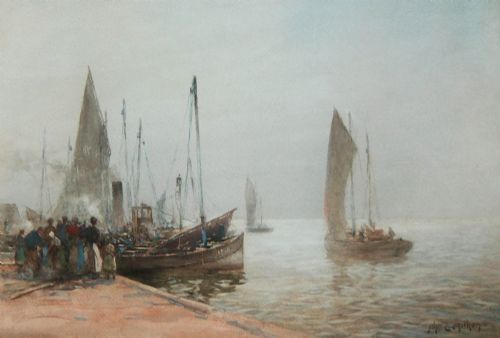
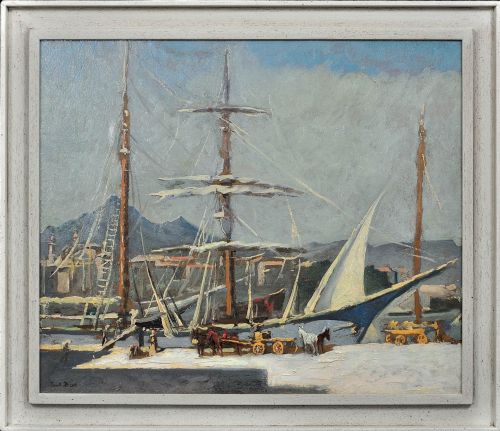
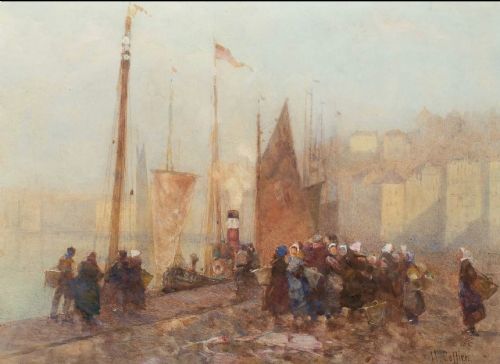
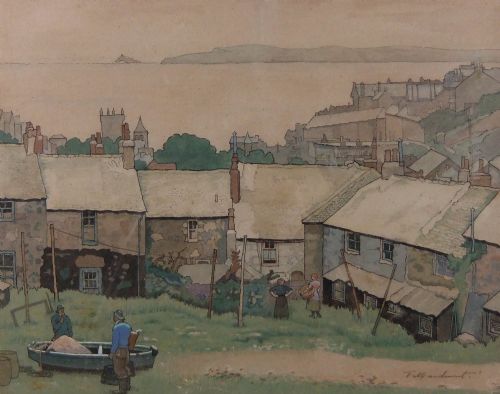
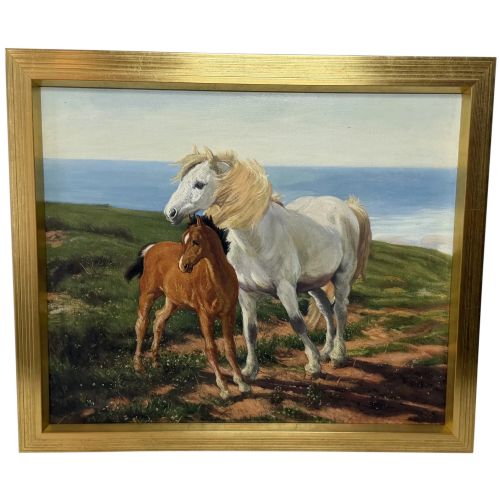
When you search for a grey coastal landscape painting, you encounter maritime scenes rendered in oil and watercolour that focus on harbours, rocky shores, and estuaries. These works often depict British and European coastal locations, capturing the atmospheric conditions of the shoreline through restrained palettes.
The pieces available span from the late Victorian era through the mid-twentieth century, encompassing periods such as Edwardian, British Impressionism, and Modern British styles. You are most likely to meet watercolours on paper or oil paintings on canvas and board produced during the early decades of the twentieth century.
Materials and Techniques
Artists working in this genre relied primarily on oil paint and watercolour pigment applied to canvas, prepared wood boards, or heavyweight paper. Watercolour paintings utilise washes and fine brushwork to capture translucent light and misty air, while oil paintings often employ heavier impasto to build texture on the surface.
Support materials varied according to the period and technique, with twentieth-century painters frequently selecting board alongside traditional stretched canvas. Glazed framing protected fragile watercolours on paper from moisture and light damage, while oil paintings on canvas were typically displayed in moulded wooden frames.
Listings feature works created on paper, canvas, and wood board using oil paint, watercolour pigment, and glass.
Distinctions in Execution
Quality in these coastal works rests upon the artist's command of atmospheric perspective and tonal harmony. Superior examples convey the weight of the sea and the dampness of the air through confident, economical brushstrokes rather than rigid detail.
The handling of light across water and overcast skies distinguishes accomplished compositions from routine topographical records. Stronger paintings demonstrate a coherent structural grasp of harbour architecture and shoreline geology within a restrained colour scheme.
James E. Aitken·Thomas William Morley·Clive Browne·Peter Brannan·Hector Caffieri·Thomas Maidment·William Matthison·Frank Kelsey·John Moxon·Charles William Adderton·Raymond Picque·Edward Seago·Arthur Tucker·Robert Leslie Howey·Herbert Royle·Tom Clough·William Greaves·James Watson·Charles Sim Mottram·George Hamilton Constantine·John Mitchell·H.E. Tidmarsh·Ernest F. Hill·Frederick Stuart Richardson·Thomas Bush Hardy
The Grey Coastal Landscape Painting Glossary
- Impasto
- Paint applied thickly to a canvas or board, standing out in relief from the surface. This technique adds tactile depth and catches light across turbulent water or rocky cliffs.
- Seascape
- A work of art depicting the sea, coastlines, or marine vessels. These subjects formed a central focus for maritime artists working across British and European ports.
- Wash
- A thin, translucent layer of watercolour pigment diluted with water and applied across paper. Painters used this method to establish expansive skies and flat stretches of wet sand.
- Sea Stack
- A geological landform consisting of a steep and often vertical column or columns of rock in the sea. Artists frequently included these formations to emphasise the rugged nature of northern shorelines.
- Board
- A rigid flat panel, often made of wood or wood pulp, used as a support for oil or acrylic painting. This medium gained popularity among plein air painters for its durability.
Grey Coastal Landscape Painting: Frequently Asked Questions
What subjects appear in these paintings?
The works primarily depict working harbours, fishing boats, rocky shorelines, and quiet estuaries under overcast skies. Coastal figures and maritime structures frequently anchor the composition.
Scenes range from specific British ports like Staithes and Whitby to European harbours in France and Italy.
How should I care for a watercolour?
Watercolours on paper require protection from direct sunlight to prevent the pigments from fading over time. Displaying them away from damp environments preserves both the paper support and the framing.
Professional mounting with acid-free materials ensures the long-term stability of works executed on paper.
How do I identify the period of a painting?
Stylistic markers, framing methods, and stretcher construction offer clues to a work's age. Impressionist brushwork and muted palettes frequently point towards early twentieth-century production.
Signatures, dates inscribed on the reverse, and historical artist records help narrow down the exact decade.
Where were these coastal scenes painted?
Artists travelled along the British coastline, working extensively in Yorkshire, Cornwall, and Scotland to capture local fishing fleets. Others ventured to European coastal communities in France, Italy, and the Netherlands.
Many works were painted on location outdoors to observe shifting marine weather firsthand.