



Grey Bedside Cupboards
Grey bedside cupboards combine practical storage with muted tones, offering a subtle finish that suits traditional and modern bedrooms alike.
Grey Bedside Cupboards
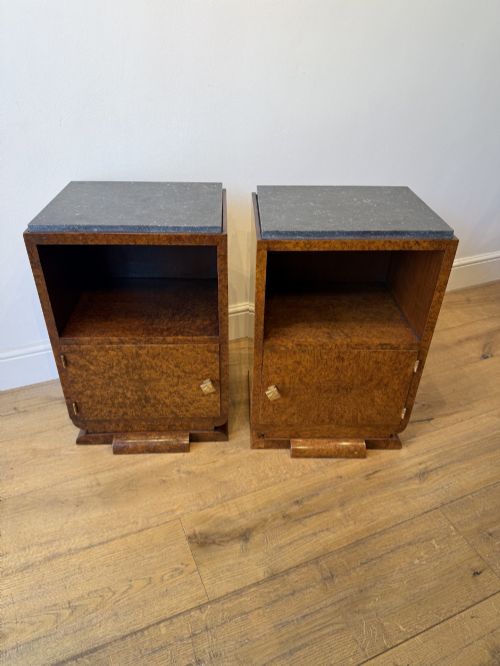
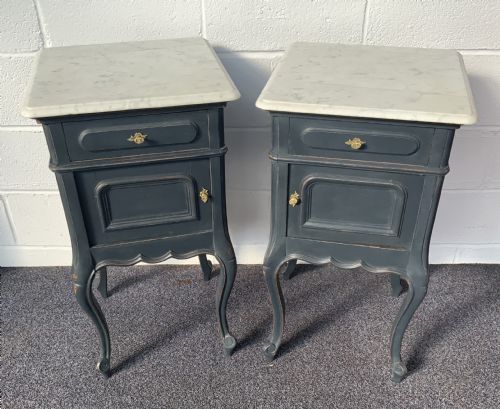
Grey bedside cupboards encompass bedside tables and bedside cabinets dating from the nineteenth century up to the 1930s. The selection ranges from Victorian pine and columned examples to French provincial and Art Deco pieces finished in various shades of grey paint.
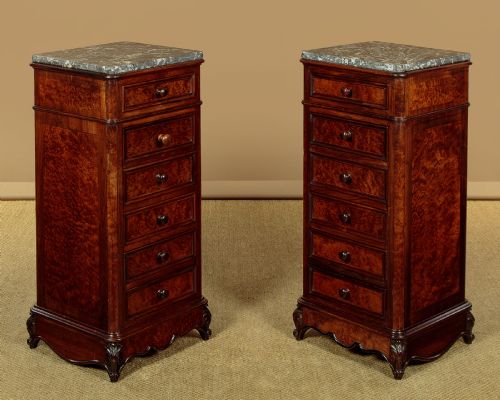
Buyers will most frequently encounter painted wooden versions alongside walnut, oak, and mahogany structures fitted with marble tops. Many listings appear as pairs, particularly those originating from French workshops or featuring twentieth-century painted finishes.
These items serve the dual purpose of surface placement beside a bed and enclosed storage via cupboards or drawers. The grey coloration often highlights carved wooden details, panelled doors, and period hardware.
Materials and construction
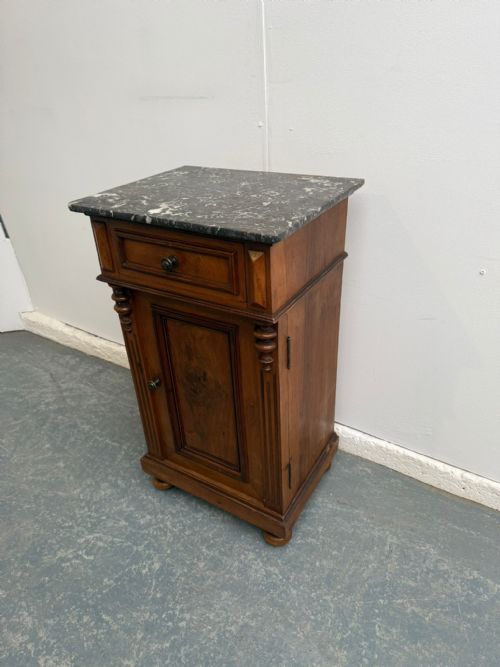
Construction relies primarily on traditional timbers such as pine, walnut, oak, and rosewood, frequently paired with imported marble slabs on the upper surface. Cabinetmakers utilised sturdy joinery methods suited to domestic bedside use, incorporating single drawers above enclosed cupboard spaces.
Surface treatments combine historic painted finishes, such as contemporary grey mineral paints applied to vintage carcasses, with original French polish on walnut and mahogany models. Brass handles and mounts often accent the woodwork, while marble tops provide a durable, water-resistant surface.
Several French cabinets hide their modest proportions behind remarkably imposing marble slabs that surely outweigh the timber holding them up.
Assessing quality and finish
Quality depends heavily on the integrity of the underlying timber and the precision of the cabinetmaker's joinery. Superior pieces display tightly fitted drawers, solid backboards, and substantial marble tops without hairline fractures.
The standard of the painted finish dictates visual appeal in contemporary adaptations, where smooth, even coats enhance carved details rather than obscuring them. Original period hardware and intact brass mounts elevate the standing of antique examples.
The Grey Bedside Cupboards Glossary
- Bedside cabinet
- An enclosed piece of furniture designed to stand next to a bed, typically featuring a door concealing interior storage space. These units keep nighttime necessities out of sight.
- Marble top
- A stone slab fitted to the upper surface of a cabinet to provide a durable, heat-resistant shelf. Belgian Sainte-Anne and other decorative stones frequently appear on continental models.
- Art Deco
- A design style spanning the early decades of the twentieth century, characterised by geometric forms and streamlined shapes. Burr walnut examples from the 1920s represent this aesthetic.
- French Provincial
- A rural style associated with regional French cabinetmaking, often featuring softer lines and carved wooden motifs. Many painted cupboards on the market reflect this influence.
- Columned
- A decorative arrangement incorporating architectural pillars or fluted posts flanking the cabinet door. Victorian examples frequently utilise this classical detail.
Grey Bedside Cupboards: Frequently Asked Questions
Are these cupboards sold as pairs?
Many listings appear as matched pairs, particularly those sourced from continental Europe. Single cabinets also feature frequently within the selection.
Buyers searching for symmetry often focus on the paired French and Swedish examples available on the page.
What timber is underneath the paint?
Painted cupboards commonly employ solid pine, oak, or mixed hardwoods beneath the surface finish. Some pieces show historic paintwork, while others receive contemporary grey applications.
Underlying wood quality remains visible inside the cabinets and along the drawer linings.
How do I date a bedside cabinet?
Dating relies on construction techniques, hardware, and stylistic indicators associated with periods from the late nineteenth century through the 1930s. Victorian models often display heavier timber construction and columned details.
Early twentieth-century pieces incorporate Art Deco veneers or lighter French provincial framing.
Do marble tops lift off?
Marble slabs on bedside cabinets usually rest unattached on top of the wooden frame for ease of transport. The weight of the stone keeps it securely in place during normal daily use.
Lifting the marble provides access to the upper wooden surface underneath for cleaning.