



Green Woven Rug
These green woven rug pieces bring rich heritage into a room, offering centuries-old craftsmanship and deep botanical tones.
Green Woven Rug
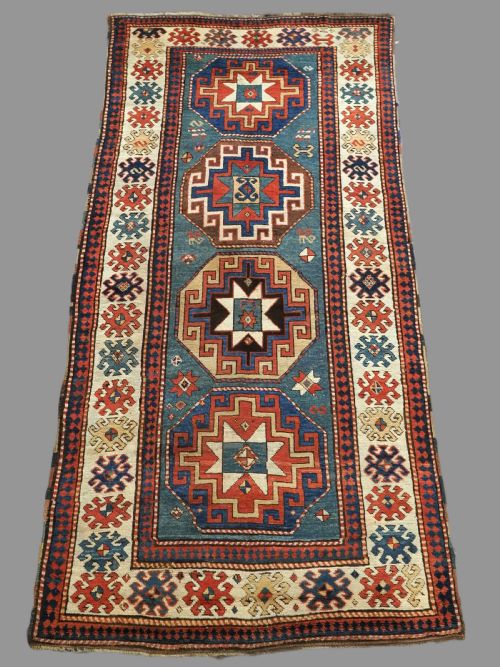
These floor coverings served functional purposes in nomadic tents, village homes, and grand European reception rooms alike. The surviving examples display a fascinating variety of formats, ranging from compact prayer rugs and area runners to expansive palatial carpets exceeding four metres in length. Their enduring appeal lies in the botanical and olive hues achieved through natural dyeing traditions.
How they were made
The materials recorded in these pieces consist entirely of wool, cotton, and silk, utilised across both warp and weft foundations and surface piles. Weavers spun these animal and plant fibres by hand before applying natural dyestuffs derived from local plants and minerals. This foundational labour created the durable tensile strength observed in surviving nineteenth-century village and workshop productions.
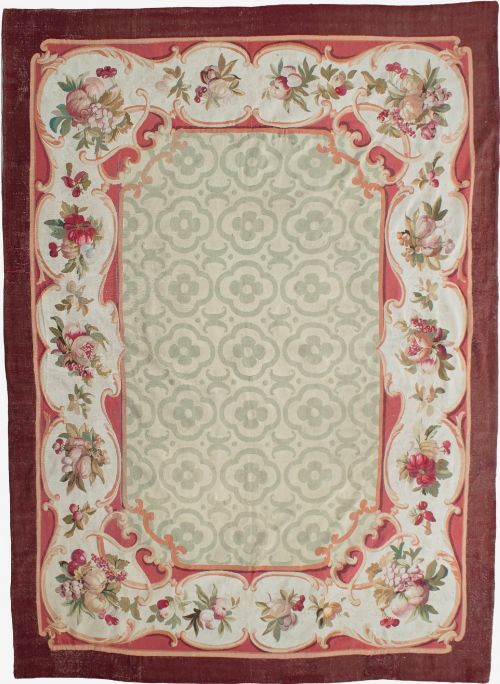
Construction techniques vary between knotted pile weaving, as seen in traditional Persian and Anatolian carpets, and flatwoven methods utilised for kilims and Aubusson pieces. Artisans tied symmetrical or asymmetrical knots onto vertical looms, packing each horizontal row tightly with heavy combs. This meticulous density accounts for the survival of intricate geometric and floral compositions over many generations.
Green Woven Rug Retail Price Guide 2026
Typical asking prices for green woven rug among the pieces listed under this phrase on Sellingantiques today, from the lower quarter to the upper quarter. They describe what is for sale here now, not the wider market.
Listings span production dates from the 1850s through the 1920s, encompassing both nineteenth-century village weaving and urban workshop carpet traditions.
What varies in quality
Quality in these textiles depends heavily upon the purity of the wool and the depth of the natural dyes used across the field. Superior examples display vibrant yet harmonious colour saturation that has aged gracefully without chemical fading. Inferior grades often feature brittle foundations or muddy dye mixtures that lack the luminous resonance found in master-woven pieces.
The precision of the design execution and knot density further distinguish standard village outputs from exceptional workshop commissions. Finer rugs maintain crisp geometric outlines or fluid floral curves, whereas lesser pieces show compressed proportions or erratic border symmetry. The integrity of the original selvedges and end finishes also dictates the overall preservation standard.
Mohtasham Kashan
The Green Woven Rug Glossary
- Kilim
- A flatwoven textile produced without a pile by tightly interweaving warp and weft strands. These pieces function primarily as lightweight floor coverings or wall hangings.
- Prayer rug
- A small format carpet featuring a central niche design that indicates the direction of prayer. These textiles were traditionally used for personal devotion in domestic settings.
- Warp
- The stationary vertical threads stretched across a loom that form the structural skeleton of the rug. The visible fringe at either end of a finished piece consists of these extended foundation threads.
- Weft
- The horizontal strands passed alternately over and under the warp threads to lock the knots or flatweave into place. Proper packing of these rows ensures structural stability.
- Sultanabad
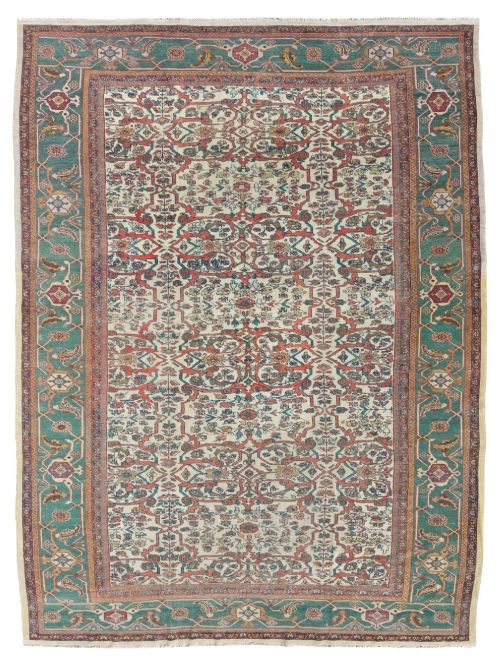
- A nineteenth-century Persian carpet style known for large-scale, open floral patterns and softer colour palettes. These grand room-size pieces were frequently exported to Western markets.
Green Woven Rug: Frequently Asked Questions
How do I clean an antique rug?
Professional dusting and gentle surface washing by a specialist conservator are essential for preserving fragile wool fibres and natural dyes. Avoid household detergents and mechanical scrubbing entirely.
Regular light vacuuming without a rotating power brush helps remove abrasive grit from the pile base between professional cleanings.
Where were these rugs made?
The pieces originate from traditional weaving centres across Turkey, the Caucasus, Persia, and parts of Eastern Europe such as Bessarabia. Each region developed distinct geometric or floral repertoires.
Nomadic tribes, village cooperatives, and urban workshops all contributed distinct regional characteristics to the surviving corpus.
Can I place these rugs in heavy traffic areas?
Durable wool pile constructions handle moderate foot traffic well when supported by a quality rug underlay to prevent sliding and friction. Delicate flatweaves or silk pieces require more sheltered placement.
Rotating the rug every six months ensures even wear patterns across the field and balances exposure to natural light.
How do I date a nineteenth-century carpet?
Dating relies on analysing material characteristics, natural dye chemistry, structural knot types, and regional design motifs recorded in comparative examples. Stylistic evolution provides strong chronological clues.
Consulting structural details like wool spin direction and selvedge construction helps narrow down the period of production.