


Green Umbrella Stand
A green umbrella stand brings character to an entrance hall, offering sturdy storage for wet walking sticks and brollies.
Green Umbrella Stand
A green umbrella stand serves the practical purpose of holding wet walking sticks and umbrellas in a hallway while adding a distinct visual element to the entryway. When searching for a green umbrella stand, buyers encounter pieces primarily taking the form of dedicated umbrella stands, stick stands, and larger hall stands with integrated receptacles.
The materials span from durable metals to carved timber and ceramics, reflecting a diverse range of domestic and utilitarian needs from past centuries. Examples on this page include cast iron, oak, glazed earthenware, and painted steel.
Origins stretch across the nineteenth and twentieth centuries, taking in periods such as the Victorian era, the Art Nouveau movement, and Art Deco design. Buyers are most likely to meet Victorian carved oak hall stands featuring green man motifs alongside cast iron and ceramic vessels.
Construction and materials
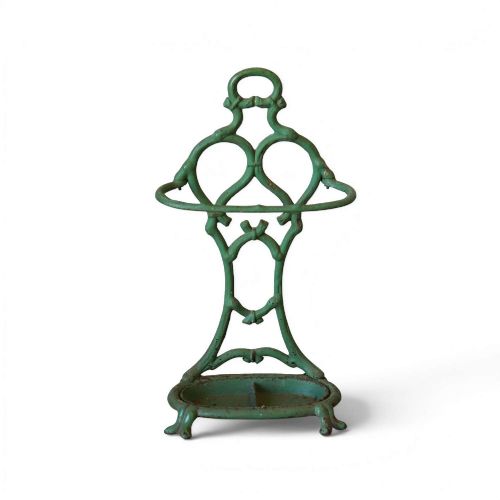
Makers utilised heavy casting techniques for metal pieces, producing durable iron and steel frames that could withstand the constant moisture of wet boots and brollies. Cast iron and wrought iron provided the structural integrity required for tall, slender stick stands and hall stands.
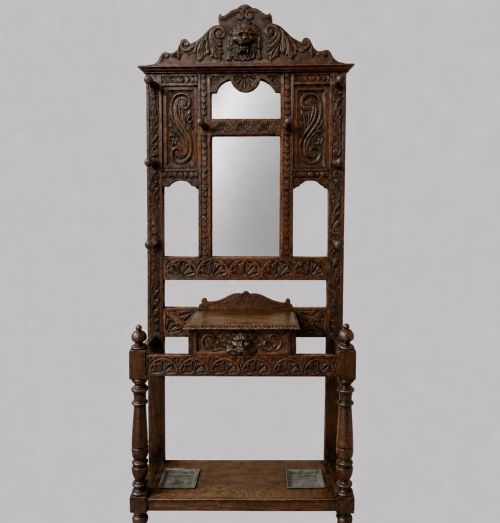
Carved wooden pieces relied on traditional joinery and detailed chisel work, particularly visible in the oak hall stands decorated with green man carvings. Timber was selected for its grain and strength, then shaped into elaborate hall furniture.
Ceramic and earthenware stands were shaped from clay and finished with glazes, creating watertight vessels suitable for catching runoff from wet items. Painted finishes on steel and milk churns added colour and protected the underlying metal from rust.
Young Hercules once held court in the hallway, cast in iron to keep wet brollies company.
Assessing quality
Quality in these pieces rests on the depth and clarity of the craftsmanship, whether in the crispness of a cast iron faux bois bamboo design or the hand-carved detail of an oak green man mask. Finer examples display meticulous attention to proportion and ornamentation by the maker.
The choice and preservation of materials dictate longevity and visual appeal, with dense hardwoods and heavy-gauge metals maintaining their structural integrity over decades of daily domestic use. Surface finishes, from original paint to rich wood patination, show how well a piece has survived its working life.
The Green Umbrella Stand Glossary
- Green man
- A sculptural motif of a face carved from leaves, tendrils, or foliage, commonly found on Victorian oak hall stands. It symbolises rebirth and the cycle of growth.
- Faux bois
- A French term meaning false wood, describing metal or ceramic work painted or moulded to imitate natural timber, such as bamboo.
- Jardiniere
- An ornamental pot or stand designed to hold plants or flowers, sometimes utilised as a decorative container for sticks and umbrellas.
- Hall stand
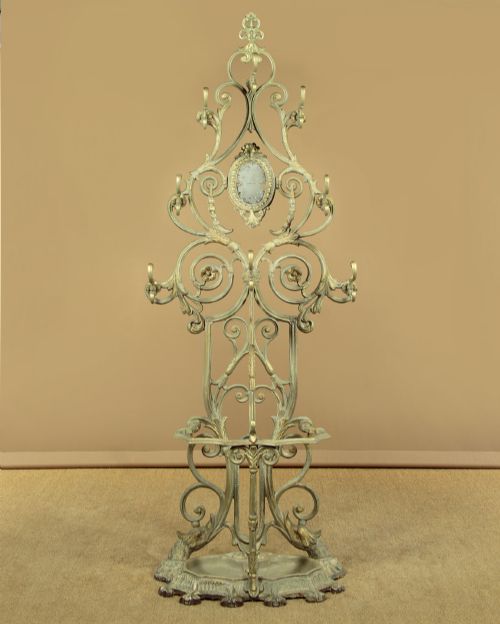
- A piece of hallway furniture combining hooks for coats, a mirror, and a base fitted with trays or wells for holding umbrellas and walking sticks.
Green Umbrella Stand: Frequently Asked Questions
How do I date an oak umbrella stand?
Dating an oak umbrella stand involves examining the style of the carving, the construction methods, and hardware such as iron coat hooks or mirror backing. Pieces featuring green man motifs often point to the Victorian period.
Comparing the joinery and finish to established nineteenth and twentieth-century design periods helps narrow down the decade of manufacture.
Where should I place a hall stand?
A hall stand belongs in an entrance hall or porch where guests and residents enter the home, providing a convenient drop zone for coats, hats, and wet umbrellas. Placing it near the front door protects interior floors from moisture.
Ensure there is adequate clearance for doors to open and sufficient light to appreciate carved wood or decorative ironwork.
How were cast iron stands made?
Cast iron stands were produced by pouring molten iron into sand moulds to create intricate patterns, such as plant stems, figures, or faux bois bamboo designs. This technique allowed manufacturers to achieve durable, highly detailed structures.
After casting, the metal was often painted or finished to prevent corrosion and enhance the decorative appearance of the piece.