


Green Stripe Armchair
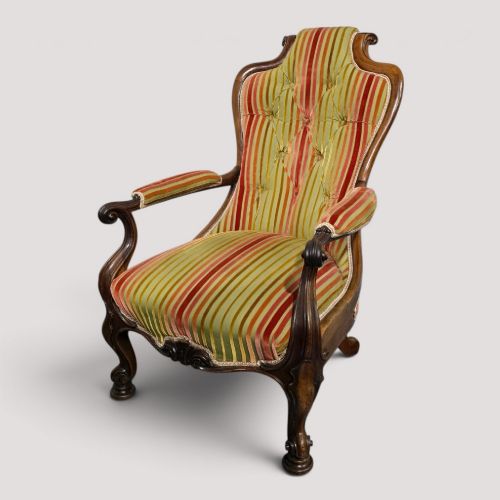
A green stripe armchair brings a distinct pattern into a room, offering functional seating shaped by periods ranging from the Regency era to the twentieth century.
Green Stripe Armchair
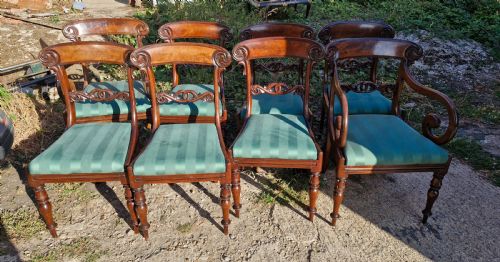
When you search for a green stripe armchair, you are looking at upholstered seating framed in mahogany, birch, hardwood, or painted wood. These pieces span the nineteenth century, the Victorian period, and early twentieth-century revivals.
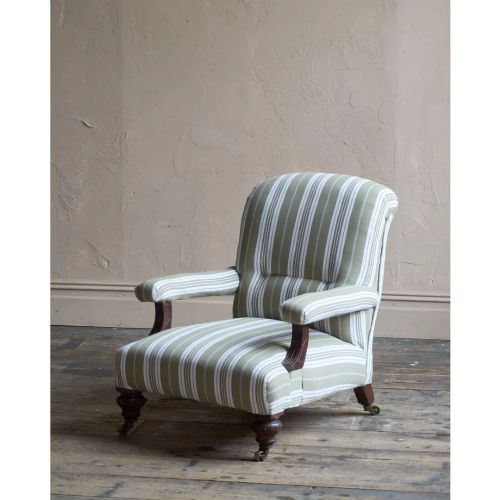
The selections on this page include library armchairs, desk chairs, open armchairs, and wingback sofa armchairs. You will encounter styles from French Neoclassical and Louis XV to George IV and Karl Johan influences.
Most examples rely on fabric and textile upholstery, sometimes paired with ticking fabric or brass details. Forms range from simple nineteenth-century frames to grander carved library chairs.
Materials and construction
Makers shaped these frames from solid hardwoods like mahogany and birch, alongside painted wood and black lacquered surfaces. Carved elements and structural supports demonstrate traditional cabinet-making methods of the nineteenth and early twentieth centuries.
Upholstery techniques involve textiles and cotton fabrics stretched over padded frames, occasionally secured with brass tacks or finished with ticking. These textile choices define the visual character of the striped pattern against the wood structure.
Listings feature mahogany, birch, and painted wood structures paired with cotton and textile upholstery across the nineteenth and twentieth centuries.
Assessing quality and execution
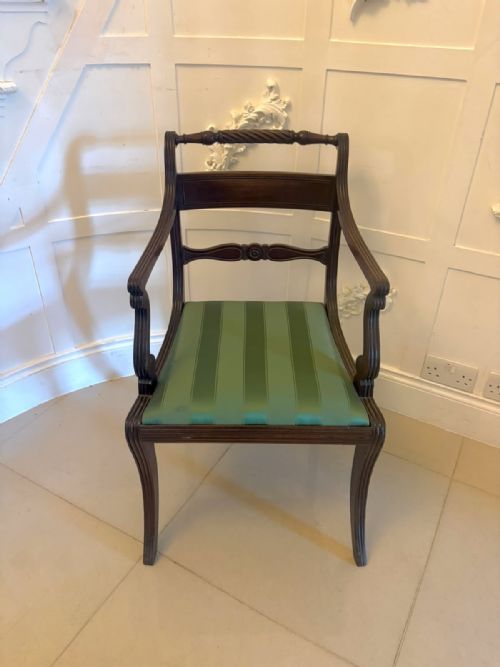
Quality rests in the crispness of the wood carving and the stability of the hardwood frame. Superior examples show refined proportions in styles like Regency or Louis XVI revival, where the joinery remains tight and substantial.
The execution of the upholstery finish alters the overall impression. Better pieces maintain harmonious alignment between the striped fabric and the underlying wooden contours.
The Green Stripe Armchair Glossary
- Regency
- A British design period spanning the early nineteenth century, characterised by classical restraint and mahogany construction. It often draws inspiration from ancient Greek and Roman forms.
- Curule
- A distinctive X-shaped chair design derived from ancient Roman magistrate seats. This structural form appears in library armchairs.
- Karl Johan
- A Scandinavian neoclassical style dating from the early nineteenth century. It utilises pale woods like birch with clean, understated lines.
- Louis XV Style
- A French aesthetic from the eighteenth century that was later revived, featuring flowing curves and asymmetrical floral carving. It typically avoids straight lines in the wooden framework.
- Wingback
- An upholstered chair style with protective side panels designed to shield the sitter from draughts. These wings extend upward from the arms to the backrest.
Green Stripe Armchair: Frequently Asked Questions
What periods do these armchairs come from?
The pieces span the nineteenth century, including Regency and Victorian eras, alongside early twentieth-century examples up to the 1930s.
Revival styles also appear, referencing earlier French and Scandinavian designs through traditional manufacturing methods.
How do I identify a Regency armchair?
Regency armchairs generally feature mahogany frames with classical influences, such as saber legs or scrolled armrests.
They emphasise structural clarity and are often associated with desk and dining chair forms.
What woods are used in these frames?
Makers utilised hardwoods such as mahogany and birch, alongside painted wood and black lacquered finishes.
These materials provided the rigid structural support necessary for upholstered library and open armchairs.
Where were library armchairs placed?
Library armchairs were positioned in domestic studies, libraries, and grand reception rooms for reading and writing.
Their robust construction in mahogany or lacquered wood suited heavy daily use.