



Green Silk Chairs
Green silk antique chairs bring profound French and English grandeur into a room, uniting rich silk upholstery with carved and gilded timber.
Green Silk Chairs
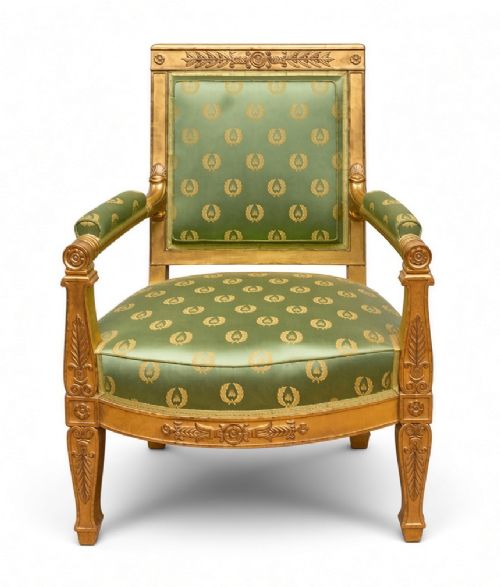
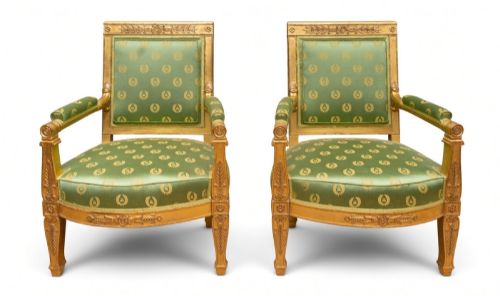
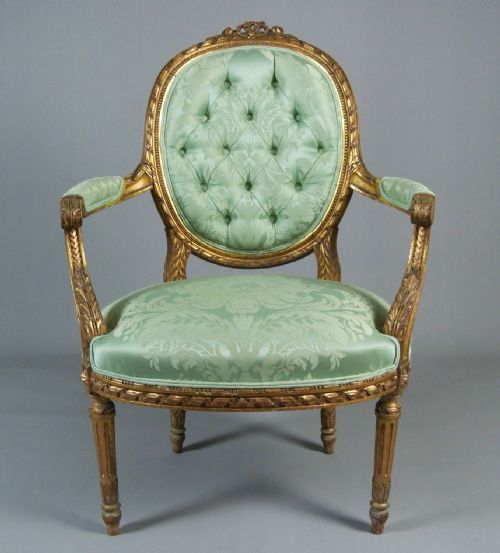
Green silk antique chairs encompass formal seating pieces upholstered in silk, silk damask, or emerald silk, spanning the eighteenth and nineteenth centuries. Buyers searching for green silk antique chairs encounter diverse regional forms including French Restauration fauteuils, George III neoclassical armchairs, and Scandinavian painted seating.
Originating from periods such as the Georgian era, the nineteenth century, and specific years like eighteen hundred, these chairs bridge continental court aesthetics and refined domestic luxury. Each piece demonstrates the enduring appeal of pairing carved timber frames with lustrous green silk textiles.
Materials and construction
The structural foundations of these chairs rely heavily on timber, with makers employing giltwood, carved wood, gesso, painted wood, and mahogany to build durable frames. Giltwood and gesso finishes require meticulous application of gold leaf over prepared wooden surfaces, while painted and lacquered finishes offer alternative decorative schemes.
Upholstery relies on traditional textiles, specifically silk and silk damask, secured to support structures that sometimes incorporate brass details. Craftspeople shaped these materials using established woodworking and carving techniques native to Georgian, French Baroque, and Rococo styles.
Green Silk Chairs Retail Price Guide 2026
Typical asking prices for green silk chairs among the pieces listed under this phrase on Sellingantiques today, from the lower quarter to the upper quarter. They describe what is for sale here now, not the wider market.
Princes and courtiers occasionally requested emerald silk chairs so their velvet waistcoats would not clash during long sessions of courtly gossip.
Evaluating craftsmanship and condition
Quality rests in the crispness of the wood carving, the integrity of the original gilt or lacquered decoration, and the historical suitability of the silk upholstery. Superior pieces display refined hand-carved details on the frame and retain authentic decorative surfaces without heavy modern intervention.
The distinction between standard and exceptional seating also lies in the provenance of the timber frame and the precision of joinery used by period makers. Chairs bearing documented attribution or originating from notable workshops command greater attention from discerning collectors.
Jacob-Desmalter·Thomas Chippendale
The Green Silk Chairs Glossary
- Giltwood
- Wood that has been coated with gold leaf or gold paint to create a brilliant metallic surface. This finish is characteristic of formal seating from the seventeenth century onward.
- Fauteuil
- An open-armed upholstered armchair with exposed wooden framing, originating in France. These chairs typically feature padded armrests and a distinctively carved back.
- Damask
- A reversible, figured fabric woven on a jacquard loom, featuring patterns formed by contrasting warps and wefts. Silk damask provides a formal sheen suited to period interiors.
- Gesso
- A plaster-like mixture applied to wood as a base for paint or gilding. It allows craftsmen to model intricate low-relief decorations directly onto the furniture frame.
- Rococo
- An ornate design style popular in the eighteenth century characterised by asymmetry, curved lines, and naturalistic motifs such as shells and foliage.
Green Silk Chairs: Frequently Asked Questions
Are these chairs suitable for daily seating?
These antique chairs were constructed for formal rooms and salons rather than heavy daily lounging. Their historic frames and delicate silk upholstery require mindful placement and gentle use to preserve their structural integrity.
Placing them in low-traffic areas or utilising them as decorative accent seating helps protect the antique textiles from undue wear and direct sunlight.
How do I identify a Georgian armchair?
Georgian armchairs typically display characteristic timber framing such as mahogany, alongside stylistic influences from neoclassical or Chippendale design. Look for balanced proportions, carved woodwork, and traditional joinery methods native to eighteenth-century Britain.
Comparing the arm supports, leg shapes, and stretcher configurations against documented period examples helps confirm the era of manufacture.
What is a Restauration fauteuil?
A Restauration fauteuil is a French upholstered armchair dating from the early nineteenth century. These pieces often feature giltwood frames and reflect the decorative preferences of the Bourbon Restoration period in France.
They are frequently associated with prominent Parisian cabinet makers and grand interiors like the Palais de Tuileries.
How should I care for antique silk upholstery?
Antique silk upholstery demands protection from direct sunlight and high humidity to prevent the fibres from weakening and fading. Gentle vacuuming with a soft brush attachment can remove surface dust without straining the fabric.
Professional textile conservators should handle any deep cleaning or structural repairs required for historic silk coverings.