



Green Roemer Wine Glass
These green roemer wine glass pieces bring centuries of continental and British table tradition to the room, prized for their rich forest hues and tactile, bulbous stems.
Green Roemer Wine Glass
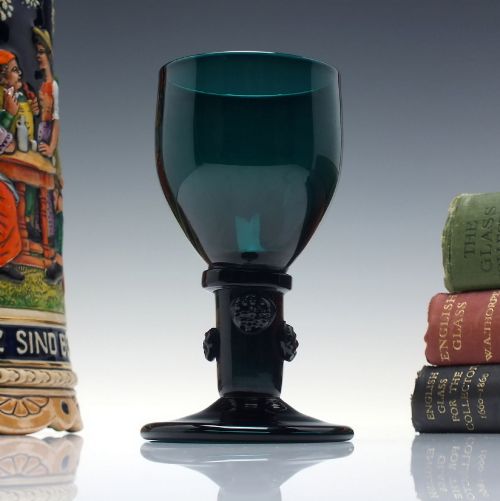
A green roemer wine glass is a traditional drinking vessel defined by its distinct green glass body and characteristic moulded or prunted stem, often seen in forms dating from the Georgian and Victorian eras. Buyers seeking these items encounter a range of origins, from English export pieces and French houses to Bohemian and Biedermeier workshops.
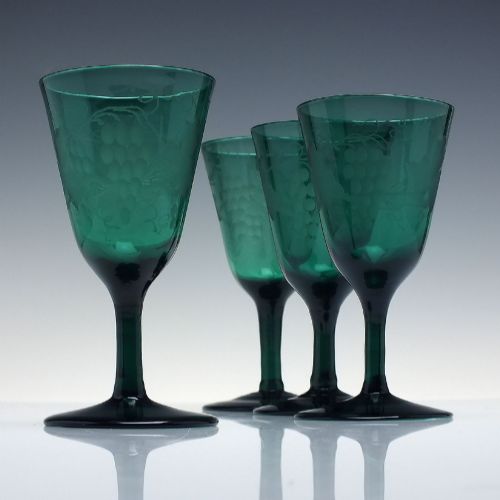
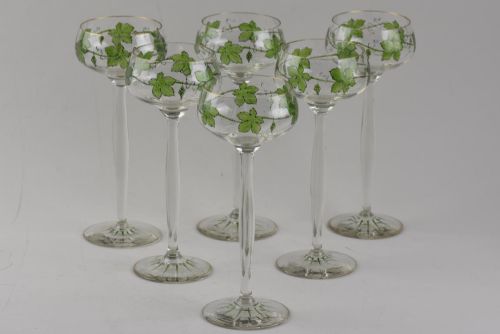
The selection ranges from tall Victorian table services and Georgian hollow-stem examples to decorative Continental hock glasses featuring elaborate enamelling. Most pieces on this page reflect European drinking customs where forest green glass was favoured for white wines and hock.
Forms vary from robust 18th-century English export shapes to slender Art Nouveau iterations and heavy cut-glass Biedermeier goblets. Each iteration preserves the historic silhouette of the traditional roemer while reflecting the decorative tastes of its specific decade.
Materials and construction
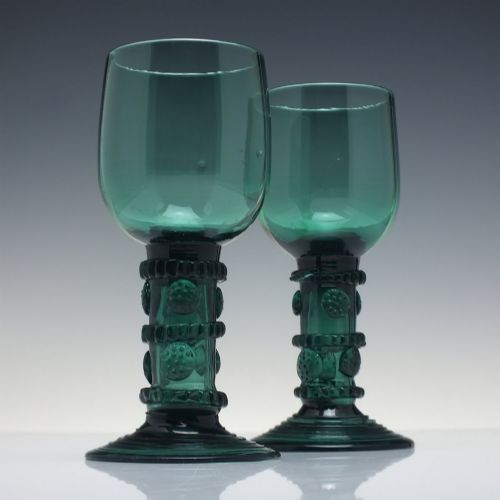
The primary material is green glass, often worked as lead glass or hand-blown glass to achieve the characteristic depth of colour and weight. Artisans shaped these vessels using traditional blowing techniques, frequently incorporating a hollow stem or applied prunts for grip.
Decoration on finer examples involves polychrome enamel, gold gilt, or precise wheel-cut patterns that contrast with the tinted body. Bohemian and French makers utilised enamel work to depict botanical or heraldic motifs upon the bowl.
Green Roemer Wine Glass Retail Price Guide 2026
Typical asking prices for green roemer wine glass among the pieces listed under this phrase on Sellingantiques today, from the lower quarter to the upper quarter. They describe what is for sale here now, not the wider market.
Those bumpy glass blobs on the stem are called prunts, thoughtfully designed to stop greasy medieval dinner fingers from dropping the wine.
Assessing quality and execution
Quality in a green roemer wine glass lies in the depth and evenness of the green glass colour, the balance of the bowl upon its stem, and the crispness of any cut or enamelled decoration. Finer pieces demonstrate careful control during the blowing process, resulting in walls of uniform thickness and stable, well-formed bases.
The distinction between standard tableware and exceptional pieces often rests on the finesse of the applied enamel or the complexity of the wheel-cut facets. Greater articulation in the stem prunts and meticulous gilding elevate a vessel from a simple utility to a notable example of glassmaking.
Hans Christiansen·Theresienthal·St Louis Massenet·Lobmeyer·Frits Hechert
The Green Roemer Wine Glass Glossary
- Roemer
- A traditional European drinking glass, usually green, featuring a wide bowl sitting on a cylindrical stem decorated with applied glass prunts or raspberries.
- Hock glass
- A tall stemmed wine glass traditionally used for hock or other white wines, frequently produced in green or amber glass during the 19th and early 20th centuries.
- Prunt
- A small blob of applied glass melted onto the stem of a roemer to provide a secure grip for the hand during dining.
- Biedermeier
- A Central European style spanning the mid 19th century characterised by utilitarian comfort, clean lines, and restrained decorative cuts on glassware.
- Enamel
- An opaque vitreous composition fused to the surface of the glass through firing, allowing for colourful painted designs across the bowl.
Green Roemer Wine Glass: Frequently Asked Questions
What is a green roemer glass used for?
These vessels were traditionally designed for serving white wine, hock, and Rhine wines during formal dining. Their distinct forest green tint historically helped mask impurities in early wine production.
Today, they serve equally well as functional glassware for dinner parties or as decorative cabinet pieces that highlight historic glass colours.
Are these glasses safe to drink from?
Most antique green roemer wine glasses are structurally sound enough for occasional use with beverages. However, pieces with delicate gold gilt or intricate enamel work are better reserved for careful handling or display.
Inspect the rim and bowl for any historical chips before deciding to use them at the table.
How can I tell Georgian glass from Victorian pieces?
Georgian roemers generally display simpler, hand-blown forms with characteristic pontil marks on the base and heavier, export-style walls. Victorian examples often incorporate more varied cutting techniques, taller proportions, or complex enamelling influenced by later revival styles.
Comparing the weight, stem construction, and optical properties of the green glass helps distinguish the 18th-century pieces from 19th-century interpretations.