



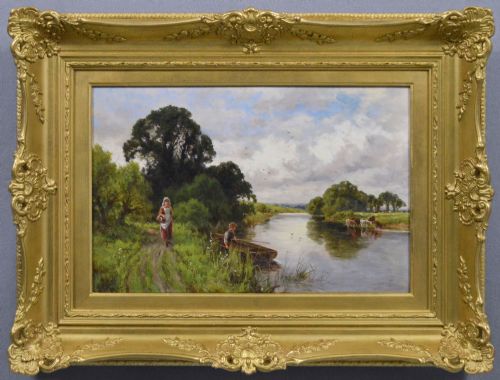
Green River Oil Painting
A green river oil painting captures tranquil riparian scenes through layered brushwork and natural light.
Green River Oil Painting
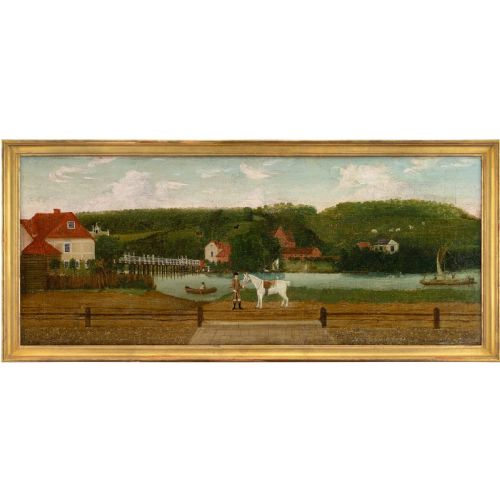
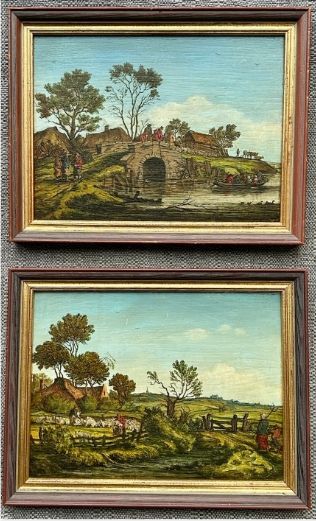
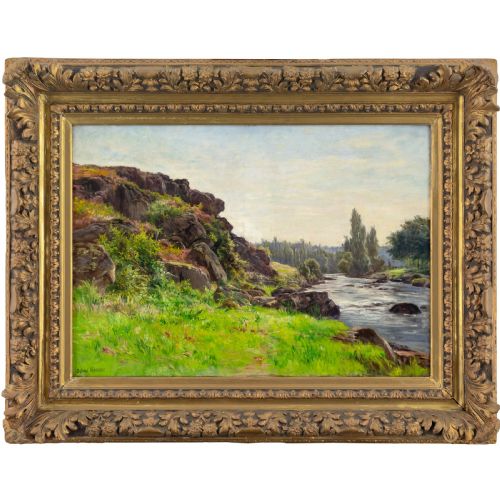
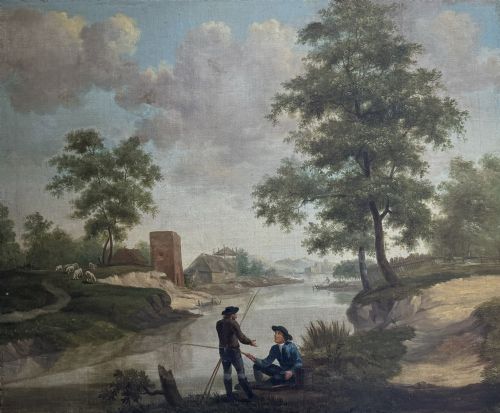
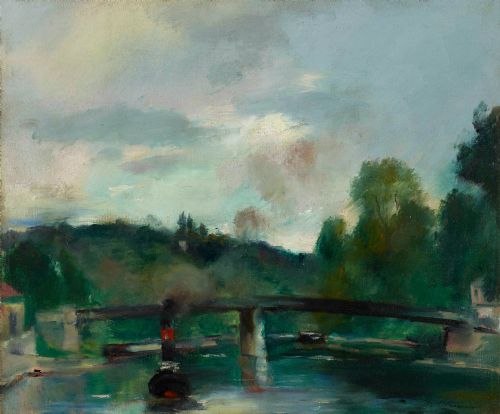
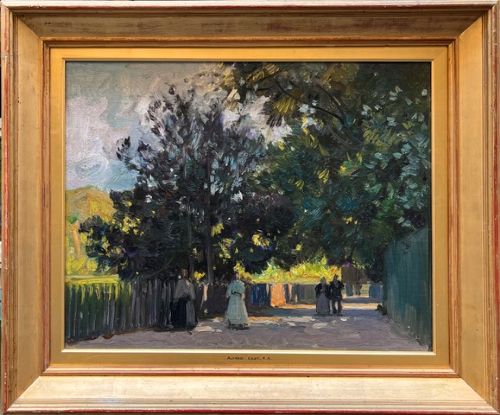
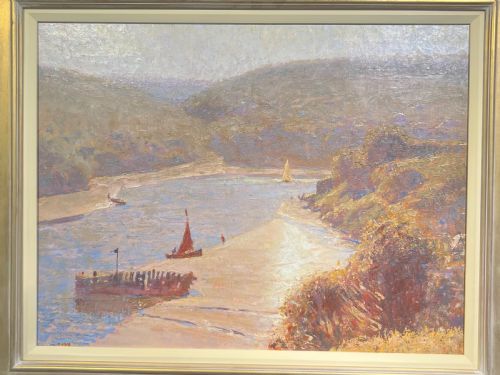
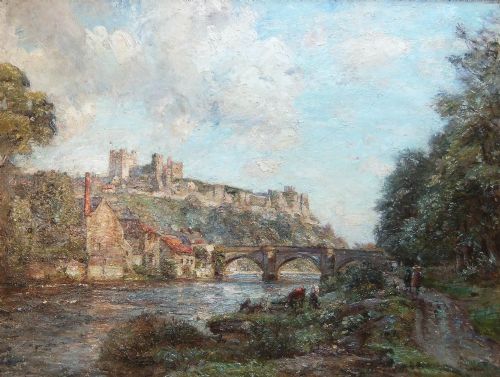
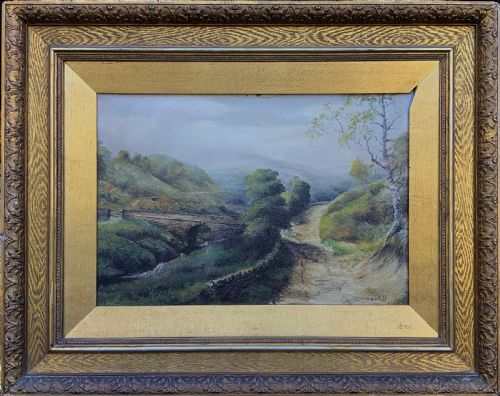
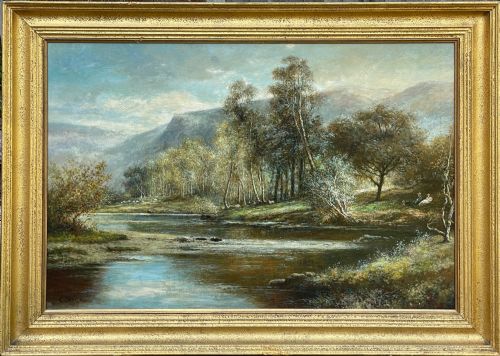
A green river oil painting depicts natural waterways, woodland streams, and pastoral banks rendered through traditional pigment applications. These works span multiple decades, incorporating Victorian pastoral scenes, Edwardian river views, and mid-century impressionist interpretations.
Most pieces show British and European landscapes featuring rivers, estuaries, and pastoral footpaths. Canvas and wood panel supports carry works by named artists alongside notable regional schools.
Materials and construction
Artists painted primarily using oil on canvas or prepared wood panels, sometimes employing gesso grounds to seal the support before applying pigment. Frames of giltwood and carved gesso frequently accompany these works to complete the presentation.
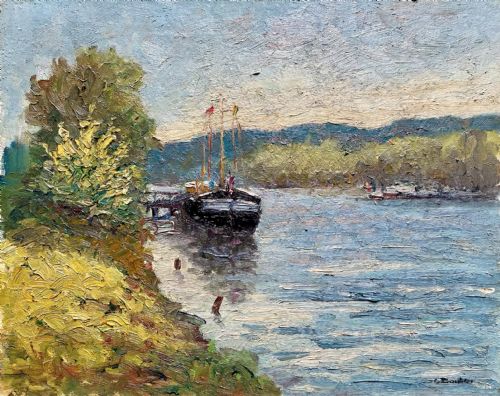
Brushwork ranges from smooth academic blending to textured impasto applications typical of impressionist and post-impressionist movements. Supporting boards and stretcher frames occasionally show later stabilization or conservation additions.
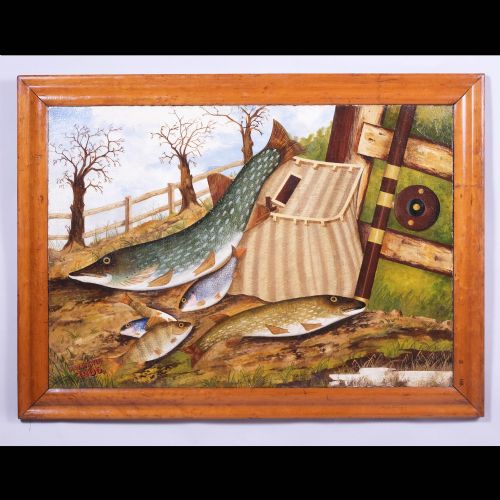
Listings feature oil paintings on canvas and wood panels from the 19th, 20th, and mid-century periods.
Distinctions in quality
Quality rests upon the confidence of the brushwork, the handling of atmospheric light reflecting off water, and the compositional balance of the landscape. Superior examples demonstrate a precise command of tone that suggests depth and movement within the river setting.
The integrity of the original paint surface and the condition of the canvas or wood panel further separate standard decorative works from accomplished fine art paintings by listed practitioners.
George Graham·Frederick Marriott·Henri Ottmann·Sir Alfred East·Herbert Royle·Henry H Parker·Sydney Yates Johnson·John Horace Hooper·Honore Cavaroc·Archibald Kay·Henri Jaques Delpy·Sir David Murray·Mario Pinetti·Alfred Augustus Glendening Jnr·William Sydney Cooper·David Mead
The Green River Oil Painting Glossary
- Impasto
- Paint applied thickly to a canvas or panel, leaving visible brush or palette knife marks that stand proud of the surface. This technique adds tactile dimension and captures light dynamically.
- Giltwood
- Wood carved and covered with a thin layer of gold leaf or gold paint, frequently used for traditional picture frames. It provides a warm metallic border that complements oil pigments.
- Gesso
- A white paint mixture consisting of a binder mixed with chalk, gypsum, or pigment, used to prepare wood panels or canvases for painting. It creates a smooth, stable ground for oil layers.
- Barbizon School
- A mid-19th-century French art movement part of an overall movement towards realism in art, focusing on landscape and rural scenes. Painters prioritized direct observation of nature.
Green River Oil Painting: Frequently Asked Questions
What subjects appear in these paintings?
These works focus primarily on natural waterways, including rivers, streams, and pastoral banks with figures, bridges, or livestock.
Compositions range from early 19th-century estate views to mid-century impressionist river scenes.
How do I care for an oil painting?
Display paintings away from direct sunlight, extreme temperature fluctuations, and high humidity to protect the canvas and wood panels.
Dust surfaces gently with a soft, dry brush and avoid applying liquid cleaners directly to the paint.
How are periods identified?
Periods are determined through a combination of stylistic characteristics, artist signatures, framing styles, and the physical composition of the canvas or wood panel.
Clothing styles of figures and architectural elements within the landscape also help date the work.
What is an impressionist landscape?
Impressionist landscapes emphasise natural light, visible brushstrokes, and everyday rural or river settings rather than strict academic detail.
Artists aimed to capture the fleeting atmospheric conditions of a specific moment along the water.